



 English
  عربى
عربى  中文简体
中文简体

Reminder information

Mar 26, 2026
Content
In the demanding environment of Oil Country Tubular Goods (OCTG) manufacturing, adhering to the American Petroleum Institute (API) 5CT standards is not just a regulatory requirement—it is a baseline for operational safety. The integrity of a well string depends heavily on the precision of thread connections. A specialized Casing And Tubing Coupling Bucking Unit Lathe is the primary instrument used to achieve the mechanical properties and leak-resistance required for deep-well exploration. Jiangsu Taiyuan CNC Machine Tool Co., Ltd., established in 2003 and located in the East Industrial Park of Taixing City, has spent over two decades refining the technology behind these special machine tools. With a 24,800 square meter production base, we focus on providing high-technology solutions such as the Casing And Tubing Coupling Bucking Unit Lathe that guarantee long precision retention and high production efficiency for global oilfields.
API 5CT specifies rigorous tolerances for thread taper, lead, and height. High-precision CNC casing and tubing threading machines are engineered to eliminate manual error by utilizing advanced servo-control systems. Unlike traditional lathes, a dedicated casing and tubing coupling bucking unit maintains a high degree of rigidity to handle the substantial torque required for large-diameter casing. This rigidity ensures that OCTG coupling thread accuracy is maintained even during high-volume production cycles. Furthermore, when comparing CNC vs manual bucking for API 5CT compliance, CNC units provide superior repeatability, which is essential for passing the stringent third-party inspections required by the national petroleum equipment manufacturing industry.
| Processing Factor | Standard Threading Equipment | High-precision Casing and Tubing Coupling Bucking Unit Lathe |
| Taper Tolerance | ±0.05 mm/m | ±0.01 mm/m |
| Thread Lead Deviation | Variable based on operator | Precision CNC Controlled |
| Repeatability | Moderate | Extremely High |
API 5CT compliance is not only about the thread itself but also about the "bucking" or makeup process. A fully automatic bucking unit for oilfield casings must monitor both the torque applied and the number of turns (rotation) in real-time. This is known as "Torque-Turn Monitoring," a critical step to ensure that the coupling is not over-tightened or under-tightened. Improving API 5CT compliance with bucking lathes involves using digital sensors that record the makeup graph for every joint. If the curve falls outside the specified API envelope, the casing and tubing coupling bucking unit lathe operation is halted automatically. This differs from older methods where torque was measured by pressure gauges alone; the modern high torque bucking unit for large diameter tubing uses high-fidelity load cells to verify the final position of the coupling.
Oilfield operations require heavy-duty oil pipe bucking unit features that can withstand 24/7 operation without losing calibration. At Jiangsu Taiyuan CNC, our machines are designed with high driving power and simple structures to minimize failure points. The impact of machine rigidity on API thread quality cannot be overstated; vibrations during the makeup or threading process can lead to micro-fractures in the thread flank. By utilizing a customizable bucking unit for various pipe sizes, manufacturers can ensure that even heavy-walled casing remains centered and stable. Furthermore, maintaining precision in casing and tubing lathes is simplified through our ISO-certified quality management systems, which ensure that the bed and spindle components retain their alignment for years of service.
| Component Feature | Conventional Lathes | Taiyuan CNC Special Machine Tools |
| Bed Construction | Standard Cast Iron | High-Rigidity Box-Way Design |
| Failure Points | Complex Gear Trains | Simplified Structure / CNC Optimized |
| Precision Retention | Short (Requires frequent recalibration) | Long-term (High driving power stability) |
Compliance with API 5CT is the hallmark of a world-class OCTG facility. Through the integration of OCTG coupling thread accuracy control and sophisticated torque-turn monitoring, the Casing And Tubing Coupling Bucking Unit Lathe ensures that every pipe joint is ready for the extreme pressures of the energy sector. Jiangsu Taiyuan CNC Machine Tool Co., Ltd. remains dedicated to the concept of "specialization, refinement and strengthening," providing the global petroleum industry with the reliable, high-technology equipment necessary to create a better, safer future.
Standard lathes lack the torque monitoring and structural rigidity required specifically for the "bucking" (makeup) process. A specialized unit combines threading with precise makeup control to meet API 5CT data logging requirements.
It provides a digital record that the coupling reached the correct interference fit. This prevents leaks or structural disconnects in the wellbore, which are high-risk failures in deep-sea or high-pressure wells.
These units are designed to handle all API 5CT grades, including high-strength materials like P110 and Q125, by providing adjustable, high-precision torque settings.
Regular calibration of the CNC sensors and lubrication of the high-rigidity bed ways are essential. Choosing machines with a "simple structure" reduces the number of failure points that could affect alignment.
Yes. Our customizable bucking unit for various pipe sizes features adjustable clamping systems and programmable logic to accommodate everything from small tubing to large-diameter casing strings.
Related Products
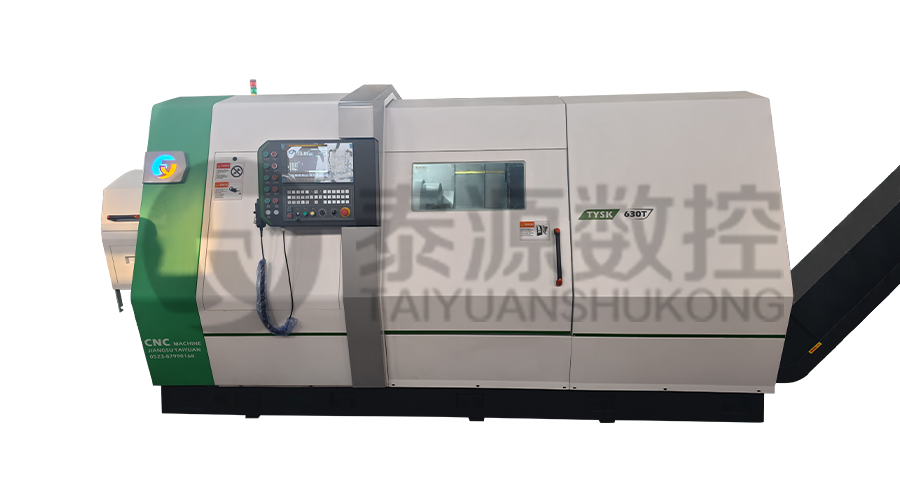 Model:TYSK-630T Drill Pipe, Joint & Coupling Lathe
The machine adopts a FANUC CNC system with stable processing accuracy and flexible programming functions to ensure that the processed parts meet strict industry standards. The high torque and heavy-load design can cope with long-term continuous work and has strong durability.
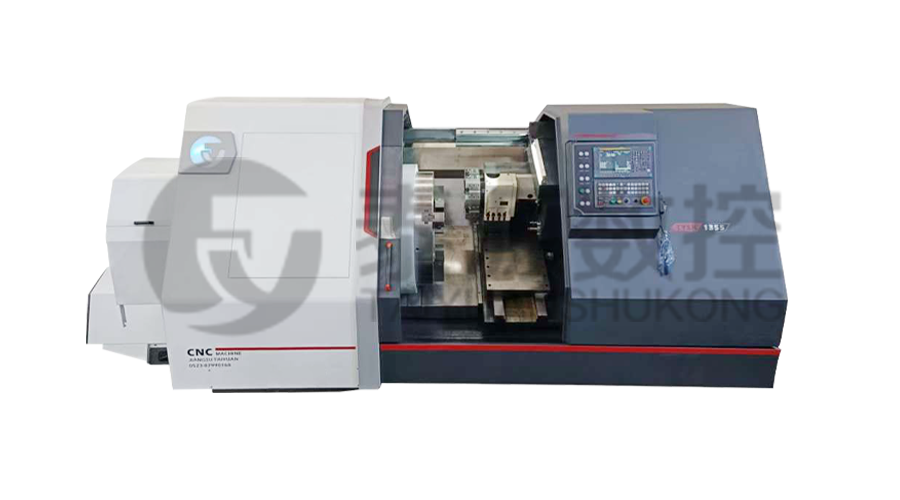 Model:TYSK-1355 Oil Pipe Processing Lathe
The machine adopts a FANUC CNC system with stable processing accuracy and flexible programming functions to ensure that the processed parts meet strict industry standards. The high torque and heavy-load design can cope with long-term continuous work and has strong durability.
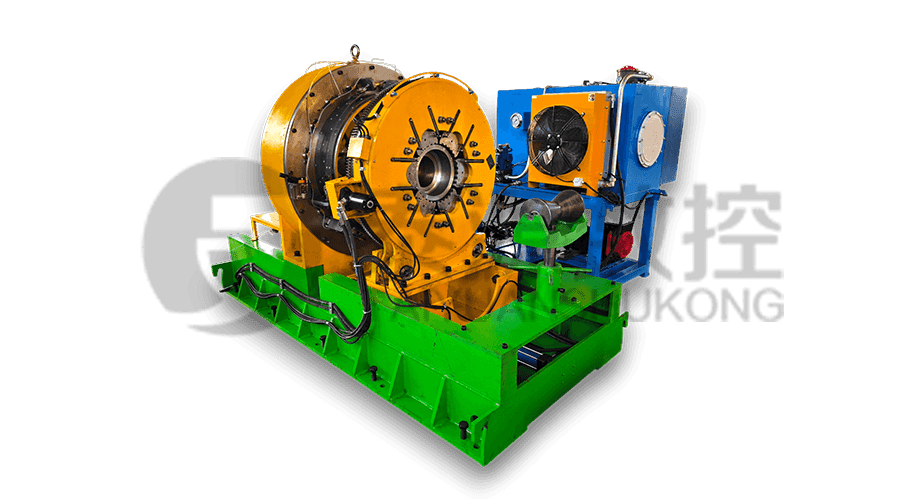
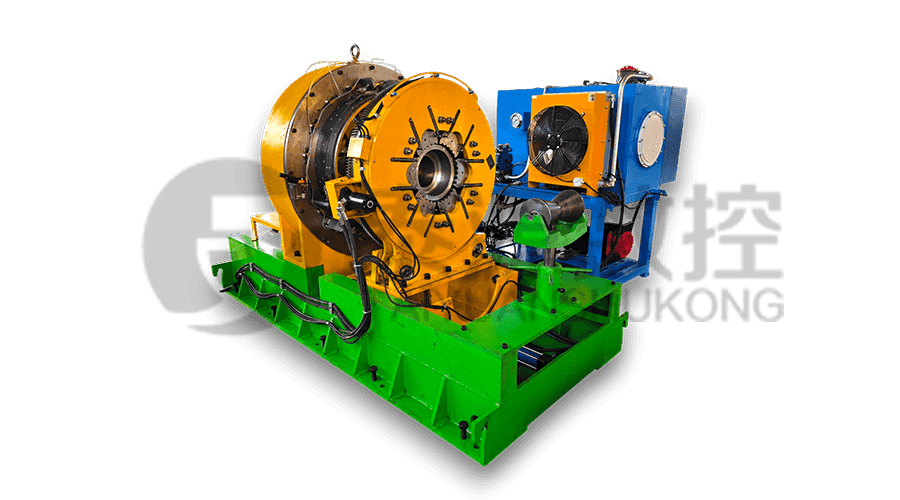 Series:TYSK-NKJ Screw-on machine/Casing and tubing coupling bucking unit
The machine uses a hydraulic motor, mechanical floating mechanism, and real-time torque detection, adapts to material bending, and prevents material deformation. Auxiliary machines are configured to help with semi-automation.
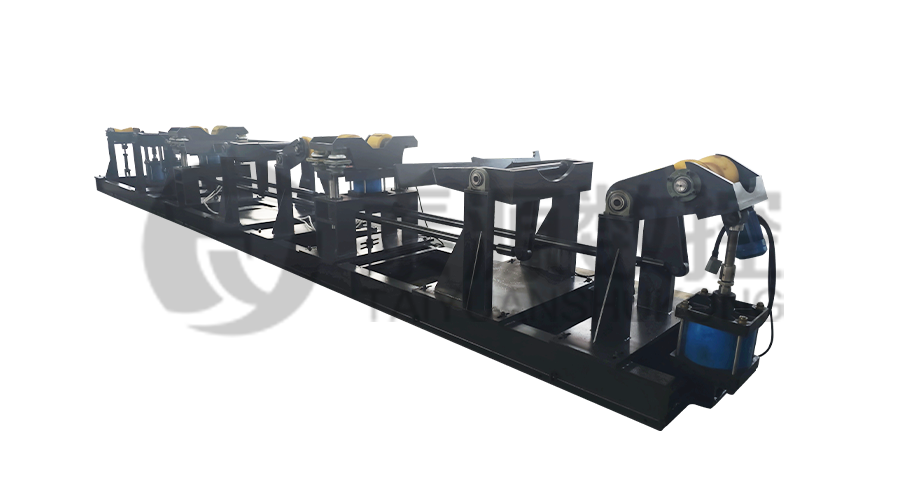 Long, heavy material solutions Automatic loading and unloading mechanism for pipe threading
The special flexible support mode can effectively reduce the influence of workpiece bending on processing and improve the yield. Strictly matching with our pipe threading lathe.
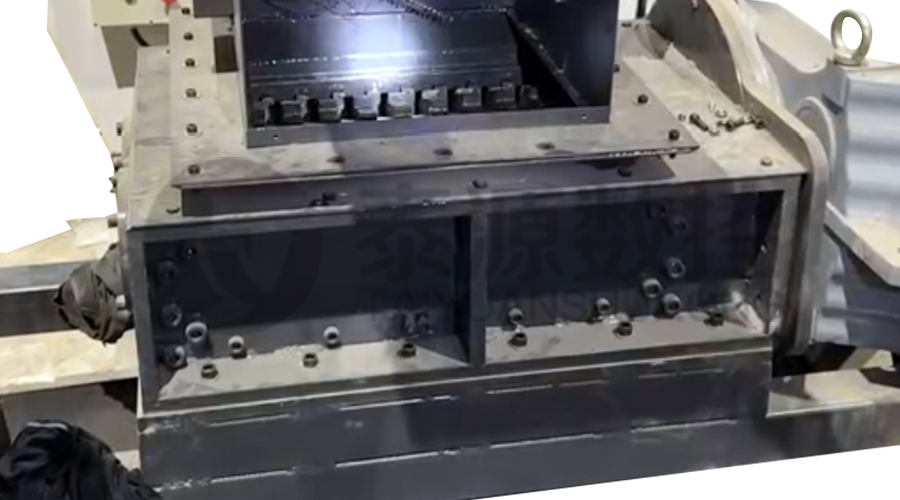 Modular Iron Chip Crusher High strength crusher for chip
The blades are made of high-strength materials and reasonably placed at the exit of the chip extractor to break the clump iron chips.Reduce the risk of rollback and improve waste frame utilization.
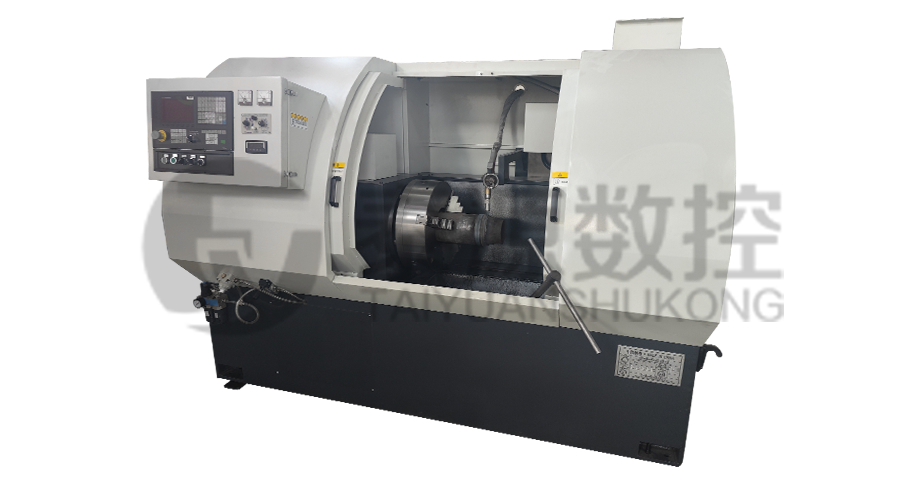 Series:TYSK-HB Semi-automatic wear-resistant band welder
Applicable to ARNCO 100XT, 200XT, 300XT. Support φ1.2-2.0 cored or solid wire surfacing welding.Can be equipped with single gun spray welding and double gun spray welding two ways. Support PLC or CNC system control.
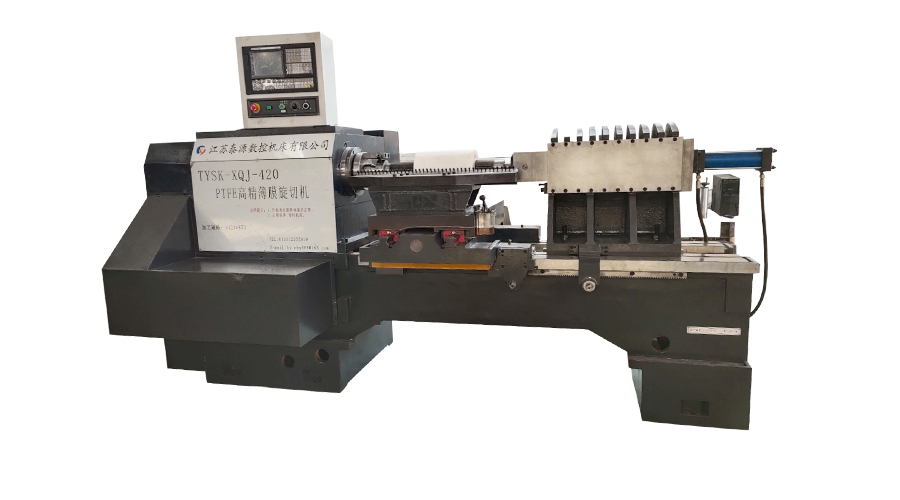 Model:TYSK-XQJ-550 Medium & Large PTFE Film Skiving Machine
Designed to process blanks with a maximum diameter of 550 mm and a maximum length of 1000 mm. We can also customize according to the needs of users. Friendly change speed and thickness with CNC.
