



 English
  عربى
عربى  中文简体
中文简体

Reminder information

Apr 02, 2026
Content
In the high-stress environments of petroleum exploration and mining, the application of hardbanding on drill pipes and centralizers is critical for reducing tool joint wear. Operating a semi-automatic wear-resistant band welder requires a specialized technical skillset that bridges CNC programming, metallurgy, and thermal management. To ensure a uniform Rockwell C hardness (HRC) across the welding zone and minimize the heat-affected zone (HAZ), operators must undergo rigorous training on both hardware kinematics and cladding process parameters.
A modern semi-automatic wear-resistant band welder utilizes a PLC or CNC-based control system to synchronize the rotation of the workpiece with the oscillation of the welding torch. The primary training objective is the calibration of torch oscillation frequency and step-over distance. If the overlap between welding beads is inconsistent, it leads to structural stress concentrations. Operators must master the CNC interface for surfacing machine tools, focusing on the real-time adjustment of wire feed speed (m/min) and travel speed to maintain a precise bead height of 3.0mm to 5.0mm, as specified by industrial standards.
Jiangsu Taiyuan CNC Machine Tool Co., Ltd., established in 2003 and located in the East Industrial Park of Taixing City, serves as a specialized production base for the national petroleum equipment manufacturing industry. Covering an area of 24,800 square meters, our company is ISO quality system certified and recognized as a national quality trustworthy enterprise. Our semi-automatic wear-resistant band welder is engineered with high driving power and superior rigidity, ensuring long precision retention times and minimal failure points. These systems are widely utilized by industry leaders such as Baosteel and Shengli Oilfield, as well as international clients in the United States, Japan, and Algeria.
| Operational Parameter | Technical Requirement | Engineering Impact |
| Welding Current (A) | 250A - 350A (Regulated) | Controls penetration depth and dilution rate |
| Oscillation Width | 15mm - 30mm (Variable) | Determines the coverage area of the wear band |
| Preheat Temperature | 150°C - 250°C (ASTM A29) | Prevents hydrogen-induced cracking in 4145H steel |
Operators must understand the compatibility of welding wire with drill pipe steel (typically AISI 4145H or 4130). Training should cover the selection of cored welding wire for wear bands, focusing on chemical compositions that include chromium, molybdenum, and tungsten carbides. Efficient operation involves managing the interpass temperature for hardbanding surfacing to avoid the formation of brittle martensite. This knowledge is essential for achieving a surface finish of Ra 12.5 or better on the welded band, which reduces casing wear during drilling operations in deep-hole environments.
The specialized machine tools from Jiangsu Taiyuan, including our drill pipe joint wear-resistant belt surfacing machines and screw pump rotor milling machines, are designed for specialization and refinement. Our semi-automatic wear-resistant band welder features a simple structure that facilitates ease of maintenance, yet demands an operator who can interpret NDT (Non-Destructive Testing) results. Understanding dye penetrant inspection for weld cracks is a mandatory skill to ensure that the surfaced band meets the rigorous quality benchmarks of the mining and chemical industries.
The preheating protocol for drill pipe welding is the most critical factor in preventing "cold cracking." By maintaining the base metal at a specific temperature (usually 200°C), the operator slows down the cooling rate, allowing hydrogen to escape and reducing thermal stress. In B2B procurement of surfacing equipment, the integration of automatic preheating systems in band welders is highly valued, as it reduces human error and ensures that the tensile strength of the joint remains uncompromised after multiple hardbanding applications.
The concept of "specialization, refinement, and strengthening" at Jiangsu Taiyuan CNC Machine Tool Co., Ltd. extends to the diagnostic capabilities of our equipment. Operators must be trained in preventative maintenance for surfacing lathes, specifically checking the integrity of the wire feed rollers and the conductivity of the contact tip. A worn contact tip can lead to arc instability, affecting the microstructure of the wear-resistant band. Regular calibration of CNC pipe threading lathes and surfacing units ensures high production efficiency and the share of development in the global peer market.
| Skill Category | Standard/Reference | Key Performance Indicator (KPI) |
| Welding Geometry | API Spec 7-1 | Bead height and width within +/- 0.5mm |
| Hardness Testing | ASTM E18 | Consistency within 3 HRC points across band |
| Safety Protocol | GB/T ISO 45001 | Zero incident rate during high-power operation |
Comparing semi-automatic vs manual wear-band welding, the semi-automatic system provides unmatched repeatability in bead morphology. While manual welding is subject to operator fatigue and varying arc lengths, a semi-automatic wear-resistant band welder maintains a constant deposition rate (kg/h) and uniform heat input. This translates to extended tool joint service life and significantly lower failure rates in the oil field, geology, and mining sectors.
An operator with basic welding experience usually requires 40 to 80 hours of specialized training to master the CNC parameters and metallurgical requirements of a wear-resistant band welder.
Yes. The machine is designed with a high-torque spindle and adjustable centering fixtures to accommodate various diameters, typically ranging from 3.5 inches to 6.625 inches or larger.
Under-bead cracking is prevented by strict adherence to preheating and post-weld controlled cooling procedures, alongside using low-hydrogen consumables.
Depending on the band width and pipe diameter, a semi-automatic system can typically complete 15 to 25 tool joints per 8-hour shift with a single operator.
The system comes with proprietary embedded software designed for surfacing tasks, requiring only parameter input rather than complex G-code programming.
Related Products
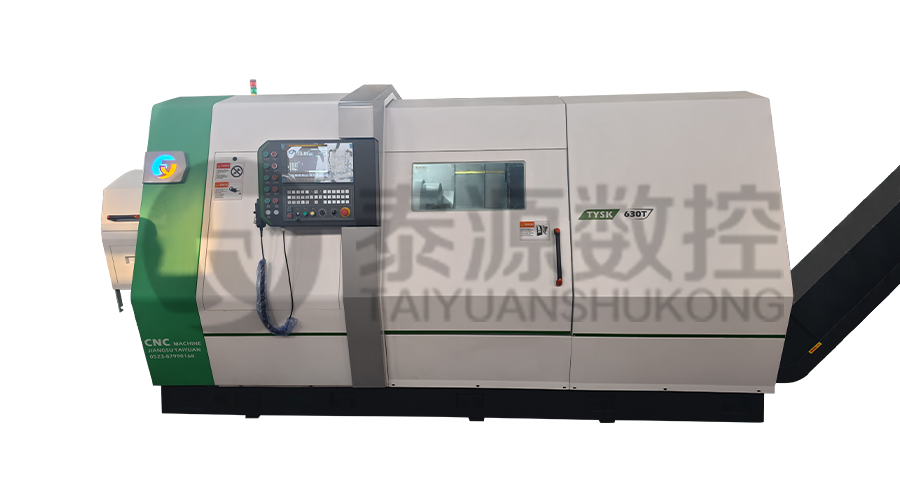 Model:TYSK-630T Drill Pipe, Joint & Coupling Lathe
The machine adopts a FANUC CNC system with stable processing accuracy and flexible programming functions to ensure that the processed parts meet strict industry standards. The high torque and heavy-load design can cope with long-term continuous work and has strong durability.
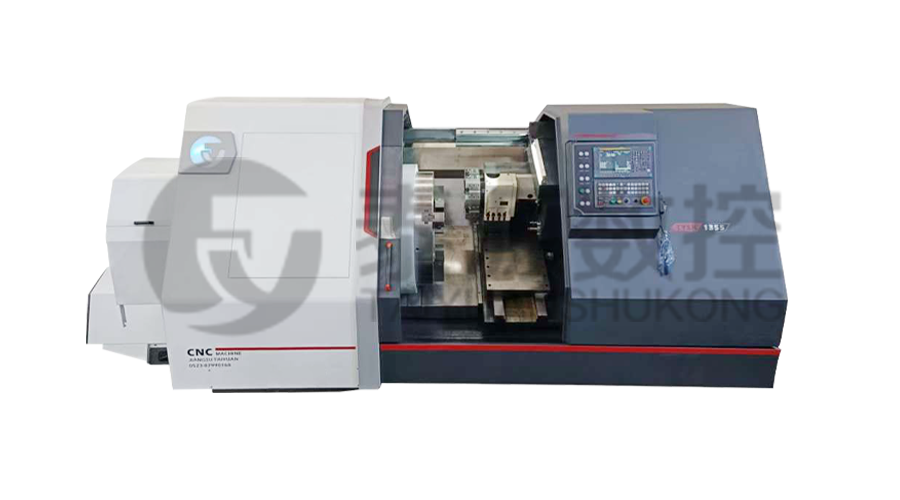 Model:TYSK-1355 Oil Pipe Processing Lathe
The machine adopts a FANUC CNC system with stable processing accuracy and flexible programming functions to ensure that the processed parts meet strict industry standards. The high torque and heavy-load design can cope with long-term continuous work and has strong durability.
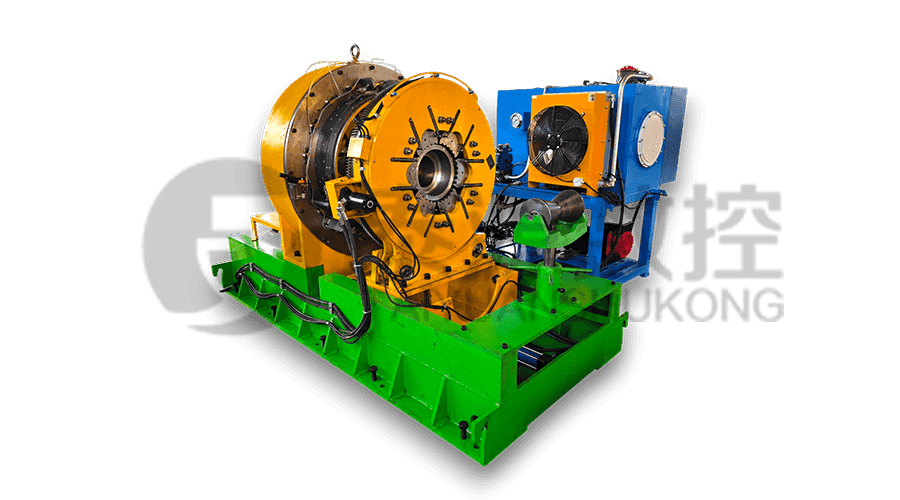 Series:TYSK-NKJ Screw-on machine/Casing and tubing coupling bucking unit
The machine uses a hydraulic motor, mechanical floating mechanism, and real-time torque detection, adapts to material bending, and prevents material deformation. Auxiliary machines are configured to help with semi-automation.
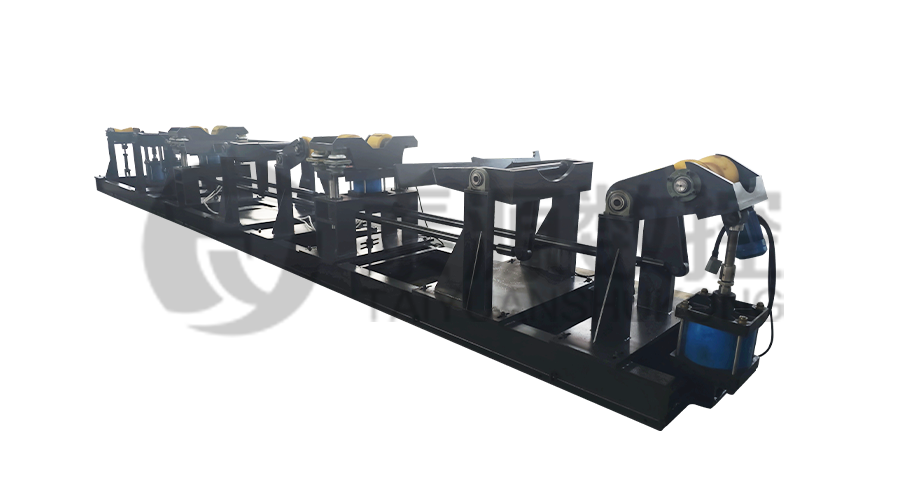 Long, heavy material solutions Automatic loading and unloading mechanism for pipe threading
The special flexible support mode can effectively reduce the influence of workpiece bending on processing and improve the yield. Strictly matching with our pipe threading lathe.
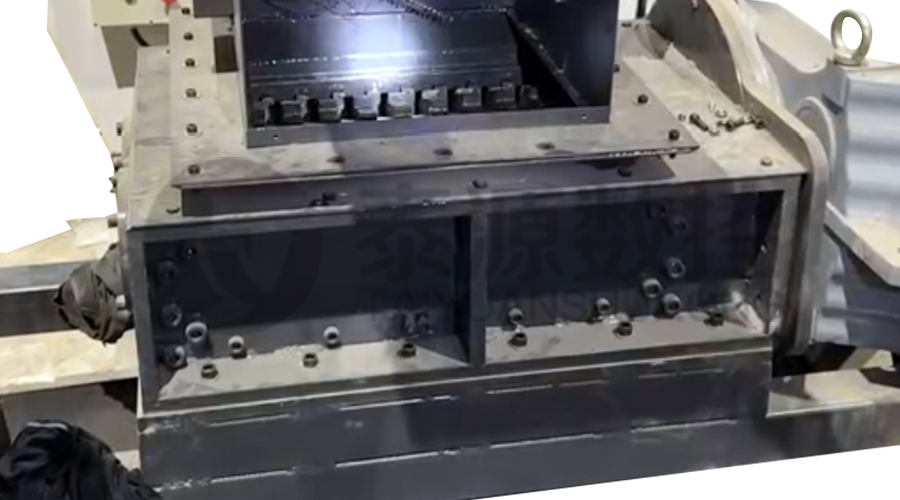 Modular Iron Chip Crusher High strength crusher for chip
The blades are made of high-strength materials and reasonably placed at the exit of the chip extractor to break the clump iron chips.Reduce the risk of rollback and improve waste frame utilization.
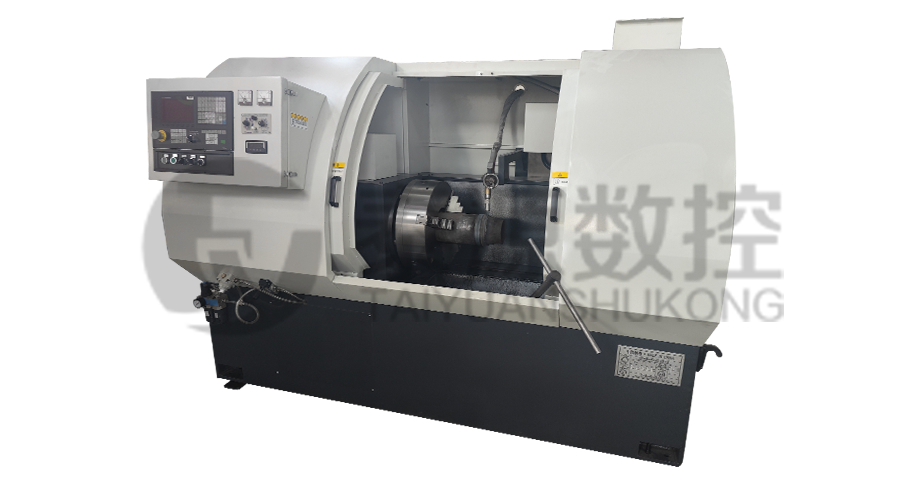 Series:TYSK-HB Semi-automatic wear-resistant band welder
Applicable to ARNCO 100XT, 200XT, 300XT. Support φ1.2-2.0 cored or solid wire surfacing welding.Can be equipped with single gun spray welding and double gun spray welding two ways. Support PLC or CNC system control.
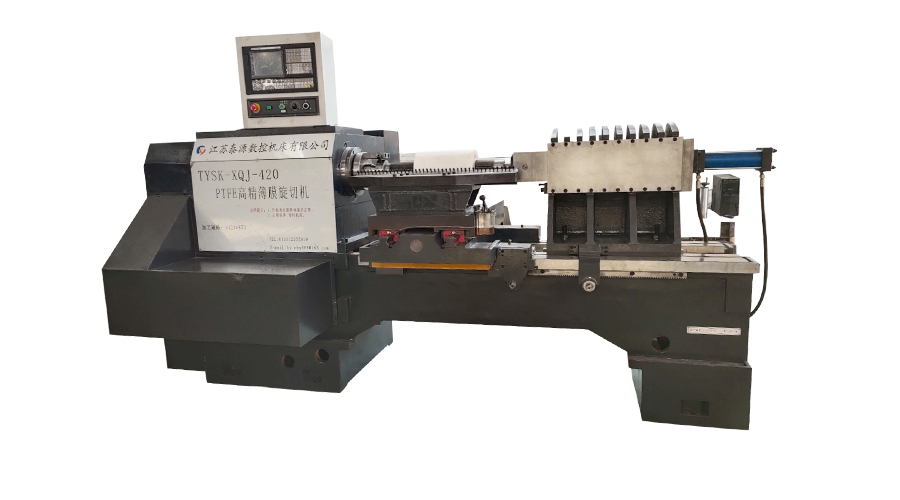 Model:TYSK-XQJ-550 Medium & Large PTFE Film Skiving Machine
Designed to process blanks with a maximum diameter of 550 mm and a maximum length of 1000 mm. We can also customize according to the needs of users. Friendly change speed and thickness with CNC.
