



 English
  عربى
عربى  中文简体
中文简体

Reminder information

Apr 07, 2026
Content
Jiangsu Taiyuan CNC Machine Tool Co., Ltd., established in 2003 and located in the East Industrial Park of Taixing City, is a premier production base for special machine tools serving the national petroleum equipment manufacturing industry. Our facility covers 24,800 square meters and is ISO/GBT quality system certified. We specialize in high-torque coupling CNC pipe threading lathes, drill pipe production lines, and complex screw pump rotor milling machines. Our equipment is utilized by global leaders such as Baosteel and Dagang Oilfield, as well as enterprises in the United States, Japan, and Azerbaijan. In the processing of API 5CT oil country tubular goods (OCTG), the cnc pipe threading machine must maintain extreme dimensional stability. Eliminating vibration during heavy-duty threading is critical for achieving the required Ra 1.6 surface finish and ensuring the long-term precision retention of the machine bed.
The primary cause of thread chattering on CNC pipe lathes is often a lack of structural damping or improper spindle bearing preload. To improve cnc pipe threading machine rigidity, the machine bed must utilize high-strength Mehanite cast iron with optimized ribbing to absorb harmonic frequencies. When processing large-diameter casing, the Why use a double-chuck CNC pipe lathe question becomes relevant; a dual-chuck configuration provides synchronized clamping force at both ends of the workpiece, significantly reducing the cantilever effect. Furthermore, How to reduce spindle vibration in pipe threading involves the use of high-precision P4-grade cylindrical roller bearings and angular contact thrust bearings. This configuration ensures that the radial runout of the spindle remains within 0.005mm, which is essential for maintaining consistent thread crest heights across long sections of pipe.
Tool wear in cnc pipe threading machine operations is accelerated by excessive heat generation at the cutting edge. What is the best insert for pipe threading often depends on the coating technology, such as AlTiN or TiSiN applied via PVD, which provides a hot hardness of up to 900°C. To minimize tool wear on CNC threading lathes, engineers should implement a modified flank inflow strategy rather than a radial inflow. This reduces the pressure on the nose radius and improves chip evacuation. When analyzing CNC threading tool life vs cutting speed, maintaining a constant surface speed (CSS) is vital. If the cutting velocity (Vc) is too low, built-up edge (BUE) occurs; if it is too high, rapid plastic deformation of the carbide substrate follows. The following table highlights the impact of parameter adjustment on thread quality.
| Parameter Configuration | Standard Production Setup | High-Precision Engineering Setup |
| Cutting Speed (Vc) m/min | 80 - 100 | 120 - 150 (Coated Carbide) |
| Thread Surface Finish (Ra) | 3.2 - 6.3 | 1.6 - 0.8 |
| Pass Count for 8-Pitch Thread | 8 - 10 passes | 12 - 14 (Diminishing Depth) |
| Coolant Pressure (Bar) | 2 - 5 | 20 - 70 (High-Pressure) |
| Positioning Accuracy (mm) | 0.015 | 0.008 |
Effective chip control in CNC pipe threading is a prerequisite for preventing "re-cutting" of chips, which causes surface scarring and premature insert breakage. Implementing high-pressure coolant for thread processing directly at the cutting zone facilitates rapid thermal dissipation and forces the chip to curl and break. This is particularly important for threading high-alloy petroleum pipes like L80 or P110 grades, which have high work-hardening rates. Furthermore, the Why chip evacuation fails in pipe lathes is usually linked to improper flute geometry or insufficient coolant flow. By ensuring a steady flow of emulsion with a concentration of 8-10 percent, the lubricity of the threading process is maintained, reducing the friction coefficient and extending the interval between tool offsets.
Long-term precision retention of CNC machine tools is what differentiates industrial-grade equipment from light-duty lathes. Jiangsu Taiyuan CNC machines utilize induction-hardened guideways (HRC 50+) and precision ball screws with pre-stretched mounting to eliminate thermal growth. How to align a CNC pipe threading machine involves periodic checks of the tailstock and spindle centerline using laser interferometers. If the parallelism of the lathe bed deviates beyond 0.02mm per meter, it induces a taper error that forces the tool to work harder on one flank, leading to uneven tool wear in CNC threading. Our specialized systems for drill pipe joints and couplings are engineered with high driving power and simple structures to ensure few failure points and high production efficiency in geology, mining, and chemical industries.
Q1: What is the most common cause of "ghost" threads or chattering?
A1: Usually, it is a combination of excessive tool overhang and incorrect threading cycles. Reducing the tool overhang to the minimum necessary and switching to a G76 cycle with a 29-degree infeed angle can solve most chatter issues.
Q2: How does the "G-code" affect thread finish on a pipe lathe?
A2: Using a constant volume removal per pass rather than a constant depth per pass ensures that the cutting force remains stable, which prevents vibration as the thread gets deeper and the contact area increases.
Q3: Why is rigidity more critical for oil pipe threading than general turning?
A3: Oil pipe threads (like API 5B) require high-load engagement. Any vibration creates microscopic "steps" on the thread flank, which can lead to high-pressure gas leaks or galling during the coupling make-up process.
Q4: Can I use water-soluble oil for all pipe materials?
A4: While suitable for most carbon steels, for high-nickel alloys or stainless steel pipes, a high-performance synthetic fluid with extreme pressure (EP) additives is required to prevent welding of the chip to the tool rake face.
Q5: What maintenance ensures the longest "precision retention time"?
A5: Regular lubrication of the ball screws and cleaning of the telescopic covers to prevent fine metal chips from entering the guideway system are the most effective maintenance tasks.
Related Products
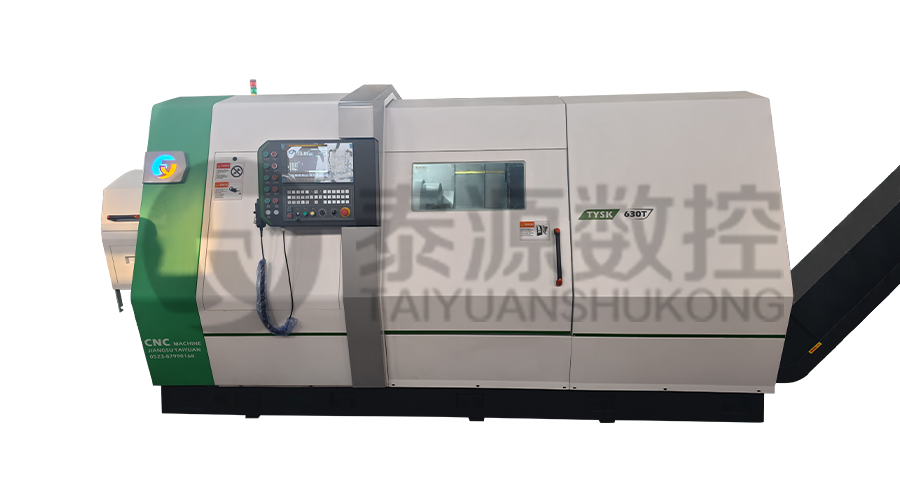 Model:TYSK-630T Drill Pipe, Joint & Coupling Lathe
The machine adopts a FANUC CNC system with stable processing accuracy and flexible programming functions to ensure that the processed parts meet strict industry standards. The high torque and heavy-load design can cope with long-term continuous work and has strong durability.
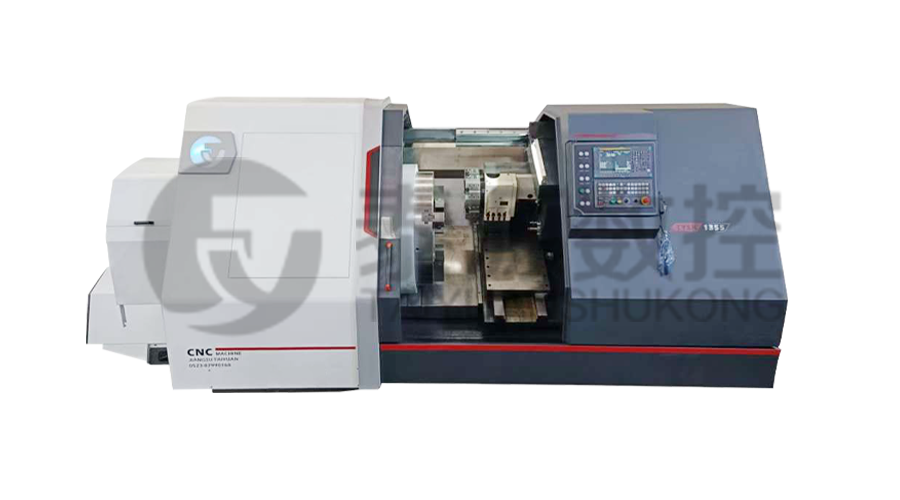 Model:TYSK-1355 Oil Pipe Processing Lathe
The machine adopts a FANUC CNC system with stable processing accuracy and flexible programming functions to ensure that the processed parts meet strict industry standards. The high torque and heavy-load design can cope with long-term continuous work and has strong durability.
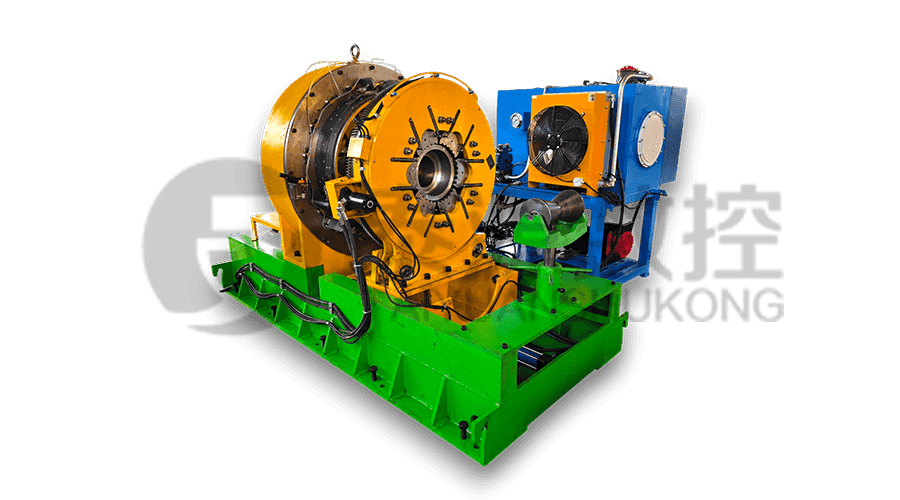 Series:TYSK-NKJ Screw-on machine/Casing and tubing coupling bucking unit
The machine uses a hydraulic motor, mechanical floating mechanism, and real-time torque detection, adapts to material bending, and prevents material deformation. Auxiliary machines are configured to help with semi-automation.
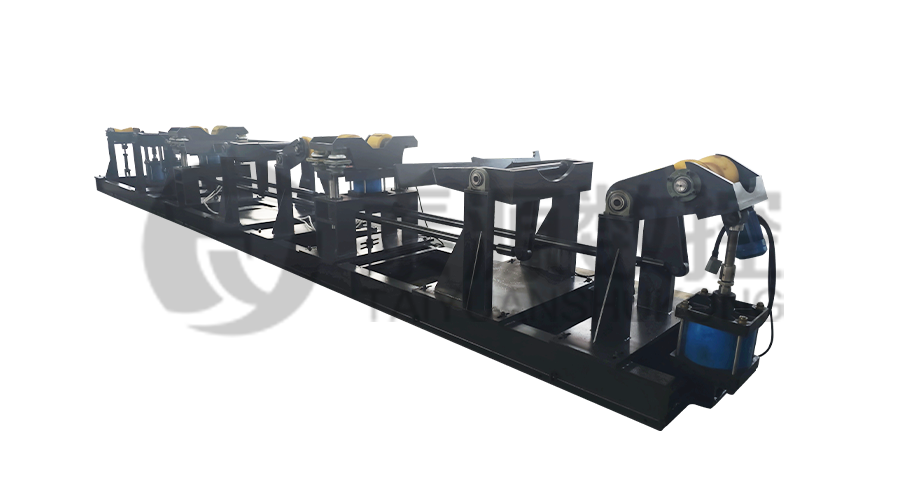 Long, heavy material solutions Automatic loading and unloading mechanism for pipe threading
The special flexible support mode can effectively reduce the influence of workpiece bending on processing and improve the yield. Strictly matching with our pipe threading lathe.
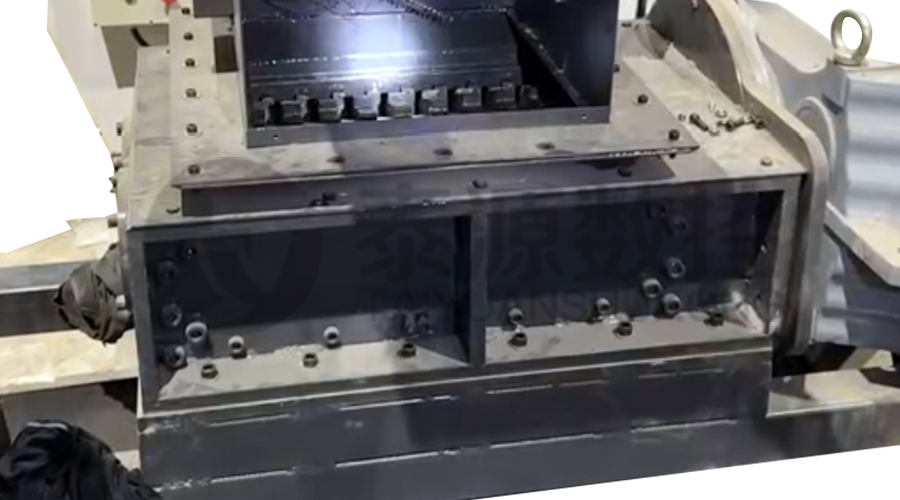 Modular Iron Chip Crusher High strength crusher for chip
The blades are made of high-strength materials and reasonably placed at the exit of the chip extractor to break the clump iron chips.Reduce the risk of rollback and improve waste frame utilization.
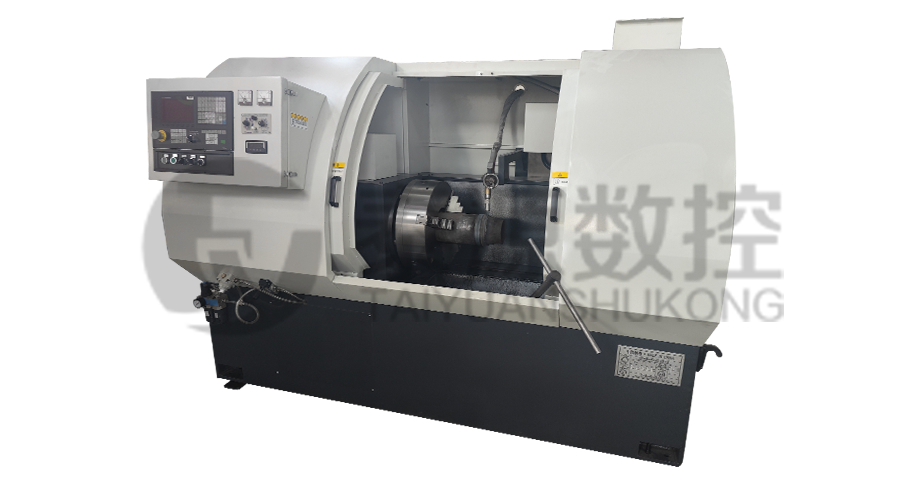 Series:TYSK-HB Semi-automatic wear-resistant band welder
Applicable to ARNCO 100XT, 200XT, 300XT. Support φ1.2-2.0 cored or solid wire surfacing welding.Can be equipped with single gun spray welding and double gun spray welding two ways. Support PLC or CNC system control.
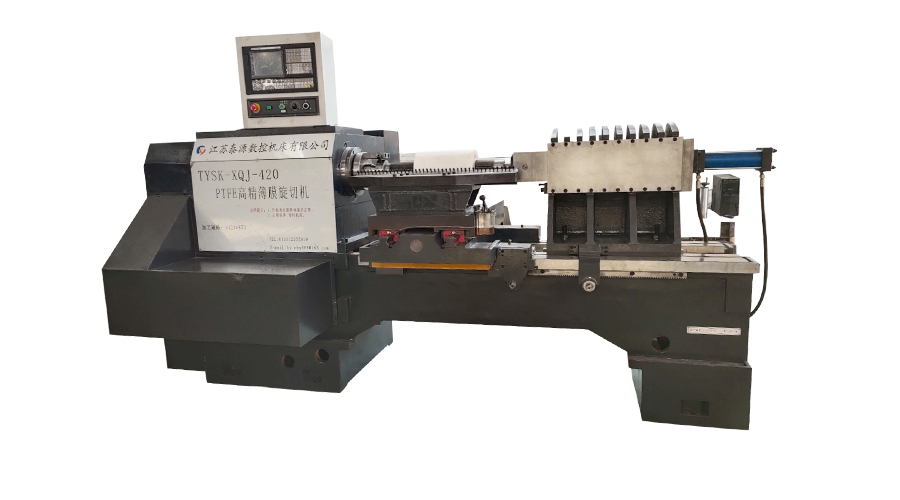 Model:TYSK-XQJ-550 Medium & Large PTFE Film Skiving Machine
Designed to process blanks with a maximum diameter of 550 mm and a maximum length of 1000 mm. We can also customize according to the needs of users. Friendly change speed and thickness with CNC.
