



 English
  عربى
عربى  中文简体
中文简体

Reminder information

Feb 26, 2026
Content
In the rapidly evolving landscape of 2026 industrial manufacturing, the demand for precision in energy infrastructure has reached an all-time high. For facilities engaged in large-scale production, the choice between traditional manual systems and a modern cnc pipe threading machine is no longer just about preference—it is a strategic decision impacting long-term Return on Investment (ROI). Jiangsu Taiyuan CNC Machine Tool Co., Ltd., established in 2003 and located in the national petroleum equipment manufacturing hub of Taixing, has been at the forefront of this technological shift. With a 24,800 ㎡ production base, we specialize in high-precision tools such as the cnc pipe threading machine, designed to meet the rigorous standards of global oil fields and mining operations. This article explores the technical and economic variables that define the ROI of these competing systems in today's market.
The primary differentiator between manual and automated systems lies in the repeatability of geometrical tolerances. A cnc pipe threading machine utilizes closed-loop feedback systems and high-rigidity spindles to ensure that every thread profile—whether API, premium, or specialized—is identical. Manual threading relies heavily on operator skill, which introduces variables in lead accuracy and taper consistency. For precision pipe threading for oil and gas, where high-pressure seals are non-negotiable, the automated precision of CNC systems significantly reduces the rate of rejected parts. Our Coupling CNC pipe threading lathe series is specifically engineered to maintain precision retention over long operational cycles, a feature verified by our ISO quality system certification.
CNC systems eliminate human error by using pre-programmed tool paths, whereas manual systems are prone to variances in feed rate and depth of cut.
| Performance Metric | Manual Threading Lathe | CNC Pipe Threading Machine |
| Lead Accuracy | ± 0.05 mm (Operator dependent) | ± 0.005 mm (Servo controlled) |
| Thread Profile Repeatability | Moderate to Low | Ultra-High |
| Surface Finish (Ra) | 3.2 - 6.3 µm | 0.8 - 1.6 µm |
In high-volume pipeline manufacturing, "time per piece" is the most critical metric for ROI. How to improve pipe threading efficiency often leads back to the reduction of non-cutting time. Modern oil country tubular goods threading requires rapid tool changes and multi-axis movements that manual machines cannot replicate. A cnc pipe threading machine can perform multi-tasking operations, such as simultaneous facing, chamfering, and threading, in a single setup. This specialization and refinement in machine structure allow for a significantly higher production efficiency compared to manual lathes, which require multiple manual adjustments and tool resets for each pipe joint.
Automated systems allow a single operator to manage multiple machines, dramatically lowering the labor cost per unit produced.
| Operational Factor | Manual System | CNC System |
| Operator Requirement | 1 Expert per Machine | 1 Operator per 2-3 Machines |
| Setup Time per Batch | High (Manual measurements) | Low (Program recall) |
| Annual Production Capacity | Standard Baseline | 300% - 400% of Baseline |
Investment in a cnc pipe threading machine is often scrutinized for its initial capital expenditure; however, industrial pipe threading machine maintenance for CNC systems in 2026 has become increasingly predictive. Jiangsu Taiyuan CNC Machine Tool Co., Ltd. builds machines with high driving power and superior rigidity, ensuring fewer failure points. While a manual machine has fewer electronic components, its mechanical wear is often uneven due to inconsistent manual loading. In contrast, cnc pipe threading machine vs manual lathe comparisons for 2026 show that the automated lubrication and centralized cooling systems in CNC lathes extend the life of critical components like the ball screws and guideways, leading to a longer "precision retention time."
The versatility of a cnc pipe threading machine allows manufacturers to pivot between different pipe diameters and thread types—such as large diameter pipe threading equipment for mainlines or smaller diameters for couplings—with minimal downtime. This adaptability is vital for companies serving diverse sectors like petroleum, geology, and chemical industries. As a national quality trustworthy enterprise, our products have been adopted by international giants across the United States, Japan, and Azerbaijan. The ability to handle automatic pipe threading and cutting in one integrated workflow ensures that the payback period for a CNC system is significantly shorter than that of a manual system in any high-volume environment.
When looking at the global peers in 2026, it is clear that specialization and refinement are the keys to growth. While manual lathes may serve niche, low-volume repair shops, they cannot compete with the ROI of a cnc pipe threading machine in a high-volume manufacturing setting. The combination of precision, efficiency, and reduced failure points ensures that CNC technology remains the backbone of the modern energy equipment industry. Jiangsu Taiyuan CNC Machine Tool Co., Ltd. looks forward to sharing this development with you, providing the high-tech tools necessary to build a better, more efficient future.
For high-volume manufacturing, the ROI period typically ranges from 18 to 24 months, driven by labor savings, reduced scrap rates, and significantly higher throughput compared to manual alternatives.
Yes. Specialized CNC lathes, like those produced by Jiangsu Taiyuan, are designed with large spindle bores and heavy-duty beds to handle substantial pipe diameters used in mainline oil and gas transportation.
The most effective way is to integrate automatic pipe threading and cutting systems. Transitioning from separate manual stages to a single-setup CNC process can reduce production time by up to 60%.
While the parts are more sophisticated, the frequency of unplanned downtime is lower. CNC machines feature self-diagnostic tools that allow for predictive maintenance, preventing the costly catastrophic failures common in overworked manual lathes.
With over 20 years of experience and a client base including Baosteel and international oilfields, we provide specialized, refined, and strengthened machine tools that are proven to withstand the harshest industrial environments.
Related Products
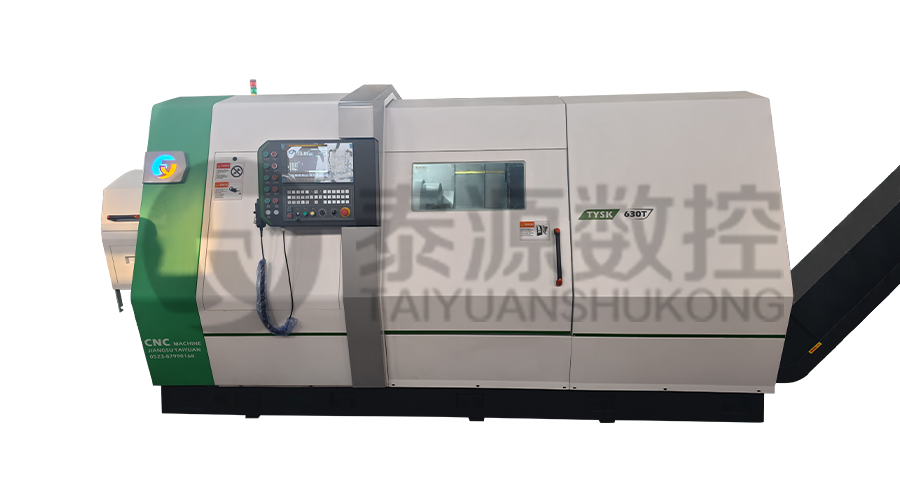 Model:TYSK-630T Drill Pipe, Joint & Coupling Lathe
The machine adopts a FANUC CNC system with stable processing accuracy and flexible programming functions to ensure that the processed parts meet strict industry standards. The high torque and heavy-load design can cope with long-term continuous work and has strong durability.
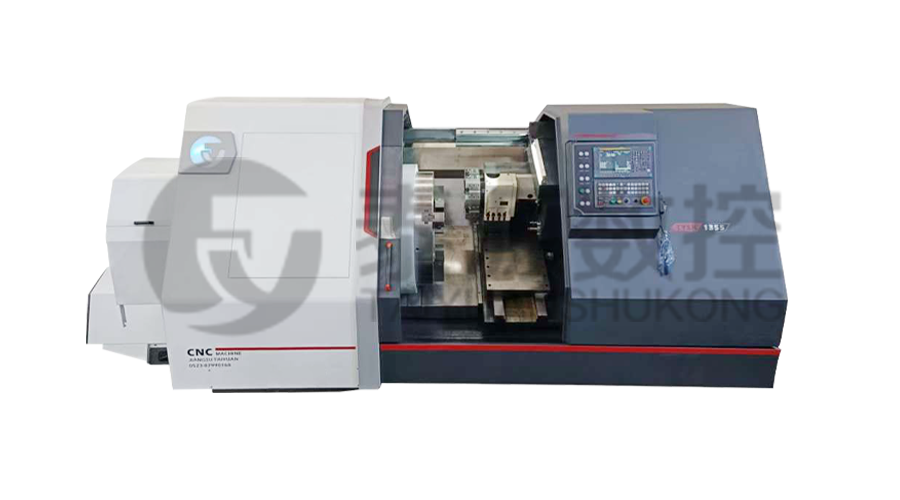 Model:TYSK-1355 Oil Pipe Processing Lathe
The machine adopts a FANUC CNC system with stable processing accuracy and flexible programming functions to ensure that the processed parts meet strict industry standards. The high torque and heavy-load design can cope with long-term continuous work and has strong durability.
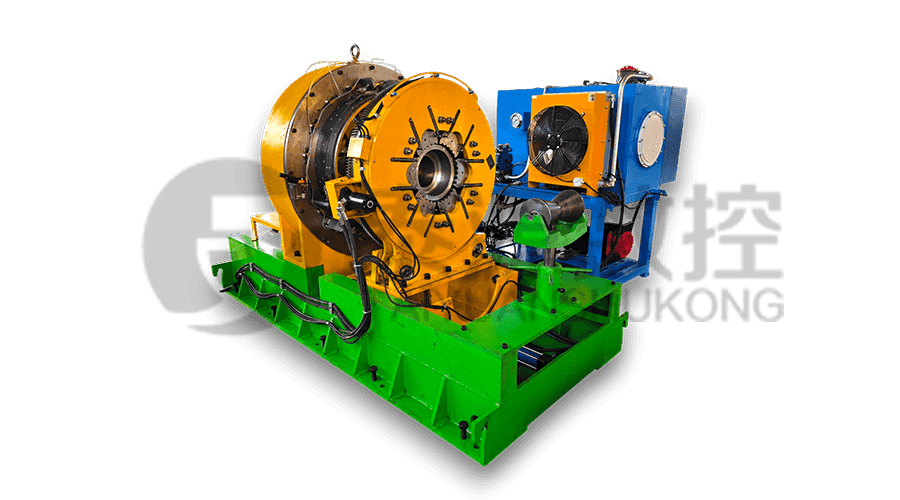 Series:TYSK-NKJ Screw-on machine/Casing and tubing coupling bucking unit
The machine uses a hydraulic motor, mechanical floating mechanism, and real-time torque detection, adapts to material bending, and prevents material deformation. Auxiliary machines are configured to help with semi-automation.
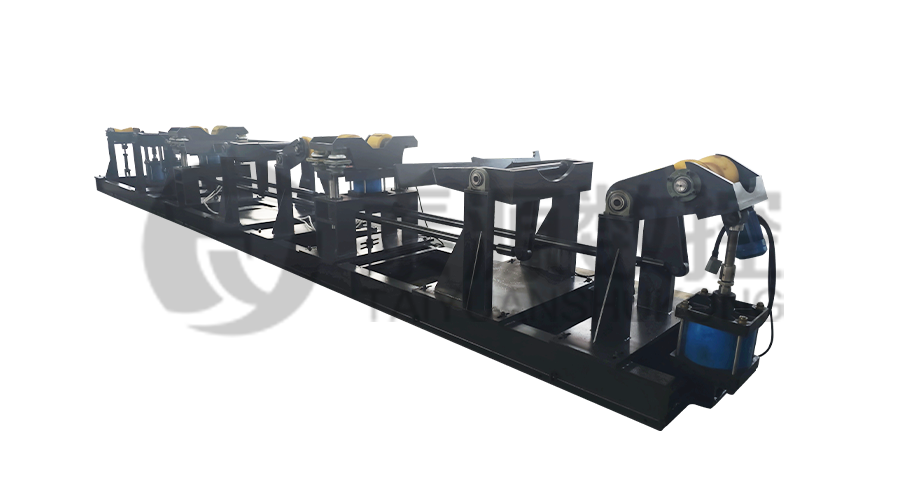 Long, heavy material solutions Automatic loading and unloading mechanism for pipe threading
The special flexible support mode can effectively reduce the influence of workpiece bending on processing and improve the yield. Strictly matching with our pipe threading lathe.
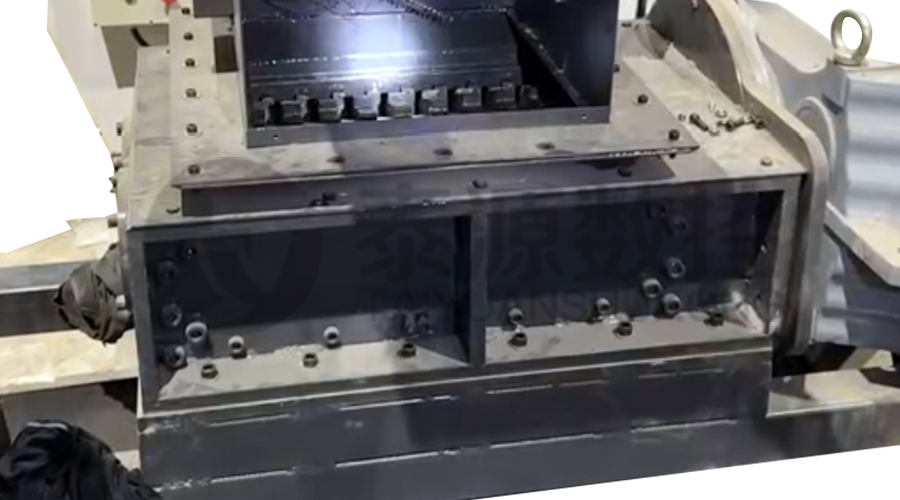 Modular Iron Chip Crusher High strength crusher for chip
The blades are made of high-strength materials and reasonably placed at the exit of the chip extractor to break the clump iron chips.Reduce the risk of rollback and improve waste frame utilization.
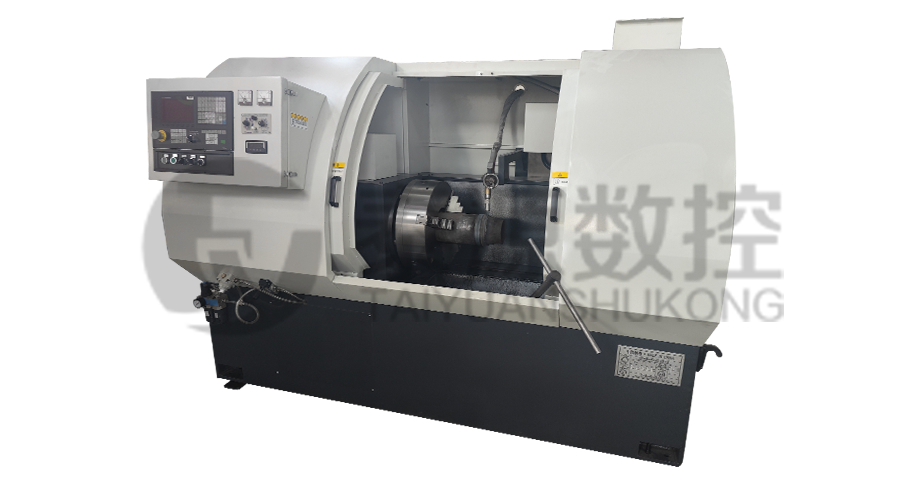 Series:TYSK-HB Semi-automatic wear-resistant band welder
Applicable to ARNCO 100XT, 200XT, 300XT. Support φ1.2-2.0 cored or solid wire surfacing welding.Can be equipped with single gun spray welding and double gun spray welding two ways. Support PLC or CNC system control.
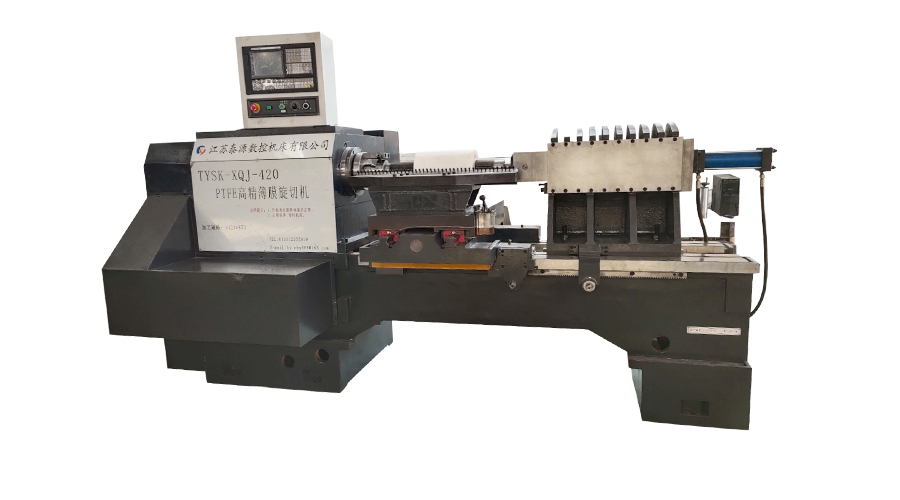 Model:TYSK-XQJ-550 Medium & Large PTFE Film Skiving Machine
Designed to process blanks with a maximum diameter of 550 mm and a maximum length of 1000 mm. We can also customize according to the needs of users. Friendly change speed and thickness with CNC.
