



 English
  عربى
عربى  中文简体
中文简体

Reminder information

Feb 19, 2026
Content
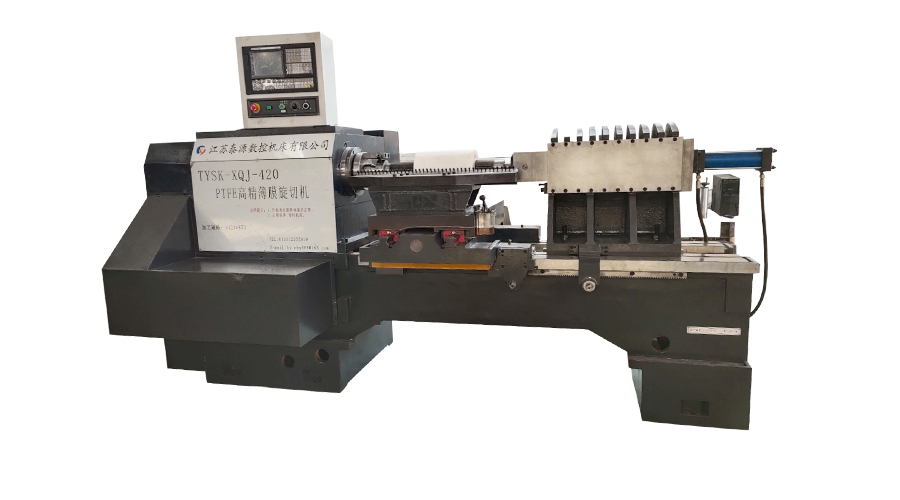
In the high-precision manufacturing of fluoropolymer films, maintaining structural integrity at velocity is the ultimate engineering challenge. A Medium & Large PTFE Film Skiving Machine must handle significant rotational inertia while peeling micron-thin layers from a sintered PTFE billet. Jiangsu Taiyuan CNC Machine Tool Co., Ltd., established in 2003, has dedicated over two decades to developing specialized CNC equipment. As a production base for special machine tools with ISO quality system certification, we understand that "rigidity" and "precision retention" are not just buzzwords—they are the requirements for survival in oilfield, geology, and chemical industries. Central to this performance is the implementation of closed-loop tension control, a system that ensures the film does not stretch, tear, or vary in density during the high-speed winding phase.
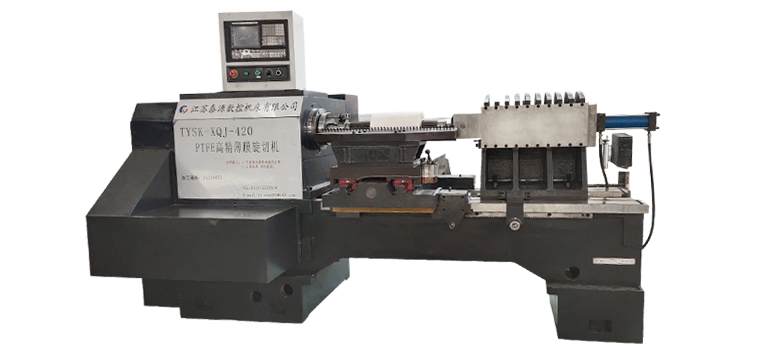
PTFE (Polytetrafluoroethylene) is characterized by a low coefficient of friction but a high susceptibility to deformation under tensile stress. When a Medium & Large PTFE Film Skiving Machine operates at high speeds, the linear velocity at the knife edge fluctuates as the diameter of the PTFE billet decreases. Without a system to improve PTFE film skiving efficiency through real-time adjustment, the film undergoes elastic deformation. Closed-loop tension control utilizes load cells and rotary encoders to feed data back to the CNC controller, allowing for instantaneous torque adjustments in the winding motor. This prevents the "necking" effect, ensuring the PTFE film thickness uniformity remains within professional tolerances across the entire roll.
Open-loop systems rely on pre-calculated estimates of torque based on diameter, whereas closed-loop systems measure actual physical tension to correct errors in real-time.
| Feature | Open-Loop Control | Closed-Loop Control |
| Feedback Mechanism | None (Estimated based on motor speed) | Real-time (Load cells/Encoders) |
| Speed Stability | Moderate (Prone to drifting) | Excellent (Constant adjustment) |
| Material Waste | Higher due to start/stop tension spikes | Minimal (Steady state tension) |
| Precision Capability | Standard industrial grade | High-precision (Micron-level accuracy) |
At Jiangsu Taiyuan CNC Machine Tool Co., Ltd., our machines are engineered for high driving power and superior rigidity. A Medium & Large PTFE Film Skiving Machine must counteract the massive centrifugal forces generated when processing large-diameter billets. One of the common maintenance tips for PTFE skiving machines involves checking the alignment of the spindle under load. When combined with closed-loop tension, the high rigidity of our CNC pipe threading lathe-derived technology ensures that vibrations do not translate into "chatter marks" on the film surface. This is particularly critical for skived PTFE film applications in electronics, where even microscopic surface variations can alter dielectric properties.
While lightweight machines suffer from harmonic resonance at high RPMs, the heavy-duty construction of a Taiyuan machine provides the dampening required for high-speed precision.
| Mechanical Metric | Standard Skiving Equipment | Taiyuan High-Rigidity Machine |
| Vibration Dampening | Low (Uses lightweight alloy) | High (Reinforced cast iron base) |
| Precision Retention Time | 12-24 Months | 5-10 Years (Industrial standard) |
| Maximum Billet Weight | Limited | Heavy-duty (Optimized for Large billets) |
In chemical and filtration industries, the porosity of the PTFE film is a critical functional parameter. Engineers must ask: how to optimize PTFE film skiving parameters for density consistency? If the tension is inconsistent, the crystalline structure of the PTFE can be pulled, altering the pore size of the film. Closed-loop control ensures that the take-up reel exerts the exact same force on the film from the first meter to the last. This specialized control is why our machinery is favored by international enterprises in the United States, Japan, and South Korea, where "specialization and refinement" are the benchmarks of quality.
High-speed operation without tension control is a safety hazard. If the film snaps at high velocity, it can lead to significant downtime and potential machine damage. The automated response of a closed-loop system can trigger an emergency stop within milliseconds of detecting a tension drop. This level of automation is why our equipment is widely used in national petroleum equipment manufacturing and by major steel groups like Baosteel and Baotou Steel. By choosing a Medium & Large PTFE Film Skiving Machine with integrated safety loops, manufacturers achieve both high production efficiency and occupational safety.
Closed-loop tension control is not merely an "add-on"—it is the fundamental technology that enables high-speed, high-precision output for modern industrial needs. Jiangsu Taiyuan CNC Machine Tool Co., Ltd. continues to push the boundaries of energy equipment and special machine tools. By focusing on specialization and refinement, we provide the global peer market with the rigidity and control necessary to create the next generation of high-performance PTFE products.
Typically, these machines are capable of producing films ranging from 0.03mm to 3.0mm, depending on the blade precision and the billet material consistency.
Optimization requires adjusting the feed rate relative to the spindle RPM and setting the closed-loop tension setpoint to 15-20% of the material's yield strength to avoid permanent elongation.
CNC integration allows for automatic compensation as the billet diameter decreases, ensuring a constant linear speed and uniform thickness that manual operation cannot replicate.
Yes, our high-rigidity structures and precision retention times ensure the surface finish and thickness uniformity required for high-frequency PCB substrates and insulation layers.
Focus on blade sharpness, guide rail lubrication, and the calibration of the tension load cells every six months to maintain the integrity of the closed-loop feedback.
Related Products
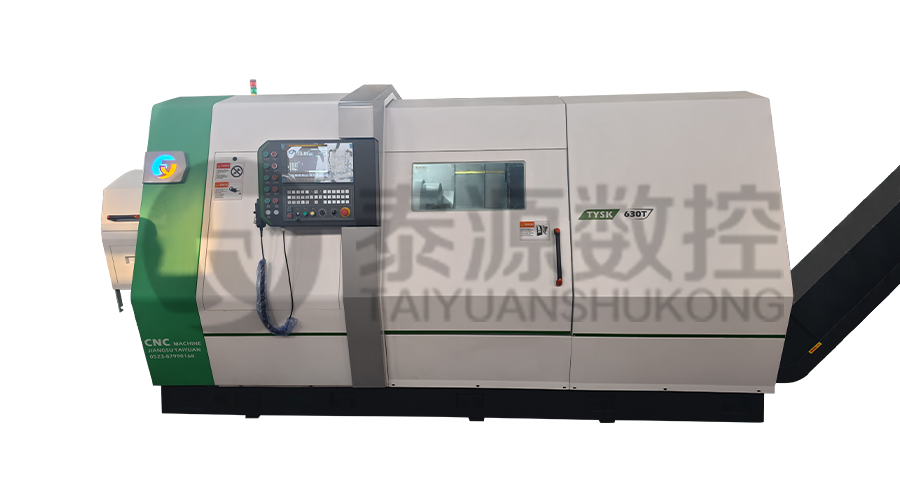 Model:TYSK-630T Drill Pipe, Joint & Coupling Lathe
The machine adopts a FANUC CNC system with stable processing accuracy and flexible programming functions to ensure that the processed parts meet strict industry standards. The high torque and heavy-load design can cope with long-term continuous work and has strong durability.
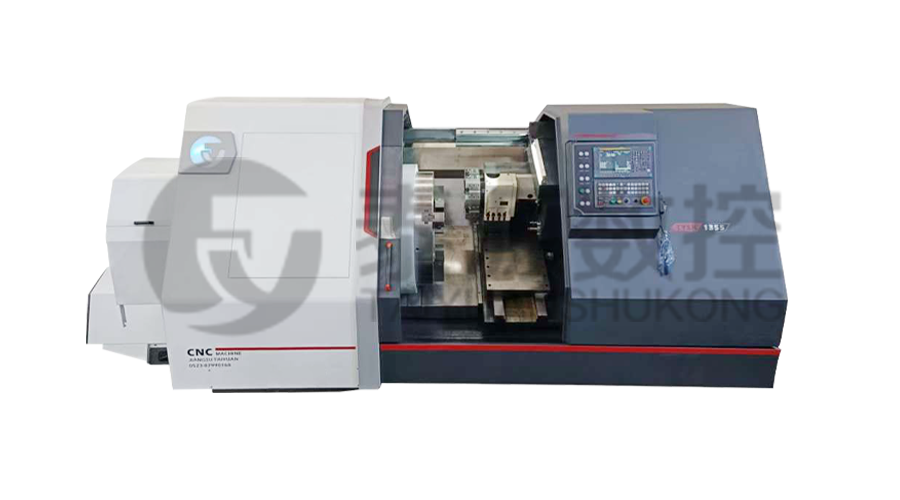 Model:TYSK-1355 Oil Pipe Processing Lathe
The machine adopts a FANUC CNC system with stable processing accuracy and flexible programming functions to ensure that the processed parts meet strict industry standards. The high torque and heavy-load design can cope with long-term continuous work and has strong durability.
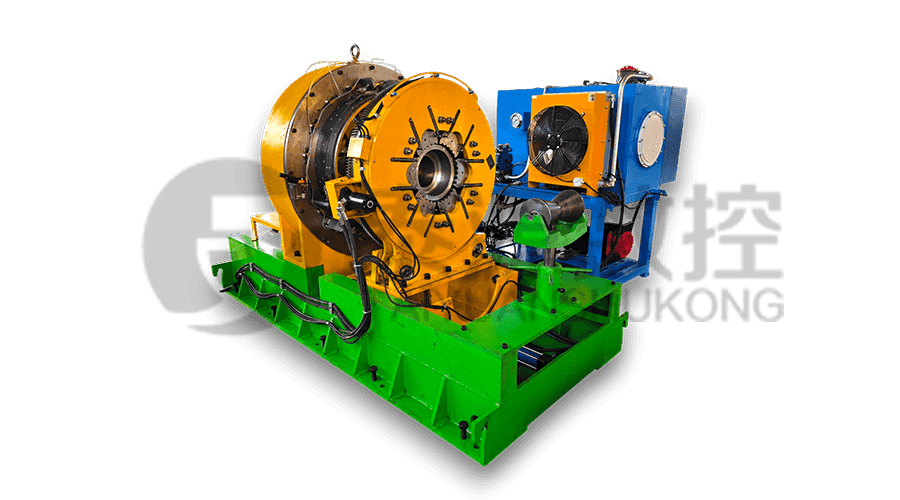 Series:TYSK-NKJ Screw-on machine/Casing and tubing coupling bucking unit
The machine uses a hydraulic motor, mechanical floating mechanism, and real-time torque detection, adapts to material bending, and prevents material deformation. Auxiliary machines are configured to help with semi-automation.
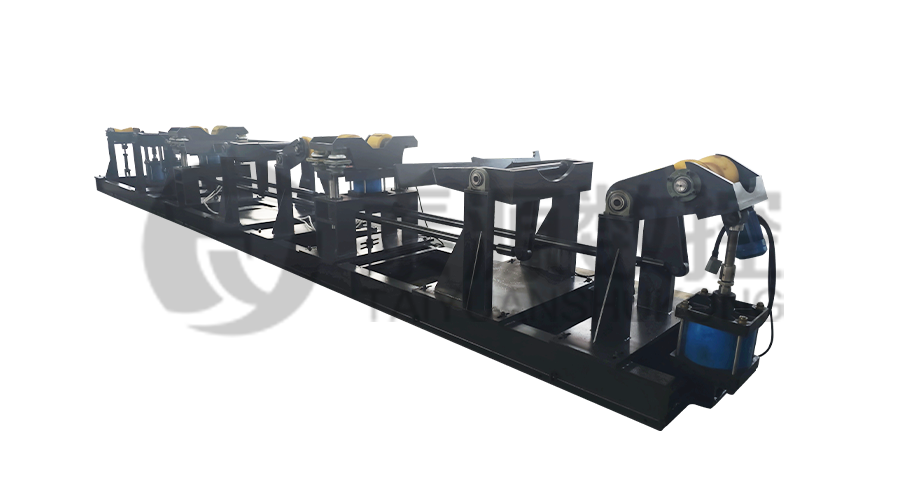 Long, heavy material solutions Automatic loading and unloading mechanism for pipe threading
The special flexible support mode can effectively reduce the influence of workpiece bending on processing and improve the yield. Strictly matching with our pipe threading lathe.
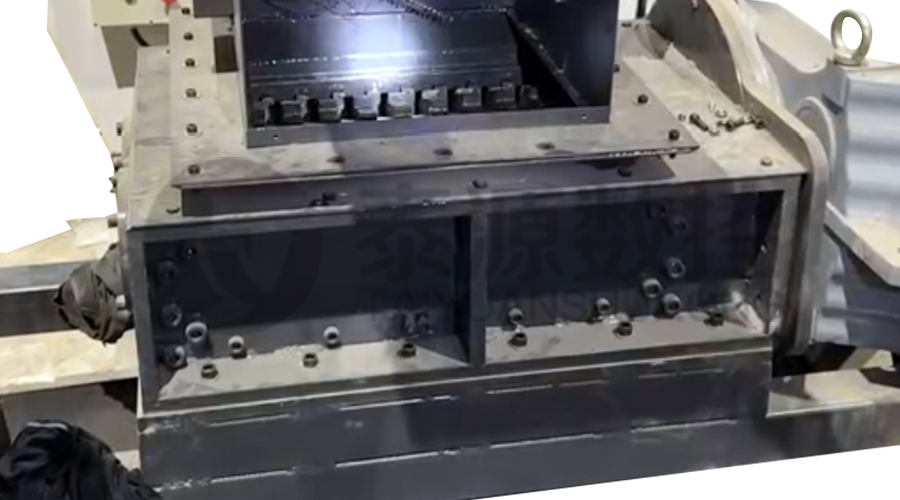 Modular Iron Chip Crusher High strength crusher for chip
The blades are made of high-strength materials and reasonably placed at the exit of the chip extractor to break the clump iron chips.Reduce the risk of rollback and improve waste frame utilization.
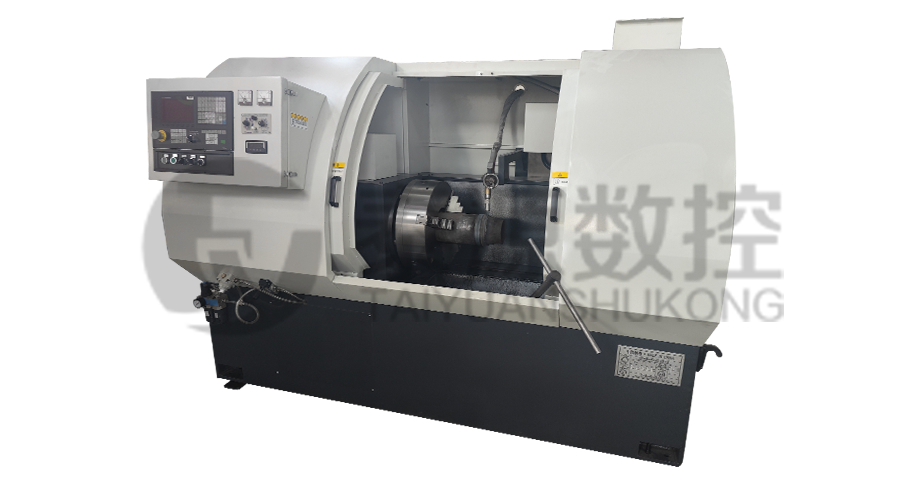 Series:TYSK-HB Semi-automatic wear-resistant band welder
Applicable to ARNCO 100XT, 200XT, 300XT. Support φ1.2-2.0 cored or solid wire surfacing welding.Can be equipped with single gun spray welding and double gun spray welding two ways. Support PLC or CNC system control.
Model:TYSK-XQJ-550 Medium & Large PTFE Film Skiving Machine
Designed to process blanks with a maximum diameter of 550 mm and a maximum length of 1000 mm. We can also customize according to the needs of users. Friendly change speed and thickness with CNC.
