



 English
  عربى
عربى  中文简体
中文简体

Reminder information

Apr 20, 2026
Content
The evolution of fluoropolymer processing demands more than mechanical precision; it requires systemic connectivity. As global manufacturing shifts toward smart factories, understanding how a Medium & Large PTFE Film Skiving Machine interfaces with Industrial Internet of Things (IIoT) protocols is essential for maintaining competitive yield rates and material consistency.
Jiangsu Taiyuan CNC Machine Tool Co., Ltd., established in 2003 and located in the East Industrial Park of Taixing City, brings over two decades of expertise in specialized petroleum and chemical equipment to the fluoropolymer industry. Our production base, spanning 24,800 square meters, focuses on high-rigidity structures that are inherently compatible with high-frequency data sampling. For operators analyzing Medium & Large PTFE Film Skiving Machine vs manual skiving lathes, the primary differentiator is the integration of digital twin capabilities that synchronize with centralized ERP systems.
Implementing IoT in heavy-duty machinery requires robust cybersecurity. The integration process involves isolating the Machine Control Unit (MCU) from the public internet using industrial-grade firewalls while allowing outbound telemetry data.
| Protocol Type | Application Layer | Data Transfer Rate |
| MQTT | Cloud Telemetry | Low Latency/Small Packet |
| OPC UA | M2M Communication | High Security/Object-Oriented |
| EtherCAT | Real-time Motion Control | Sub-millisecond Synchrony |
Q1: Does the IoT integration affect the real-time processing speed of the CNC? A1: No. By using a decoupled architecture where the PLC handles motion control and a separate gateway handles IoT data, there is zero impact on the micro-second execution of skiving paths.
Q2: Can I retrofit Industry 4.0 capabilities to an older Jiangsu Taiyuan skiving machine? A2: Yes, provided the control system supports digital output. We can install external sensor arrays and an IoT gateway to bridge the gap to modern monitoring systems.
Q3: What specific sensors are required for 0.03mm thickness monitoring? A3: High-precision laser displacement sensors or capacitive thickness gauges with sub-micron resolution are integrated via RS485 or Analog-to-Digital converters.
Q4: How does the machine handle data loss during network outages? A4: Our systems feature local "Store and Forward" buffers that cache up to 72 hours of production data, automatically syncing once the connection is restored.
Q5: Are the data formats compatible with SAP or Microsoft Azure? A5: Yes, the system outputs JSON or CSV formats via MQTT/REST API, which are natively supported by major cloud and ERP platforms.
Related Products
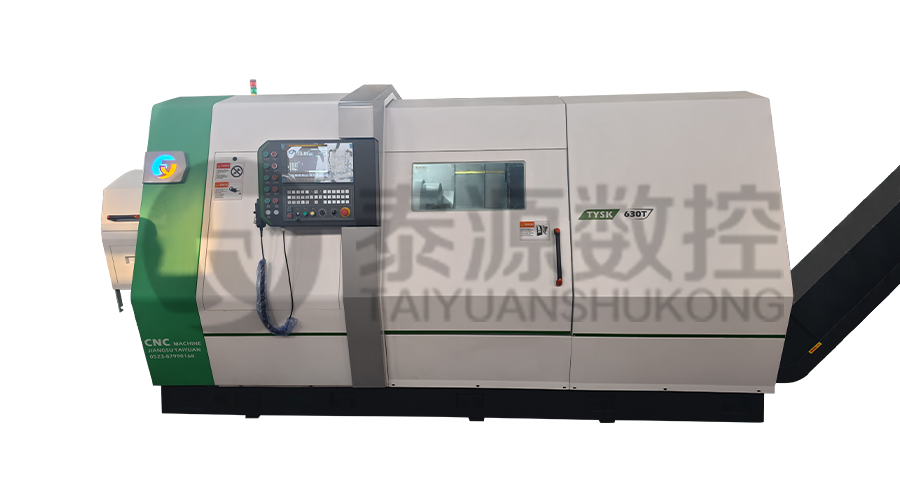 Model:TYSK-630T Drill Pipe, Joint & Coupling Lathe
The machine adopts a FANUC CNC system with stable processing accuracy and flexible programming functions to ensure that the processed parts meet strict industry standards. The high torque and heavy-load design can cope with long-term continuous work and has strong durability.
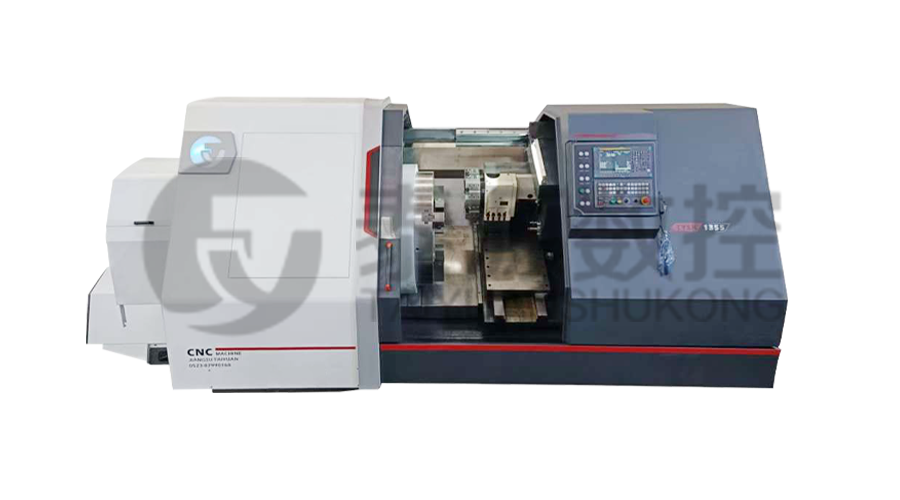 Model:TYSK-1355 Oil Pipe Processing Lathe
The machine adopts a FANUC CNC system with stable processing accuracy and flexible programming functions to ensure that the processed parts meet strict industry standards. The high torque and heavy-load design can cope with long-term continuous work and has strong durability.
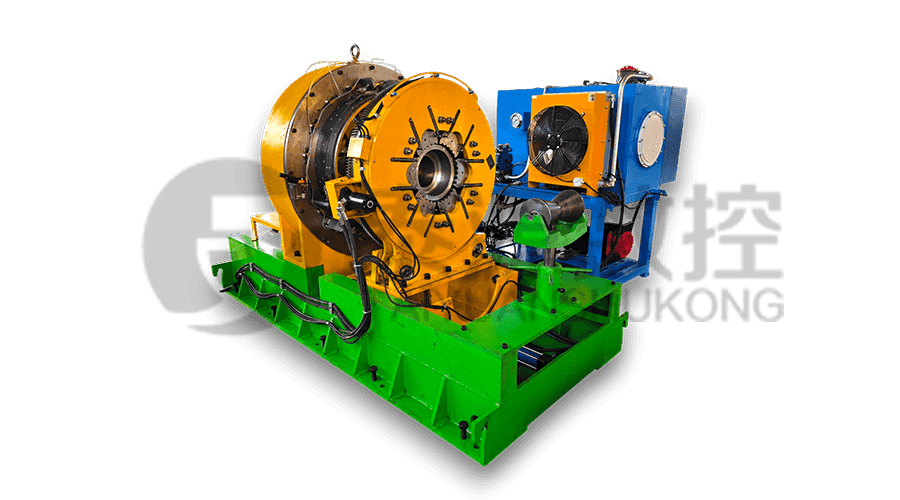 Series:TYSK-NKJ Screw-on machine/Casing and tubing coupling bucking unit
The machine uses a hydraulic motor, mechanical floating mechanism, and real-time torque detection, adapts to material bending, and prevents material deformation. Auxiliary machines are configured to help with semi-automation.
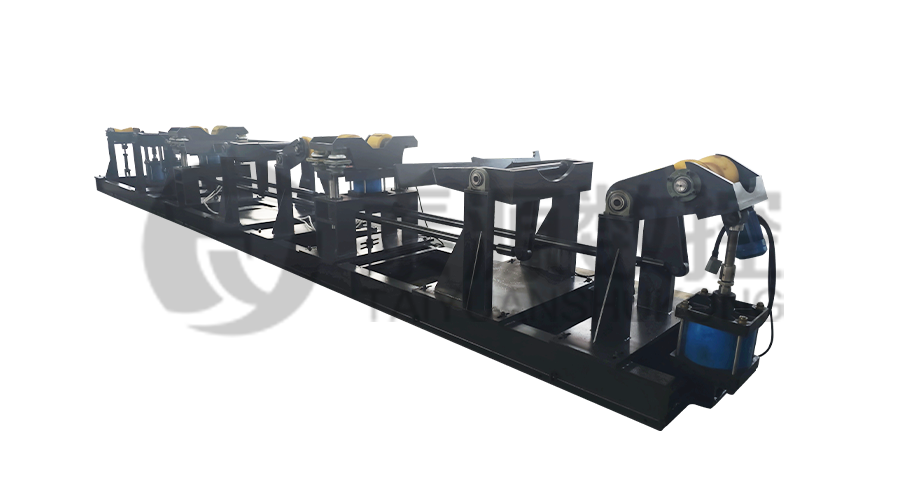 Long, heavy material solutions Automatic loading and unloading mechanism for pipe threading
The special flexible support mode can effectively reduce the influence of workpiece bending on processing and improve the yield. Strictly matching with our pipe threading lathe.
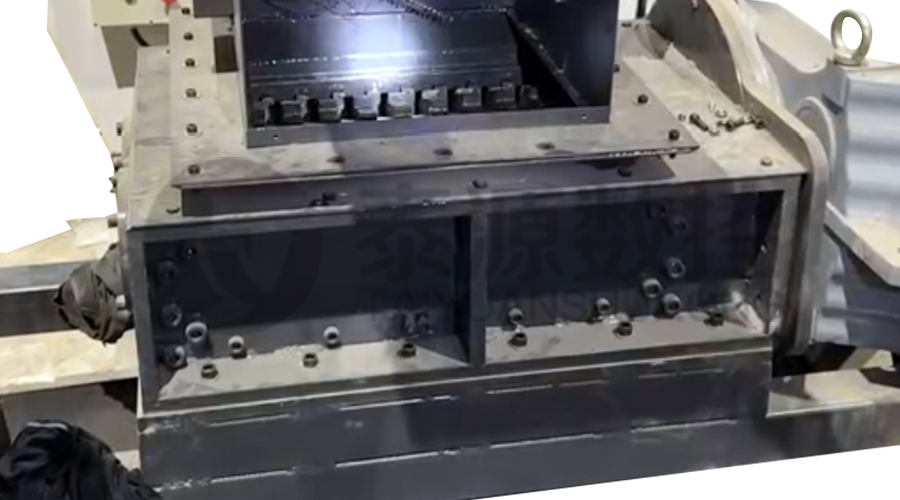 Modular Iron Chip Crusher High strength crusher for chip
The blades are made of high-strength materials and reasonably placed at the exit of the chip extractor to break the clump iron chips.Reduce the risk of rollback and improve waste frame utilization.
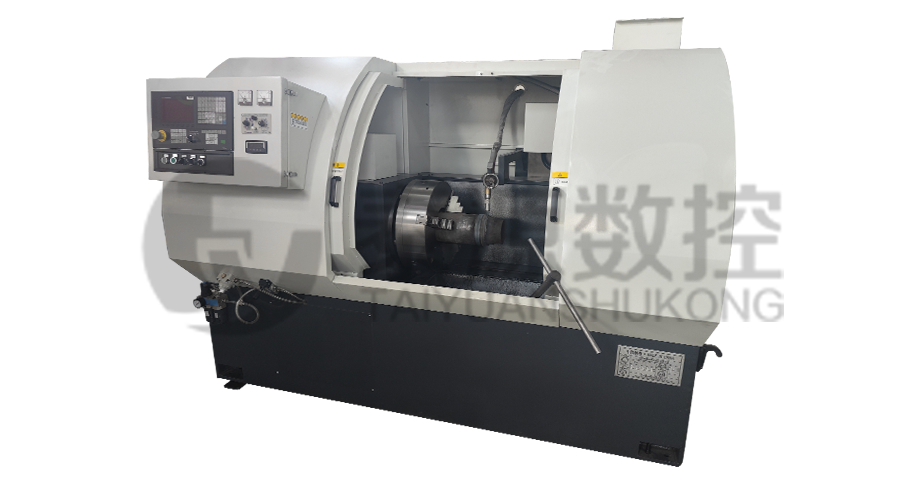 Series:TYSK-HB Semi-automatic wear-resistant band welder
Applicable to ARNCO 100XT, 200XT, 300XT. Support φ1.2-2.0 cored or solid wire surfacing welding.Can be equipped with single gun spray welding and double gun spray welding two ways. Support PLC or CNC system control.
Model:TYSK-XQJ-550 Medium & Large PTFE Film Skiving Machine
Designed to process blanks with a maximum diameter of 550 mm and a maximum length of 1000 mm. We can also customize according to the needs of users. Friendly change speed and thickness with CNC.
