



 English
  عربى
عربى  中文简体
中文简体

Reminder information

Mar 13, 2026
Content
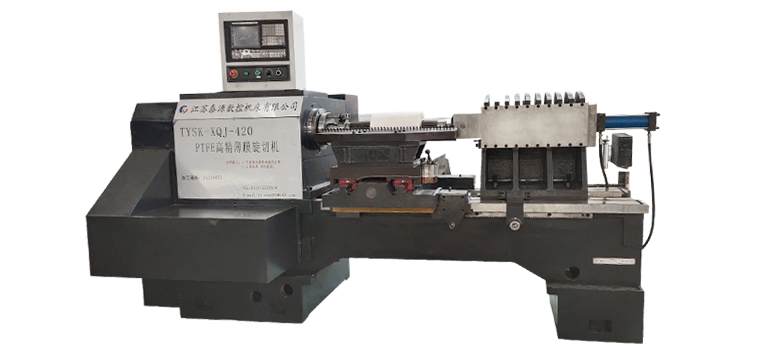
In the high-performance plastics industry, the efficiency of converting expensive raw materials into usable films is a critical metric for profitability. Processing filled-PTFE (Polytetrafluoroethylene) billets—which often contain glass fiber, carbon, or bronze—presents unique challenges due to the abrasive nature of the fillers and the high cost of the feedstock. A Medium & Large PTFE Film Skiving Machine is specifically engineered to handle these complexities with high rigidity and precision. Jiangsu Taiyuan CNC Machine Tool Co., Ltd., established in 2003 and a national quality trustworthy enterprise, has dedicated decades to the production of specialized CNC machine tools. Our expertise in high-tech, high-driving power equipment ensures that our Medium & Large PTFE Film Skiving Machine remains a benchmark for precision retention and production efficiency in the chemical and geology sectors.
The primary source of material waste in traditional skiving is "thickness variation," which often leads to out-of-spec films that must be scrapped. A Medium & Large PTFE Film Skiving Machine utilizes advanced CNC linear guides and servo-driven blade feeding systems to maintain PTFE film skiving machine precision at the micron level. When comparing CNC vs manual PTFE skiving, manual systems often suffer from vibration-induced ripples, whereas CNC systems provide consistent mechanical pressure. By achieving ultra-thin skived PTFE film thickness tolerances, manufacturers can ensure that every millimeter of the filled-PTFE billet is converted into high-quality film, significantly improving the filled-PTFE material waste reduction ratio. High rigidity in the machine frame, a hallmark of Jiangsu Taiyuan's design, prevents the blade from "chattering" against abrasive filled materials.
| Operational Parameter | Traditional Skiving Methods | CNC PTFE Film Skiving Machine |
| Thickness Tolerance | ±0.05 mm to ±0.1 mm | ±0.005 mm to ±0.01 mm |
| Surface Finish (Ra) | Inconsistent | High-precision smooth finish |
| Billet Utilization | 85% - 90% | Up to 98% (Excluding core) |
Filled-PTFE billets, especially those containing carbon or glass, are highly abrasive and can dull standard blades rapidly. Dull blades increase friction, leading to "heat buildup" that can deform the film and increase waste. A Medium & Large PTFE Film Skiving Machine supports specialized tungsten carbide or diamond-tipped blades. Understanding how a PTFE skiving machine works with filled materials involves optimizing the rake angle to ensure a clean cut. The best PTFE skiving machine for filled materials must feature an adjustable blade holder that maintains the optimal angle of attack as the billet diameter decreases. This PTFE skiving machine blade maintenance capability ensures that the cut remains sharp, preventing the tearing or shredding of the expensive filled-PTFE billet skiving feedstock.
| Material Type | Standard PTFE Billet | Filled-PTFE Billet (Bronze/Glass) |
| Blade Requirement | High-speed Steel | Tungsten Carbide / Reinforced Alloys |
| Feed Pressure | Standard | Higher (Requires high driving power) |
| Heat Management | Passive | Active (Controlled by precision CNC) |
The "end-of-billet" waste is often where the most material is lost. An automated PTFE film skiving machine is designed with high-precision spindles that can hold the billet securely even at minimal diameters. By reducing the "minimum core size," a Medium & Large PTFE Film Skiving Machine allows for more film to be extracted from each billet. Furthermore, skiving PTFE film for industrial applications often requires long, continuous lengths. Any break in the film due to machine instability results in "short rolls" that are harder to sell. The industrial PTFE skiving machine features found in Jiangsu Taiyuan equipment—such as few failure points and long precision retention—ensure continuous production runs, minimizing the startup and shutdown waste associated with less reliable machines.
In conclusion, a Medium & Large PTFE Film Skiving Machine is an indispensable tool for manufacturers looking to achieve filled-PTFE material waste reduction. Through superior PTFE film skiving machine precision, optimized blade management, and robust mechanical design, these machines transform expensive billets into high-value films with minimal loss. Jiangsu Taiyuan CNC Machine Tool Co., Ltd. continues to adhere to the concept of "specialization, refinement and strengthening," providing the energy equipment and chemical industries with reliable, high-tech solutions to create a more efficient and sustainable future.
While specific models vary, our medium to large units are designed to accommodate billets with diameters ranging from 500mm to over 1000mm, ensuring versatility for various industrial scales.
Filled materials have varying densities. CNC control allows the machine to maintain a constant surface speed and feed rate, which is impossible to achieve manually, thus preventing thickness fluctuations.
The machine allows for programmable logic control (PLC) settings where operators can input the filler type. The industrial PTFE skiving machine features then adjust the torque and speed parameters to match the material's resistance.
High rigidity, like that found in Jiangsu Taiyuan tools, prevents structural deflection. When skiving skived PTFE film for industrial applications, even a micron of deflection can cause "chatter marks," rendering the film useless.
Look for machines with GBT/ISO certification, high-driving power, and specific mentions of "precision retention time." A machine's ability to maintain its accuracy over thousands of hours is the key to reducing long-term waste.
Related Products
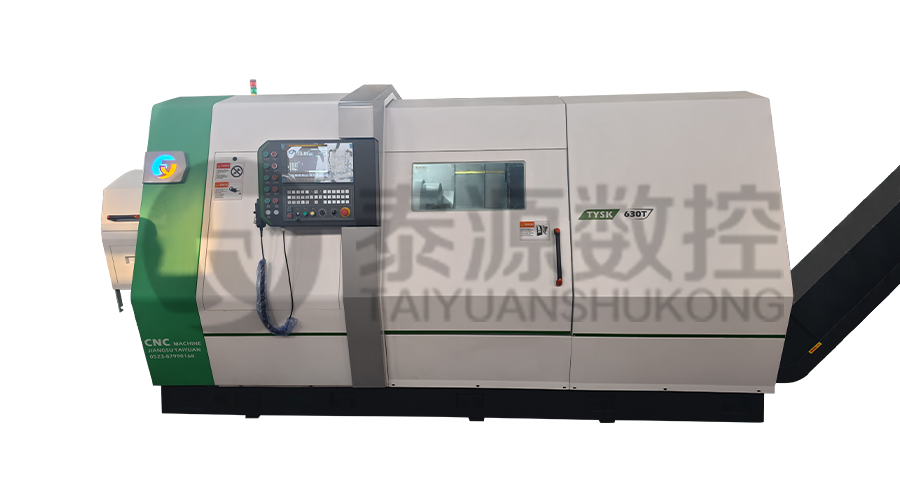 Model:TYSK-630T Drill Pipe, Joint & Coupling Lathe
The machine adopts a FANUC CNC system with stable processing accuracy and flexible programming functions to ensure that the processed parts meet strict industry standards. The high torque and heavy-load design can cope with long-term continuous work and has strong durability.
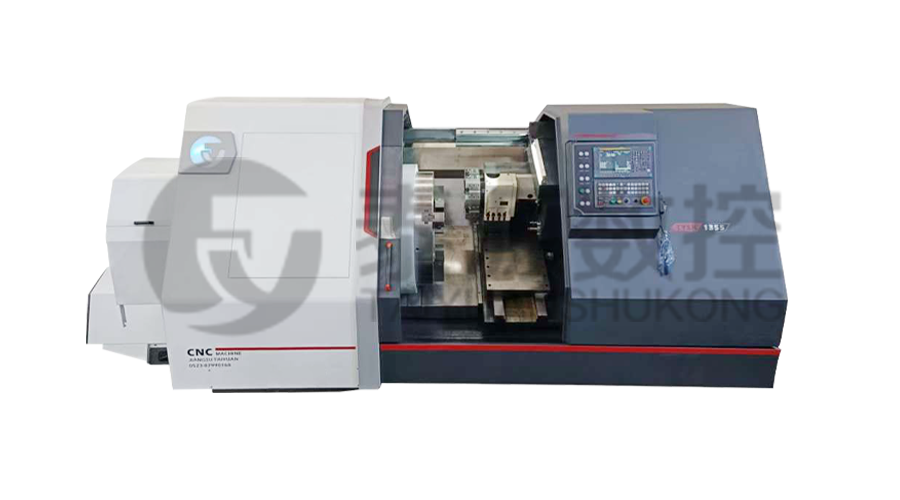 Model:TYSK-1355 Oil Pipe Processing Lathe
The machine adopts a FANUC CNC system with stable processing accuracy and flexible programming functions to ensure that the processed parts meet strict industry standards. The high torque and heavy-load design can cope with long-term continuous work and has strong durability.
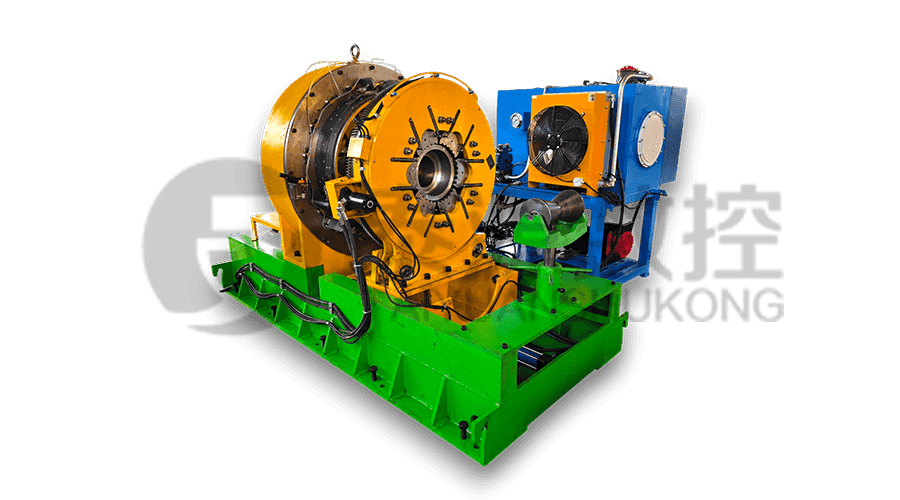 Series:TYSK-NKJ Screw-on machine/Casing and tubing coupling bucking unit
The machine uses a hydraulic motor, mechanical floating mechanism, and real-time torque detection, adapts to material bending, and prevents material deformation. Auxiliary machines are configured to help with semi-automation.
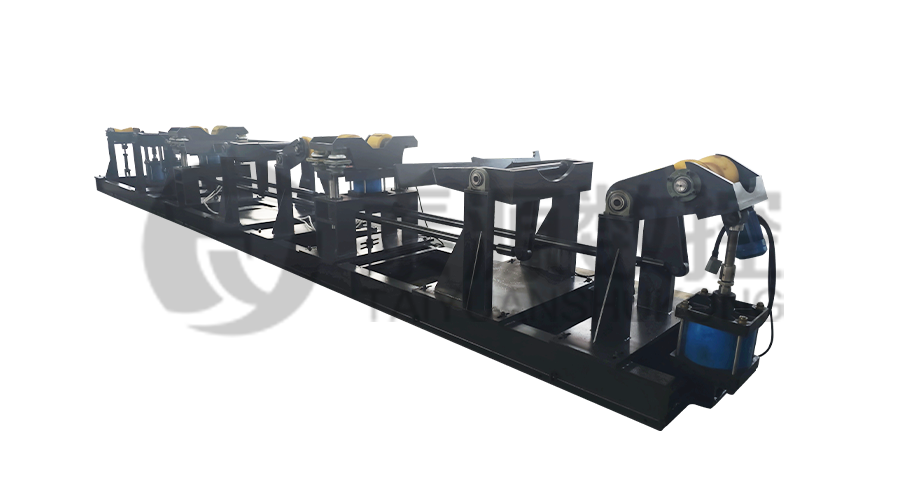 Long, heavy material solutions Automatic loading and unloading mechanism for pipe threading
The special flexible support mode can effectively reduce the influence of workpiece bending on processing and improve the yield. Strictly matching with our pipe threading lathe.
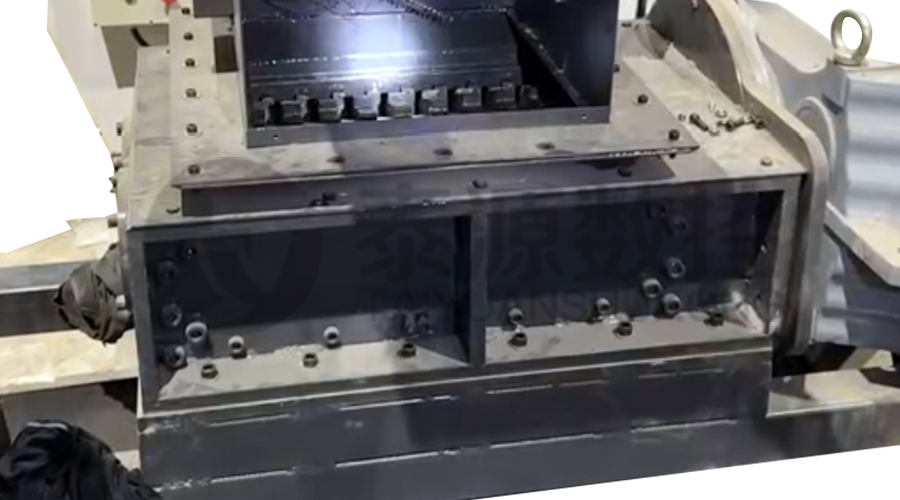 Modular Iron Chip Crusher High strength crusher for chip
The blades are made of high-strength materials and reasonably placed at the exit of the chip extractor to break the clump iron chips.Reduce the risk of rollback and improve waste frame utilization.
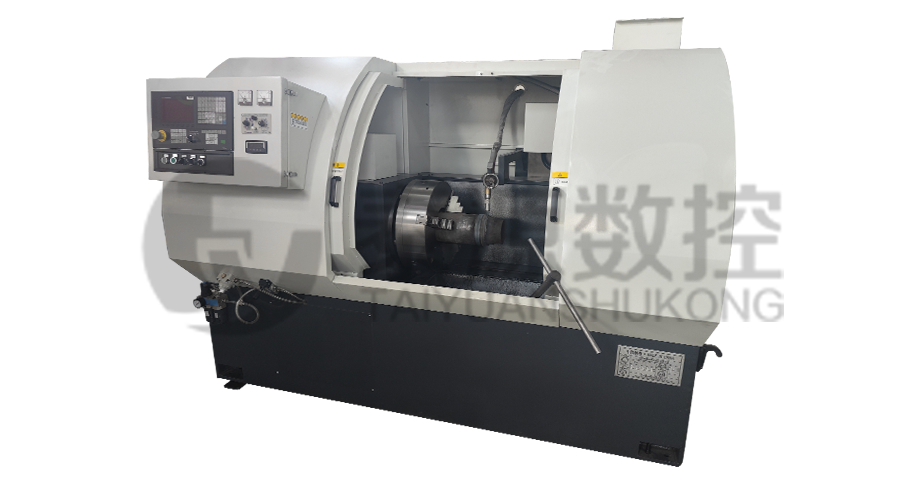 Series:TYSK-HB Semi-automatic wear-resistant band welder
Applicable to ARNCO 100XT, 200XT, 300XT. Support φ1.2-2.0 cored or solid wire surfacing welding.Can be equipped with single gun spray welding and double gun spray welding two ways. Support PLC or CNC system control.
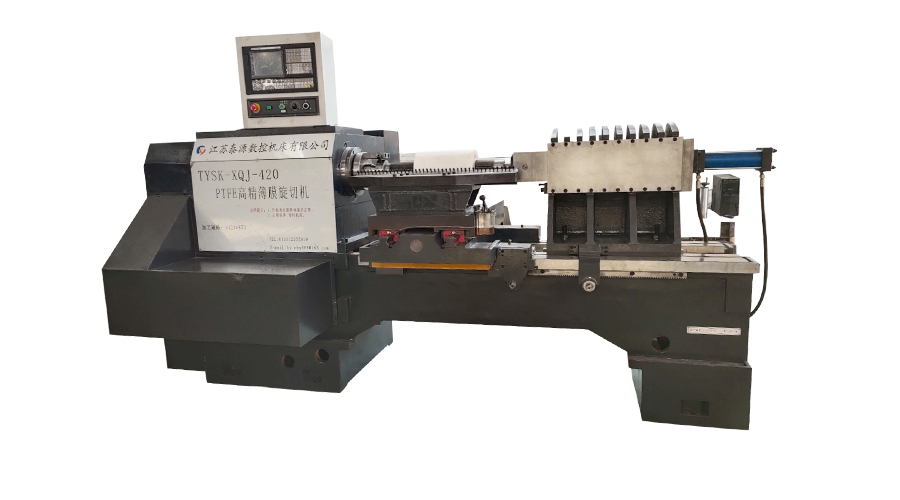 Model:TYSK-XQJ-550 Medium & Large PTFE Film Skiving Machine
Designed to process blanks with a maximum diameter of 550 mm and a maximum length of 1000 mm. We can also customize according to the needs of users. Friendly change speed and thickness with CNC.
