



 English
  عربى
عربى  中文简体
中文简体

Reminder information

Mar 06, 2026
Content
In the demanding environment of petroleum exploration, the structural integrity of drill string components is paramount. Hardbanding, the process of applying a wear-resistant alloy to tool joints, is the primary defense against abrasive downhole wear. A semi-automatic wear-resistant band welder is engineered to bridge the gap between manual inconsistency and the high capital cost of fully robotic systems. Jiangsu Taiyuan CNC Machine Tool Co., Ltd., established in 2003, has become a specialized production base for petroleum equipment, offering advanced semi-automatic wear-resistant band welder solutions. By integrating precise CNC motion control with stabilized welding parameters, our equipment ensures that the applied hardband achieves a uniform Rockwell hardness (HRC) while eliminating the risk of hydrogen-induced cracking or thermal stress fractures.
The primary factor in achieving uniform hardness is the consistency of the weld bead geometry. A semi-automatic wear-resistant band welder utilizes a synchronized rotation of the drill pipe and lateral movement of the welding torch to maintain a constant "surface speed." Unlike manual application, where travel speed fluctuations lead to localized heat spikes or cooling troughs, our automated hardbanding machine for drill pipes ensures a precise overlap of each weld pass. This prevents "soft spots" (low hardness zones) and ensures the wear-resistant alloy surfacing on tool joints remains structurally homogeneous. When comparing manual vs semi-automatic hardbanding, the semi-automatic system provides a significantly tighter tolerance on bead height and width, which is essential for maintaining the drill pipe tool joint wear protection standards required in deep-well drilling.
| Parameters | Manual Hardbanding | Semi-Automatic Wear-Resistant Band Welder |
| Travel Speed Variance | High (Human error dependent) | Low (CNC controlled <1%) |
| Bead Overlap Uniformity | Irregular (Potential for soft spots) | Precise (Ensures uniform hardness) |
| Hardness Deviation | ±5 HRC | ±1.5 HRC |
Crack-free results are highly dependent on the "Preheat" and "Interpass Temperature" management. A semi-automatic wear-resistant band welder allows for the integration of induction or flame preheating systems that work in tandem with the welding cycle. Preventing cracks in hardbanding drill pipes requires maintaining a specific temperature range to allow for the slow diffusion of hydrogen and the relief of internal residual stresses. The best welding flux for wear-resistant bands must be matched with the semi-automatic wear-resistant band welder settings to ensure a smooth transition between the base metal and the alloy. For high-carbon alloy steels used in drill collars, the hardbanding cooling rate control provided by our specialized machine tools—certified by ISO and GBT standards—is critical to avoid the formation of brittle martensite, which is the leading cause of drill pipe hardbanding failures.
The hardness of wear-resistant bands on drill pipes is a function of the chemical composition of the wire and its dilution with the parent metal. A hardbanding equipment for oilfield services must maintain a stable arc length to control the "dilution ratio." If the arc is too long, too much of the base metal melts into the alloy, lowering the final hardness. Our semi-automatic wear-resistant band welder features advanced arc voltage sensing (AVC) to keep this ratio optimized. This technology is widely utilized by industry leaders such as Shanghai Baosteel and Tianjin Dagang Oilfield. By adhering to a strict semi-automatic wear-resistant band welder maintenance schedule, operators can ensure that the machine consistently delivers the specified wear-resistant band thickness and width, maximizing the lifespan of the drilling assembly.
| Control Factor | Impact on Hardness | Impact on Crack Risk |
| Arc Voltage (AV) | Controls dilution (lower AV = higher hardness) | Stable AV reduces spatter and voids |
| Wire Feed Speed | Determines bead volume/hardness consistency | Ensures uniform filler metal distribution |
Ensuring uniform hardness and crack-free hardbanding is an engineering challenge that requires the synergy of metallurgy and CNC precision. The semi-automatic wear-resistant band welder provided by Jiangsu Taiyuan CNC Machine Tool Co., Ltd. represents the pinnacle of "specialization, refinement, and strengthening" in the petroleum equipment sector. By providing high-efficiency drill pipe wear-belt surfacing, we empower oilfields from China to the United States and Azerbaijan to drill deeper and safer. We look forward to sharing development with you and providing the reliable machine tools needed to create a better, more efficient energy future.
Most oilfield standards require a hardness between 55 and 62 HRC for maximum abrasion resistance, though "casing-friendly" alloys may range from 35 to 45 HRC to protect the well casing while sacrificing some band longevity.
The welder ensures uniform heat input, but crack prevention also relies on using dry, high-quality wire and maintaining the correct preheat temperature, which the semi-automatic system helps stabilize through consistent travel speeds.
Yes. Our equipment is specifically designed to handle the larger diameters and weights of drill collars and centralizers, providing the high driving power and rigidity necessary for heavy-duty surfacing.
While manual labor has lower upfront costs, the semi-automatic wear-resistant band welder offers higher production efficiency, less wire waste, and significantly lower rework rates due to its precision, making it more cost-effective for long-term production lines.
The most common failures are transverse cracking (due to high cooling rates), spalling (due to poor bond with the base metal), and premature wear (due to excessive dilution of the alloy).
Related Products
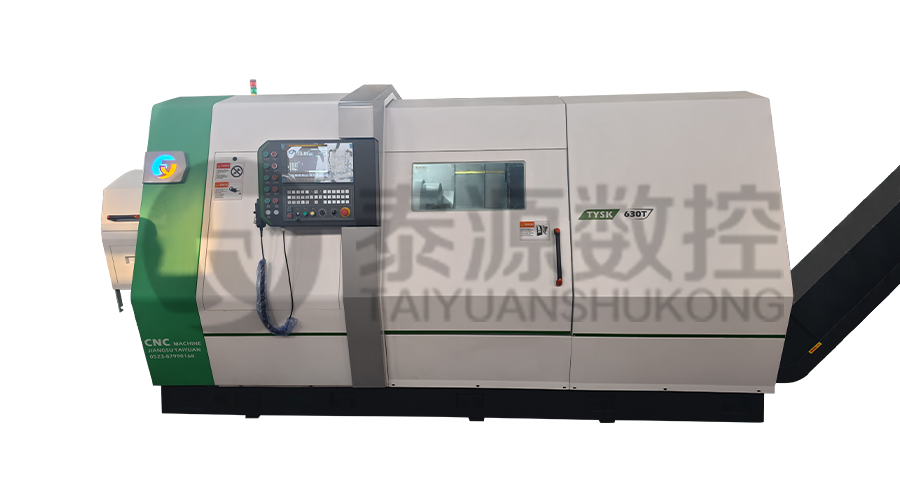 Model:TYSK-630T Drill Pipe, Joint & Coupling Lathe
The machine adopts a FANUC CNC system with stable processing accuracy and flexible programming functions to ensure that the processed parts meet strict industry standards. The high torque and heavy-load design can cope with long-term continuous work and has strong durability.
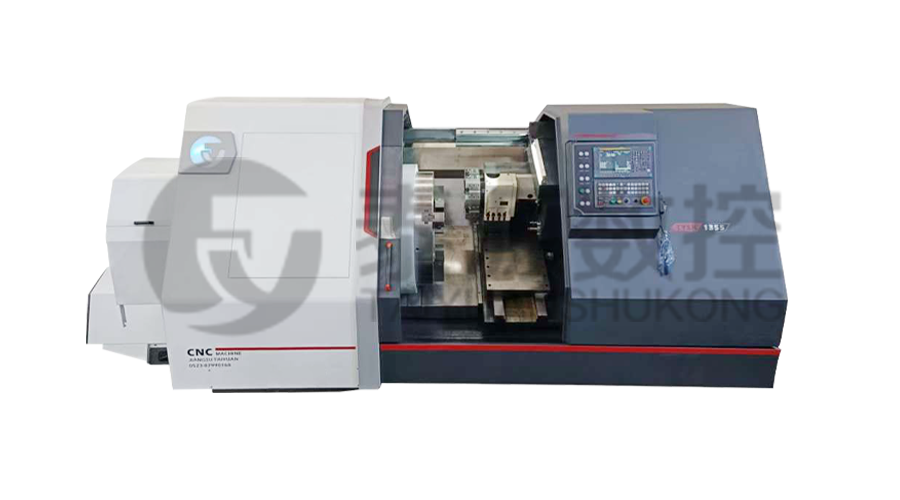 Model:TYSK-1355 Oil Pipe Processing Lathe
The machine adopts a FANUC CNC system with stable processing accuracy and flexible programming functions to ensure that the processed parts meet strict industry standards. The high torque and heavy-load design can cope with long-term continuous work and has strong durability.
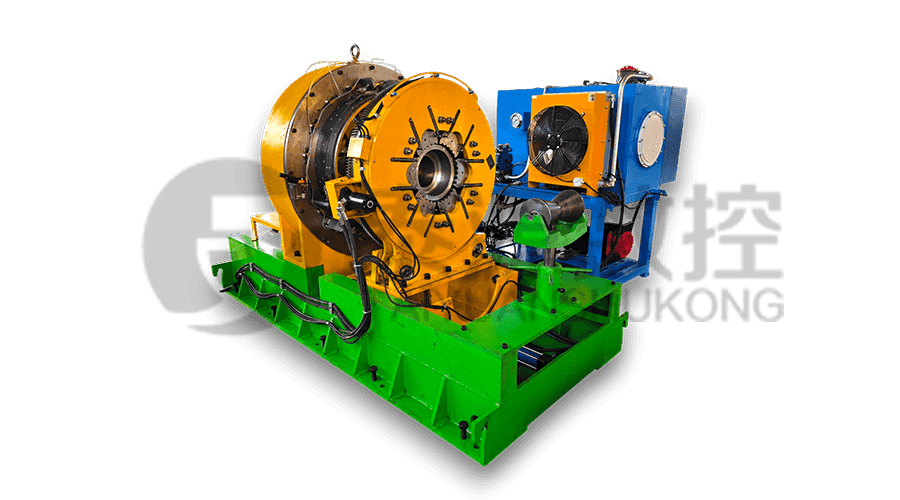 Series:TYSK-NKJ Screw-on machine/Casing and tubing coupling bucking unit
The machine uses a hydraulic motor, mechanical floating mechanism, and real-time torque detection, adapts to material bending, and prevents material deformation. Auxiliary machines are configured to help with semi-automation.
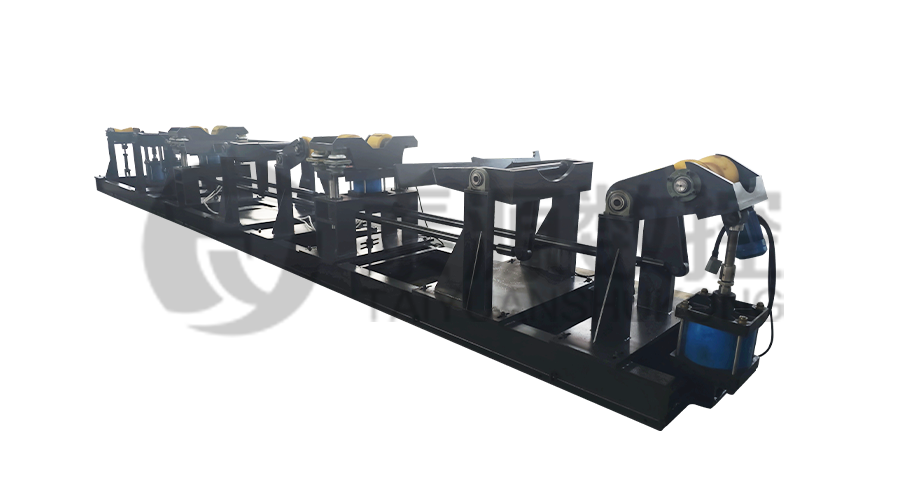 Long, heavy material solutions Automatic loading and unloading mechanism for pipe threading
The special flexible support mode can effectively reduce the influence of workpiece bending on processing and improve the yield. Strictly matching with our pipe threading lathe.
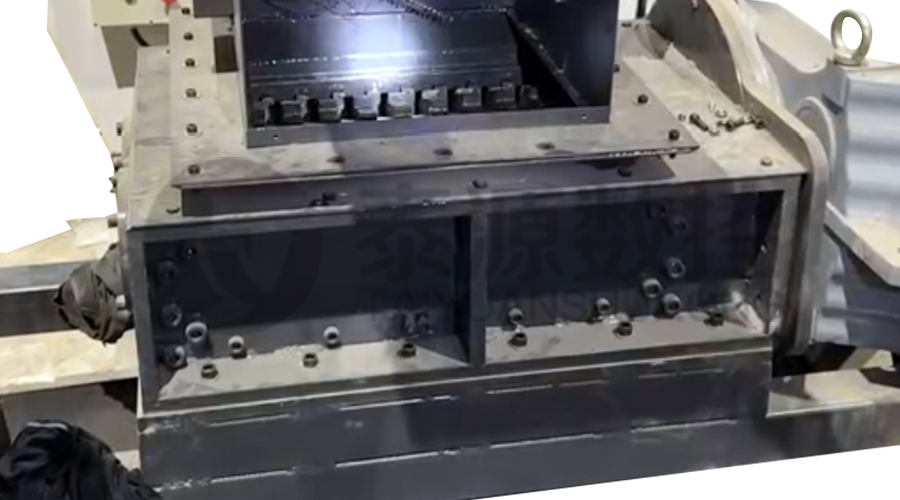 Modular Iron Chip Crusher High strength crusher for chip
The blades are made of high-strength materials and reasonably placed at the exit of the chip extractor to break the clump iron chips.Reduce the risk of rollback and improve waste frame utilization.
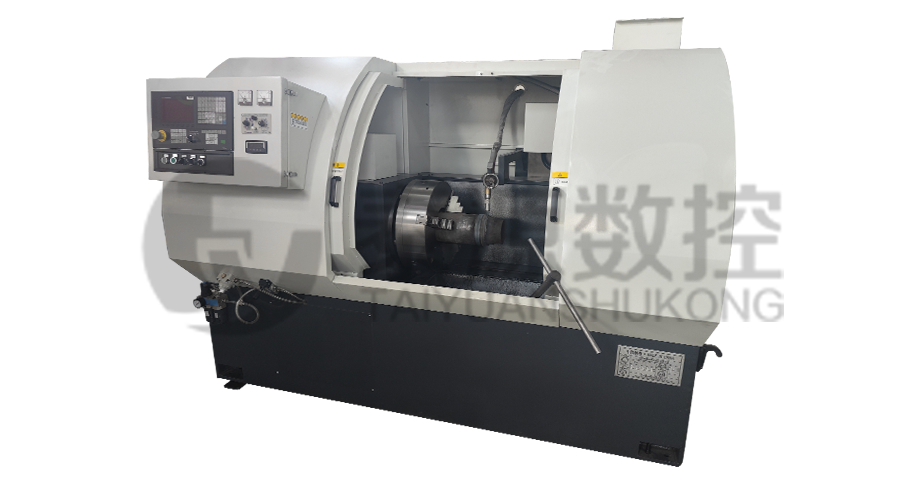 Series:TYSK-HB Semi-automatic wear-resistant band welder
Applicable to ARNCO 100XT, 200XT, 300XT. Support φ1.2-2.0 cored or solid wire surfacing welding.Can be equipped with single gun spray welding and double gun spray welding two ways. Support PLC or CNC system control.
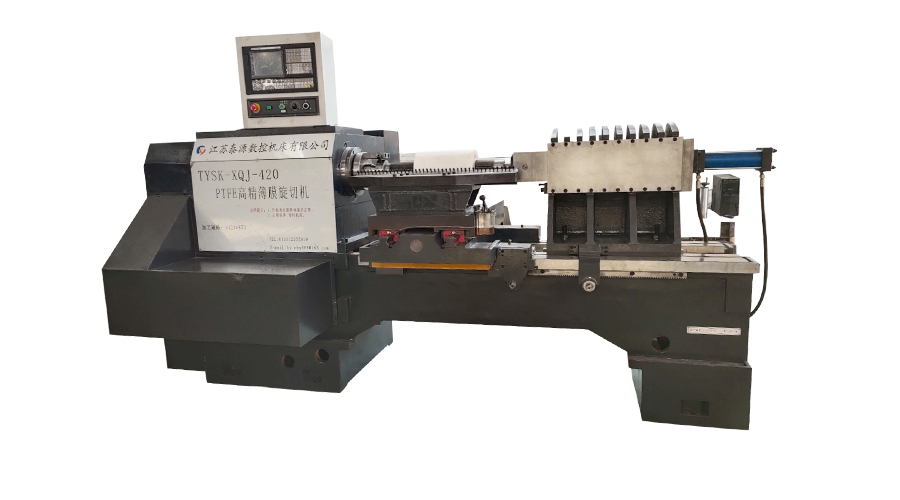 Model:TYSK-XQJ-550 Medium & Large PTFE Film Skiving Machine
Designed to process blanks with a maximum diameter of 550 mm and a maximum length of 1000 mm. We can also customize according to the needs of users. Friendly change speed and thickness with CNC.
