



 English
  عربى
عربى  中文简体
中文简体

Reminder information

Jan 29, 2026
Content
In the high-performance fluoropolymer industry, the ability to scale production for bulk orders hinges on the technical synergy between machine rigidity and automation. A Medium & Large PTFE Film Skiving Machine is a specialized CNC tool designed to shave ultra-thin, uniform layers from a sintered PTFE billet. Jiangsu Taiyuan CNC Machine Tool Co., Ltd., established in 2003, has dedicated over two decades to the R&D of special machine tools. Based in Taixing, adjacent to the golden waterway of the Yangtze River, our construction area of 7,900 ㎡ serves as a production base for high-driving power and high-rigidity equipment. For B2B procurement leaders in the chemical, mining, and oil field sectors, understanding the engineering variables that dictate throughput is the difference between meeting a deadline and facing costly downtime. Our custom industrial PTFE skiving machine solutions are engineered to minimize failure points while maintaining precision retention over long operational cycles.
The productivity of the skiving process begins long before the blade touches the material. The mechanical behavior of the PTFE billet—specifically its density and internal stress—directly impacts the maximum feed rate. If a billet is improperly sintered, the Medium & Large PTFE Film Skiving Machine must operate at lower speeds to prevent surface tearing or thickness fluctuations. Recent technical studies in 2024 emphasize that pre-warming billets to approximately 50–60°C can soften the surface slightly, allowing for a cleaner skive and higher elongation at faster cutting speeds. This is crucial for maintaining a high-efficiency PTFE film production line where consistent output is paramount.
Source: Poly Fluoro: Processing, Skiving, and Testing Considerations for PTFE Skived Tapes 2024
Billets with uniform density allow for aggressive feed rates, whereas inconsistent billets necessitate slower, conservative machine settings to preserve film integrity.
| Billet Property | Optimally Sintered Billet | Sub-Optimal Billet (Stress-Ridden) |
| Max Linear Speed | High (Up to 30-50m/min depending on thickness) | Low (Requires frequent adjustments) |
| Surface Micro-Defects | Minimal; uniform molecular alignment. | High risk of "chatter" marks or tearing. |
| Production Efficiency | Stable; optimized for bulk orders. | Reduced; high scrap rates. |
For a large scale PTFE film skiving machine, the relationship between the rotational speed of the billet and the lateral feed of the cutting tool must be governed by a high-resolution CNC system. As the diameter of the billet decreases during the run, the machine must increase RPM to maintain a constant surface speed (CSS). Modern AI-driven quality control systems, emerging as a standard in 2025, now detect micro-defects and optimize these production parameters in real-time. This level of automation is integrated into Jiangsu Taiyuan's machine tools, ensuring that our equipment, which is widely used by international enterprises in Japan, the United States, and South Korea, delivers the precision CNC PTFE skiving equipment performance required for ultra-thin films (0.05mm - 0.10mm).
Source: Towards Packaging: PTFE Tapes and Films Market Trends and AI Manufacturing Update 2025
High driving power is meaningless if the machine base cannot absorb the kinetic energy generated during high-speed skiving. At Jiangsu Taiyuan, our products are characterized by good rigidity and simple structures, which minimize vibration. Vibration is the enemy of productivity; it leads to "thickness pulsing" and dulls the cutting edge prematurely. A high capacity PTFE sheet skiver must have a heavy, vibration-dampened bed to ensure that precision is retained over thousands of hours. This technical specificity is why we have become a production base for special machine tools in the national petroleum equipment manufacturing industry and a national quality trustworthy enterprise.
A high-rigidity machine allows for tighter tolerances at faster speeds, significantly improving the yield per hour compared to standard equipment.
| Engineering Feature | Standard Skiving Machine | Taiyuan High-Rigidity CNC Machine |
| Thickness Tolerance | ± 0.005mm | ± 0.001mm |
| Vibration Resistance | Moderate; limits top-end speed. | Superior; allows for high-driving power. |
| Blade Longevity | Frequent sharpening required. | Extended; clean cutting without "chatter." |
In a bulk order environment, the "bottleneck" often occurs at the tail end of the machine. An automatic PTFE film winding and skiving system eliminates manual intervention, allowing the machine to run 24/7. According to 2025 CNC machining trends, companies adopting AI-powered automation have experienced productivity gains of 20-30% due to reduced downtime for material loading and unloading. At Jiangsu Taiyuan, we look at global peers to refine our specialization, ensuring our winding systems maintain constant tension to prevent the film from stretching—a critical factor for films used in electrical insulation and aerospace industries.
Source: Barton CNC: Navigating 2025 Technology Trends and Productivity Gains
The productivity of a Medium & Large PTFE Film Skiving Machine is a result of meticulous engineering—from the rigidity of the base to the intelligence of the CNC software. By addressing billet quality, vibration control, and automation, manufacturers can reliably execute bulk orders with high precision. Jiangsu Taiyuan CNC Machine Tool Co., Ltd. remains committed to the concept of "specialization, refinement and strengthening," providing the global market with the heavy-duty machinery required to fuel the energy and chemical industries of the future.
Related Products
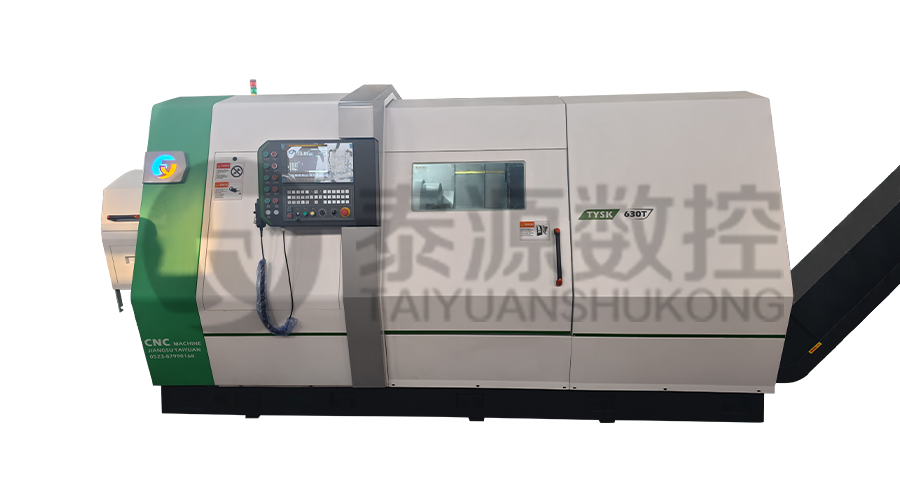 Model:TYSK-630T Drill Pipe, Joint & Coupling Lathe
The machine adopts a FANUC CNC system with stable processing accuracy and flexible programming functions to ensure that the processed parts meet strict industry standards. The high torque and heavy-load design can cope with long-term continuous work and has strong durability.
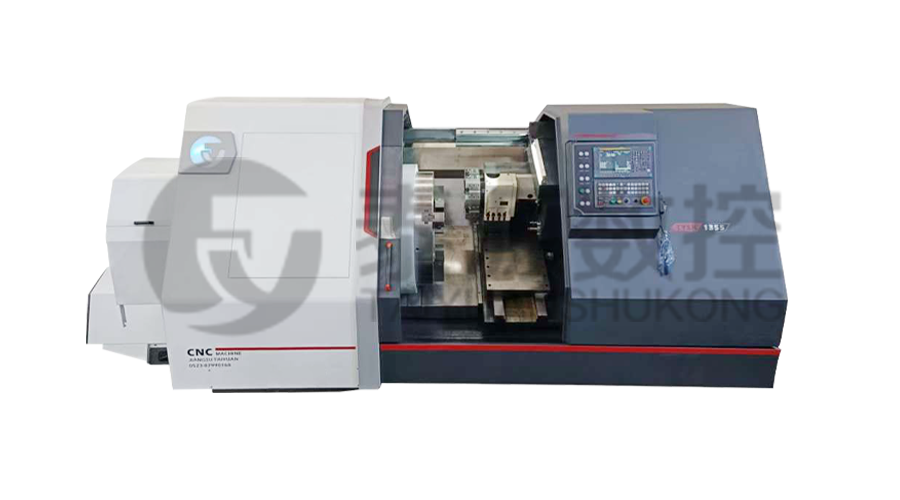 Model:TYSK-1355 Oil Pipe Processing Lathe
The machine adopts a FANUC CNC system with stable processing accuracy and flexible programming functions to ensure that the processed parts meet strict industry standards. The high torque and heavy-load design can cope with long-term continuous work and has strong durability.
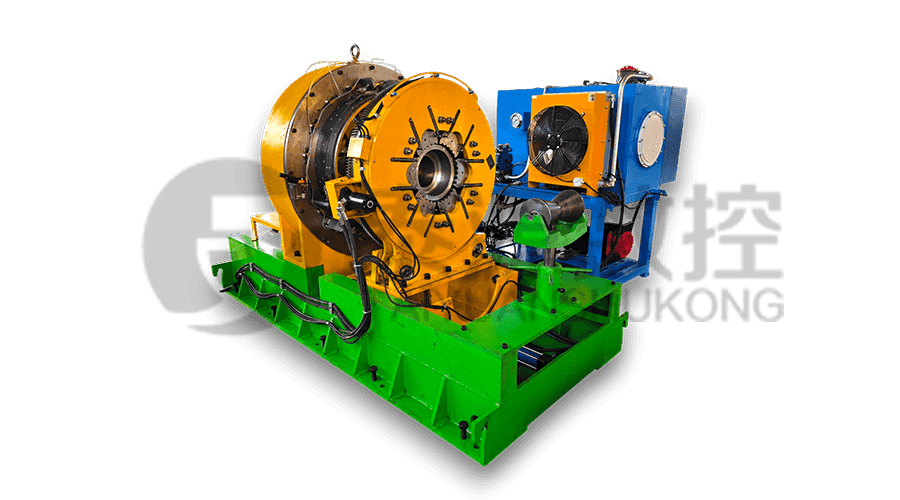 Series:TYSK-NKJ Screw-on machine/Casing and tubing coupling bucking unit
The machine uses a hydraulic motor, mechanical floating mechanism, and real-time torque detection, adapts to material bending, and prevents material deformation. Auxiliary machines are configured to help with semi-automation.
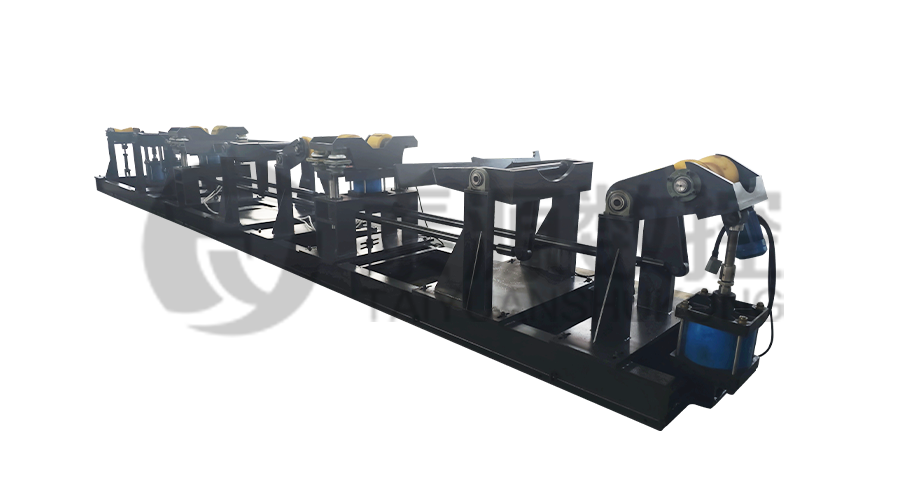 Long, heavy material solutions Automatic loading and unloading mechanism for pipe threading
The special flexible support mode can effectively reduce the influence of workpiece bending on processing and improve the yield. Strictly matching with our pipe threading lathe.
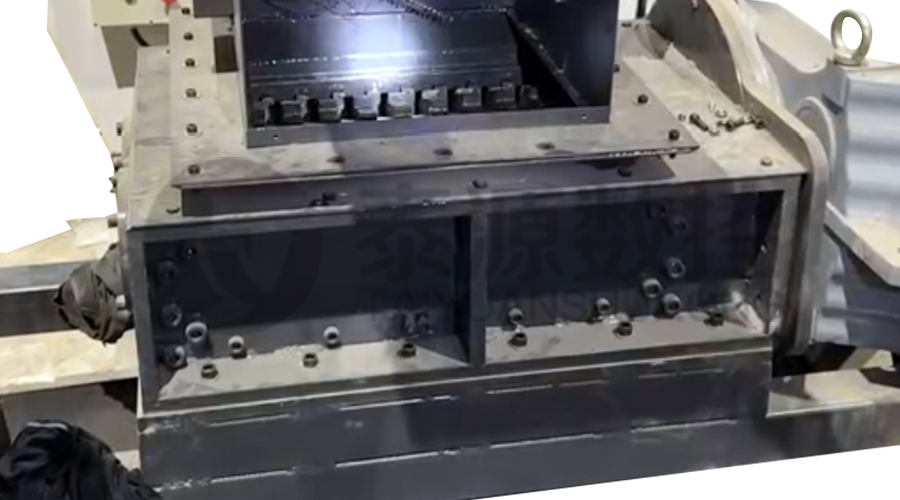 Modular Iron Chip Crusher High strength crusher for chip
The blades are made of high-strength materials and reasonably placed at the exit of the chip extractor to break the clump iron chips.Reduce the risk of rollback and improve waste frame utilization.
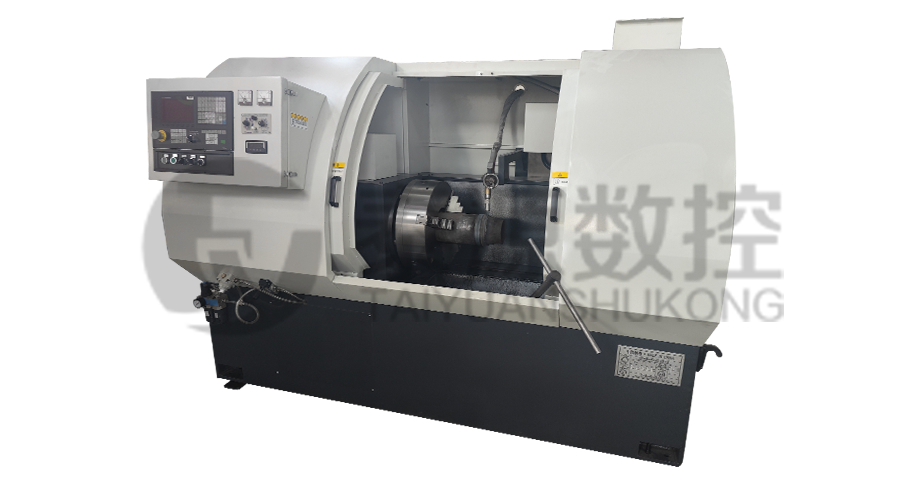 Series:TYSK-HB Semi-automatic wear-resistant band welder
Applicable to ARNCO 100XT, 200XT, 300XT. Support φ1.2-2.0 cored or solid wire surfacing welding.Can be equipped with single gun spray welding and double gun spray welding two ways. Support PLC or CNC system control.
Model:TYSK-XQJ-550 Medium & Large PTFE Film Skiving Machine
Designed to process blanks with a maximum diameter of 550 mm and a maximum length of 1000 mm. We can also customize according to the needs of users. Friendly change speed and thickness with CNC.
