



 English
  عربى
عربى  中文简体
中文简体

Reminder information

Jan 22, 2026
Content
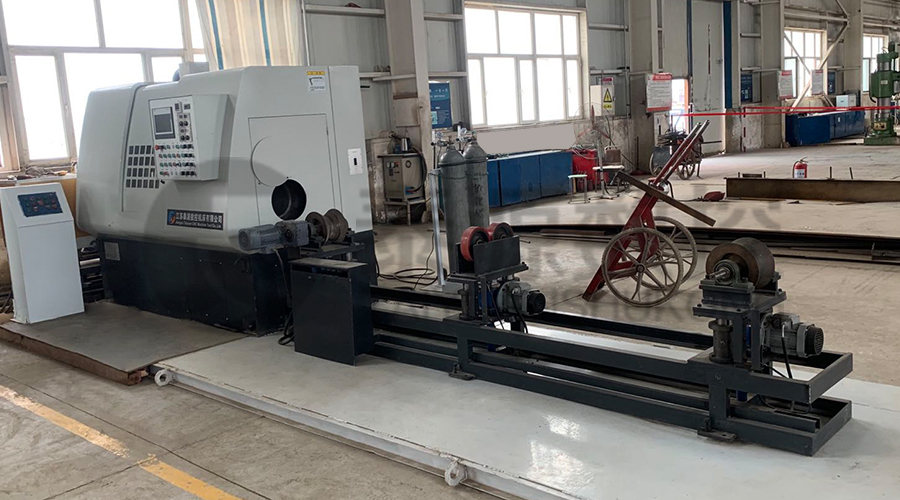
In the high-stakes environment of petroleum equipment manufacturing and oilfield services, the protection of drill pipe joints and centralizers is critical for operational longevity. Historically, manual hardfacing was the industry standard; however, the shift toward precision engineering has favored the Semi-automatic wear-resistant band welder. Jiangsu Taiyuan CNC Machine Tool Co., Ltd., established in 2003 and located in the East Industrial Park of Taixing, has emerged as a specialized production base for such high-tech equipment. With GBT and ISO quality certifications, our machinery is designed to provide high driving power and long precision retention times, serving major oilfields and global industrial leaders.
The primary technical advantage of a Semi-automatic wear-resistant band welder is its ability to maintain a consistent arc length and travel speed, which is nearly impossible to achieve manually. Manual cladding often results in irregular bead profiles and heat-affected zones (HAZ) that can weaken the base metal. In contrast, utilizing a wear-resistant band surfacing machine for drill pipe joints ensures that each layer of the wear-resistant alloy is deposited with metallurgical precision, resulting in a smoother finish and optimized hardness distribution.
While manual welding depends on the welder's fatigue levels and skill, a semi-automatic system provides a repeatable, programmed path that eliminates human error and surface irregularities.
| Performance Metric | Traditional Manual Cladding | Semi-automatic Band Welder |
| Weld Bead Consistency | Variable (Subject to operator skill) | Uniform (Controlled by CNC/PLCs) |
| Heat Input Control | Irregular (Risk of deformation) | Constant (Minimal HAZ impact) |
| Surface Quality | Rough (Requires post-grinding) | Smooth (Near-net shape) |
Source: ISO 15614-7:2024 Specification and qualification of welding procedures — Overlay welding
Transitioning to specialized hardbanding equipment for oilfield services allows a single operator to manage multiple cycles with higher efficiency. Traditional methods require intense physical labor and prolonged exposure to welding fumes and heat. A high-efficiency wear-resistant belt welder significantly reduces "arc-off" time. Recent market data from 2024 indicates that automated cladding solutions can reduce labor hours by up to 60% while maintaining a higher throughput of processed drill collars and joints.
Manual methods incur high indirect costs due to frequent rework and specialized labor shortages, whereas a semi-automatic machine represents a stable, high-technology capital investment with a lower total cost of ownership (TCO).
| Cost/Efficiency Factor | Manual Method | Semi-automatic System |
| Production Efficiency | Low (Frequent breaks required) | High (Continuous duty cycle) |
| Consumable Waste | High (Over-welding/Spatter) | Low (Precision wire feeding) |
| Labor Requirement | Highly skilled/Certified welder | Trained operator |
Source: AWS D14.3/D14.3M:2024 Specification for Welding Earthmoving, Highway, and Agricultural Equipment
At Jiangsu Taiyuan CNC Machine Tool Co., Ltd., we focus on the rigidity of the machine bed to ensure that even during industrial drill pipe hardbanding machine operations, vibration is minimized. This rigidity is essential for "precision retention time"—a technical metric where our special machine tools excel. Modern hardbanding alloys contain high percentages of tungsten carbides or specialized chromium, which require stable driving power to ensure proper dilution with the parent metal.
The 2025 technical standards for petroleum equipment emphasize the need for "Smart Cladding," where machines adjust parameters in real-time based on the thermal feedback of the workpiece, a feature increasingly integrated into specialized CNC wear-resistant band welders.
The Semi-automatic wear-resistant band welder is not limited to drill pipes; it is a vital tool for wear-resistant surfacing equipment for centralizers and drill collars. Our products are widely used by major domestic players like Baosteel and Shengli Oilfield, as well as international clients in Japan, the United States, and Azerbaijan. This versatility ensures that the equipment can adapt to various diameters and alloy requirements, providing strong specificity for geology, mining, and chemical industries.
Adhering to the concept of "specialization, refinement and strengthening," the move from manual to semi-automatic cladding is a leap in both technology and safety. The Semi-automatic wear-resistant band welder offers a superior ROI by guaranteeing high driving power, fewer failure points, and unparalleled production efficiency. Jiangsu Taiyuan CNC Machine Tool Co., Ltd. looks forward to sharing these development breakthroughs with you to create a more resilient future for energy equipment.
Related Products
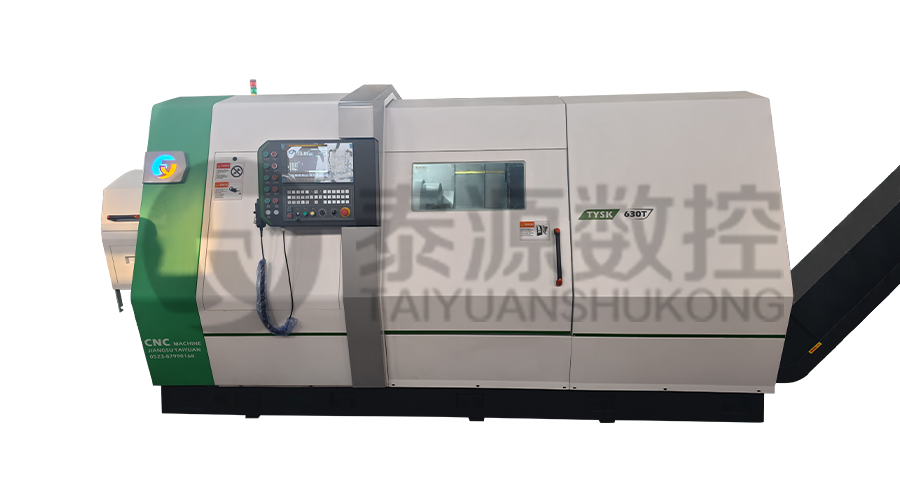 Model:TYSK-630T Drill Pipe, Joint & Coupling Lathe
The machine adopts a FANUC CNC system with stable processing accuracy and flexible programming functions to ensure that the processed parts meet strict industry standards. The high torque and heavy-load design can cope with long-term continuous work and has strong durability.
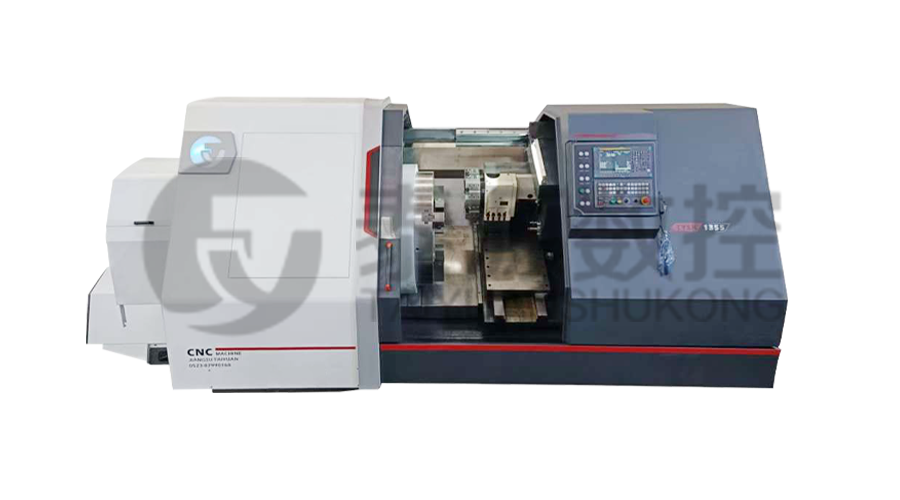 Model:TYSK-1355 Oil Pipe Processing Lathe
The machine adopts a FANUC CNC system with stable processing accuracy and flexible programming functions to ensure that the processed parts meet strict industry standards. The high torque and heavy-load design can cope with long-term continuous work and has strong durability.
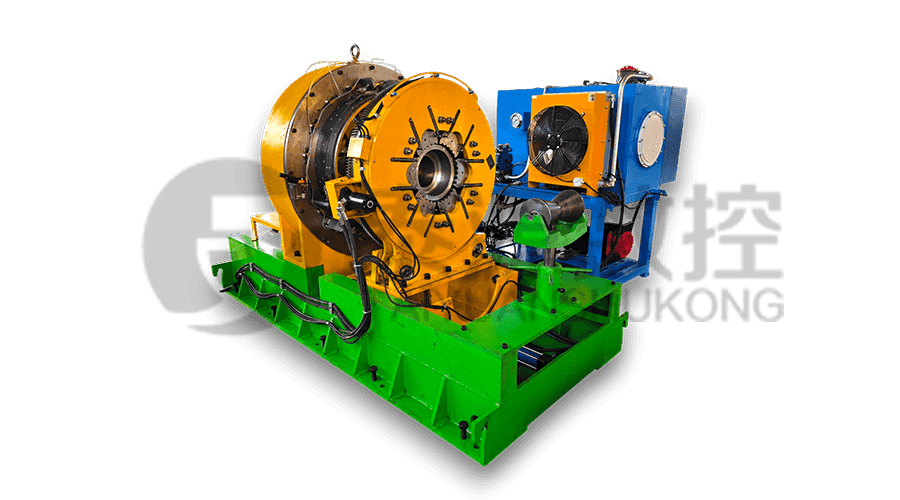 Series:TYSK-NKJ Screw-on machine/Casing and tubing coupling bucking unit
The machine uses a hydraulic motor, mechanical floating mechanism, and real-time torque detection, adapts to material bending, and prevents material deformation. Auxiliary machines are configured to help with semi-automation.
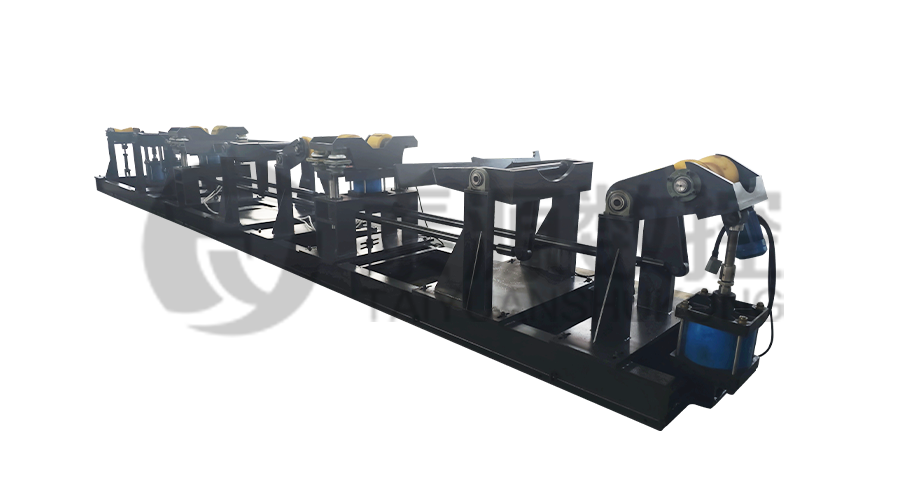 Long, heavy material solutions Automatic loading and unloading mechanism for pipe threading
The special flexible support mode can effectively reduce the influence of workpiece bending on processing and improve the yield. Strictly matching with our pipe threading lathe.
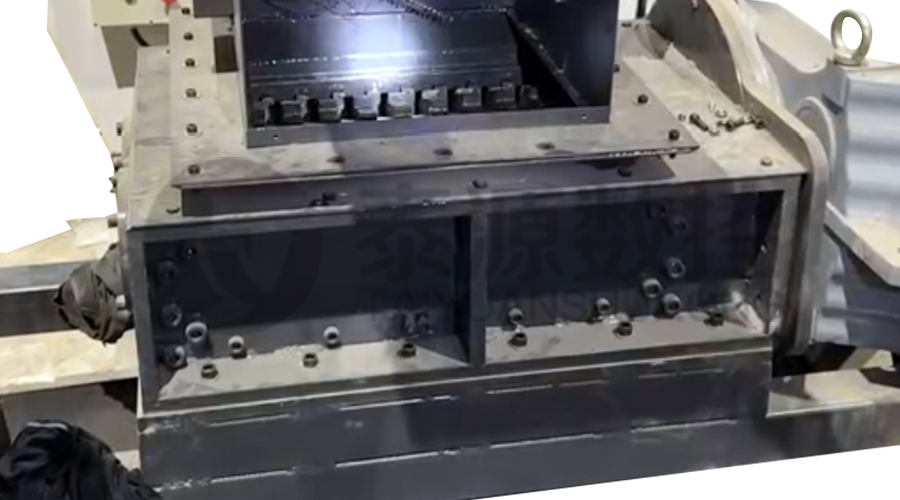 Modular Iron Chip Crusher High strength crusher for chip
The blades are made of high-strength materials and reasonably placed at the exit of the chip extractor to break the clump iron chips.Reduce the risk of rollback and improve waste frame utilization.
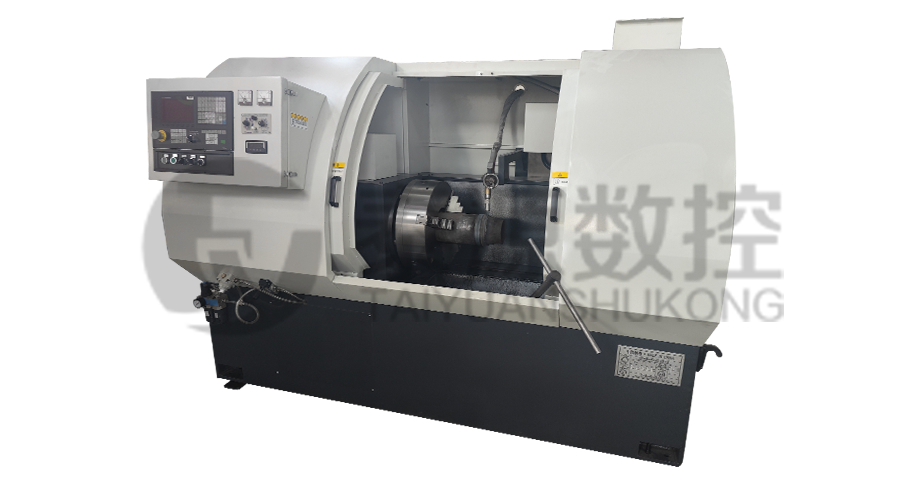 Series:TYSK-HB Semi-automatic wear-resistant band welder
Applicable to ARNCO 100XT, 200XT, 300XT. Support φ1.2-2.0 cored or solid wire surfacing welding.Can be equipped with single gun spray welding and double gun spray welding two ways. Support PLC or CNC system control.
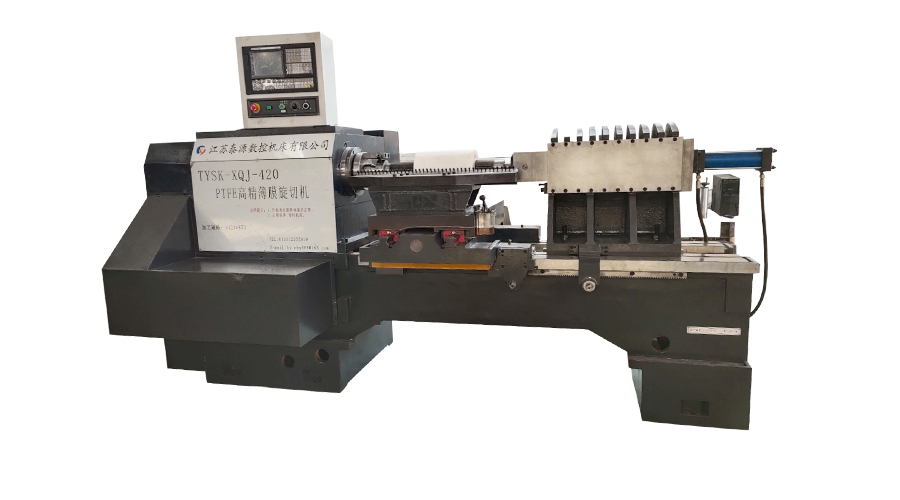 Model:TYSK-XQJ-550 Medium & Large PTFE Film Skiving Machine
Designed to process blanks with a maximum diameter of 550 mm and a maximum length of 1000 mm. We can also customize according to the needs of users. Friendly change speed and thickness with CNC.
