



 English
  عربى
عربى  中文简体
中文简体

Reminder information

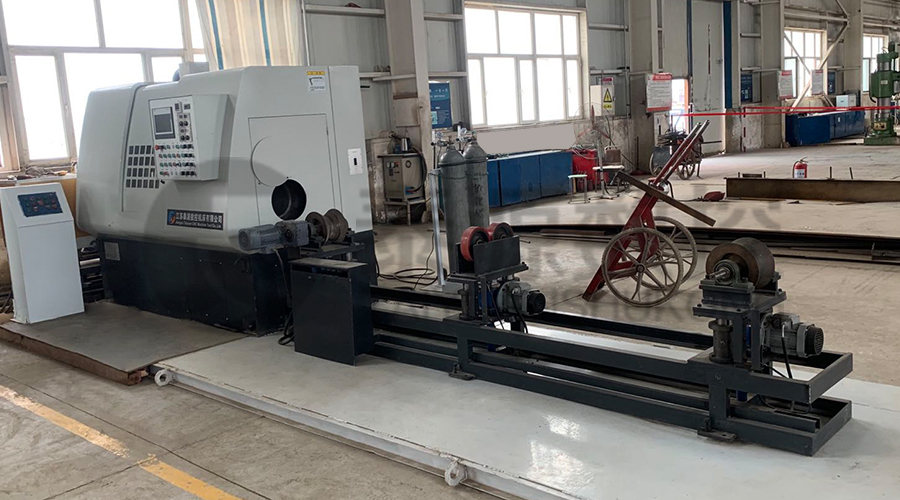
Jan 01, 2026
Content
In the high-stakes petroleum equipment industry, the longevity of drill pipes and centralizers is paramount. Hardbanding—the process of applying a wear-resistant alloy to tool joints—is the primary defense against downhole friction. Achieving a high-quality metallurgical bond requires precision that manual welding simply cannot sustain over long shifts. A Semi-automatic wear-resistant band welder bridges the gap between manual inconsistency and the high capital expenditure of full-scale robotic lines. Jiangsu Taiyuan CNC Machine Tool Co., Ltd., established in 2003, has emerged as a specialized production base for these machine tools, offering equipment that combines high driving power with the precision retention required for the demanding oil field, mining, and chemical industries.
The transition from manual surfacing to using a Semi-automatic wear-resistant band welder fundamentally changes the production throughput of a hardbanding shop. While a manual welder must constantly adjust the torch angle and travel speed to maintain bead uniformity, a semi-automatic drill pipe hardbanding machine automates the rotation and oscillation parameters. This ensures that the welder’s primary role shifts from execution to supervision, significantly reducing the physical strain and the likelihood of human error. According to the 2024-2025 Drilling Equipment Market Report by the International Association of Drilling Contractors (IADC), the industry is seeing a 12% increase in the adoption of semi-automated surfacing technologies as companies strive to meet tighter API 7-1 and 7-2 thread and joint standards while managing a shrinking skilled labor pool.
Source: IADC - 2024 Global Drilling Equipment Market Standards
In terms of hourly output, manual welding is limited by operator fatigue and the need for frequent repositioning. In contrast, a drill pipe joint wear-resistant belt surfacing machine allows for continuous operation with precise overlapping of welding beads, which results in a smoother finish that requires significantly less post-weld grinding.
| Performance Metric | Manual Hardbanding | Semi-automatic wear-resistant band welder |
| Consistency | Low (Subject to operator skill/fatigue) | High (Preset CNC parameters) |
| Processing Speed | Slow (Frequent interruptions) | Fast (Continuous automated travel) |
| Labor Utilization | 1 Welder per Pipe | 1 Technician can oversee multiple stations |
| Post-Weld Processing | Significant grinding required | Minimal grinding (Uniform bead profile) |
For B2B buyers, the "rigidity" of the machine tool is a key technical indicator. Hardbanding involves high-heat cycles and the rotation of heavy drill collars or centralizers. Jiangsu Taiyuan CNC Machine Tool Co., Ltd. designs machines with heavy-duty beds to ensure that the high precision wear-resistant band welder for centralizers maintains its alignment even under thermal expansion. This structural integrity is vital for maintaining the "precision retention time," ensuring that the welding torch follows the helical or square path of a drill collar spiral groove accurately for years of operation. The application of a heavy duty hardbanding machine for oil fields ensures that even the most specialized alloys are deposited with consistent thickness, meeting the stringent durability requirements of deep-well drilling.
Technological breakthroughs in 2025, specifically in the area of real-time monitoring, have allowed manufacturers to integrate sensors into CNC surfacing equipment for drill pipe joints. According to the American Petroleum Institute (API) Technical Report 2024, the integration of automated voltage and amperage monitoring during the surfacing process can reduce defect rates by up to 15% by maintaining the heat input within the specified metallurgical window.
Source: API - Technical Standards for Drilling Tool Maintenance 2024
While lightweight welding setups might offer a lower entry cost, they lack the "driving power" and "precision retention" found in dedicated CNC machine tools. A CNC surfacing equipment for drill pipe joints is engineered with few failure points and a simpler structure, leading to lower long-term maintenance costs compared to complex robotic arms that require highly specialized software maintenance.
| Reliability Factor | General Purpose Robotic Arm | CNC surfacing equipment for drill pipe joints |
| Structural Rigidity | Medium | High (Cast iron heavy-duty bed) |
| Environment Resistance | Sensitive (Requires clean air/temp) | Rugged (Designed for shop floors/oil fields) |
| Operation Complexity | Requires specialized programming | Simple CNC interface / Technician friendly |
| Cost of Ownership | High (Parts and expert maintenance) | Moderate (Durable heavy duty hardbanding machine for oil fields) |
Our company, located in the East Industrial Park of Taixing City, spans 24,800 square meters and serves as a specialized production base for the national petroleum equipment manufacturing industry. Having obtained ISO quality system certifications, our Semi-automatic wear-resistant band welder and related products are favored by global giants and domestic leaders alike. From drill pipe joint wear-resistant belt surfacing machine units to screw pump rotor milling machines, our portfolio is built on "specialization, refinement, and strengthening." We provide the driving power and rigidity that industrial users in the United States, Japan, South Korea, and Azerbaijan trust to create a better future in energy equipment.
Yes. Our semi-automatic drill pipe hardbanding machine is designed with adjustable chucks and steady rests to accommodate a wide range of drill pipe sizes and centralizers, providing high versatility for service shops.
The CNC control system allows the operator to adjust wire feed speed, voltage, and travel speed. This level of control is essential when applying specialized wear-resistant alloys that have unique melting points and cooling requirements.
Because the structure is simple and the interface is optimized for hardbanding, a technician can typically become proficient on our high precision wear-resistant band welder for centralizers within a few days of training.
Absolutely. By using a heavy duty hardbanding machine for oil fields, the overlap and bead thickness are precise, which significantly reduces "over-welding" and saves costly wear-resistant wire compared to manual application.
Yes. Jiangsu Taiyuan CNC Machine Tool Co., Ltd. builds its machines with high rigidity and environmental protection for electrical components, ensuring reliable drill pipe joint wear-resistant belt surfacing machine performance even in dusty or varied-temperature shop environments.
Related Products
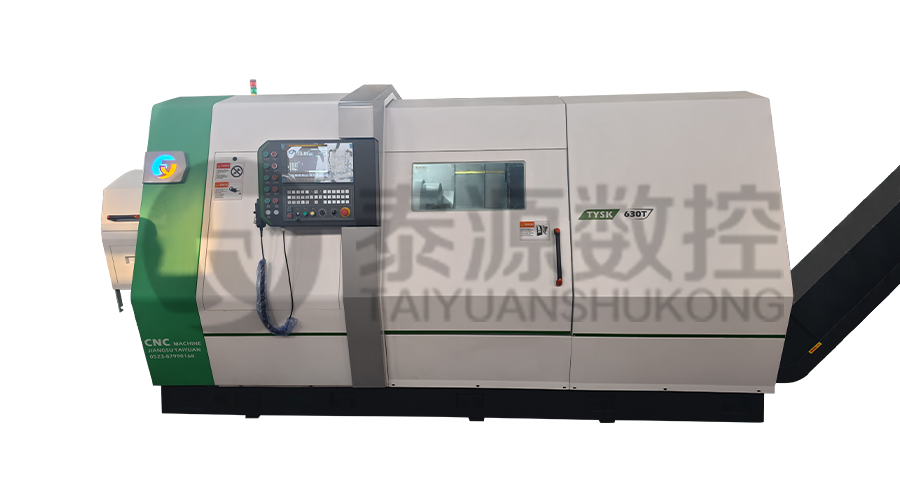 Model:TYSK-630T Drill Pipe, Joint & Coupling Lathe
The machine adopts a FANUC CNC system with stable processing accuracy and flexible programming functions to ensure that the processed parts meet strict industry standards. The high torque and heavy-load design can cope with long-term continuous work and has strong durability.
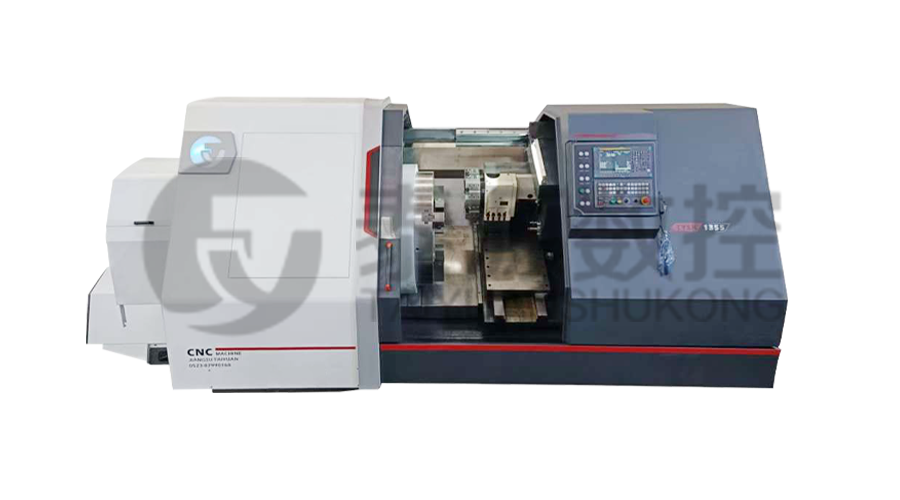 Model:TYSK-1355 Oil Pipe Processing Lathe
The machine adopts a FANUC CNC system with stable processing accuracy and flexible programming functions to ensure that the processed parts meet strict industry standards. The high torque and heavy-load design can cope with long-term continuous work and has strong durability.
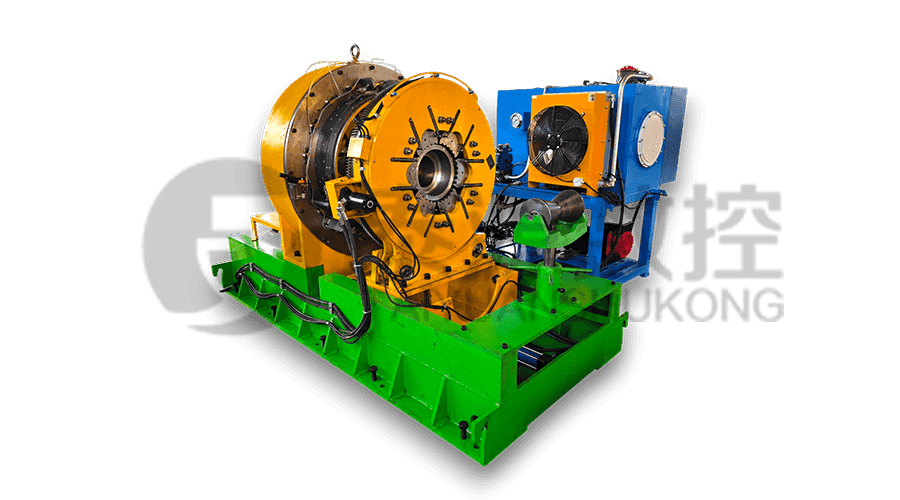 Series:TYSK-NKJ Screw-on machine/Casing and tubing coupling bucking unit
The machine uses a hydraulic motor, mechanical floating mechanism, and real-time torque detection, adapts to material bending, and prevents material deformation. Auxiliary machines are configured to help with semi-automation.
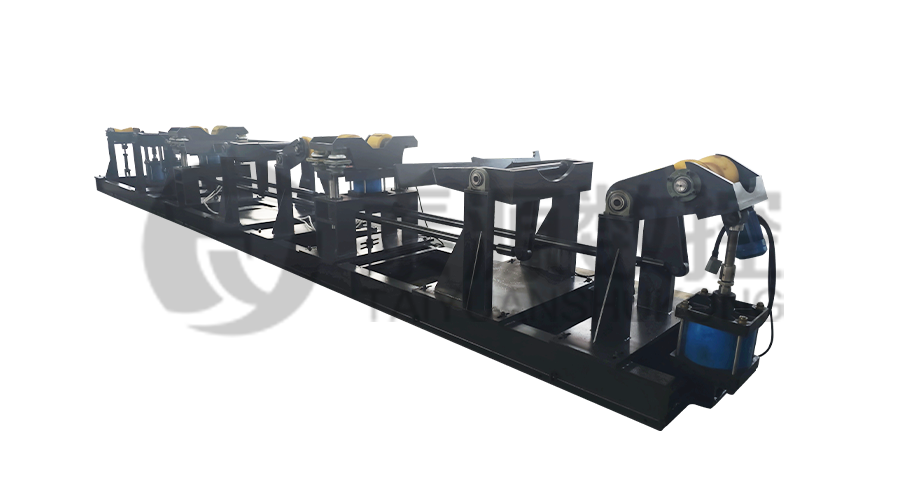 Long, heavy material solutions Automatic loading and unloading mechanism for pipe threading
The special flexible support mode can effectively reduce the influence of workpiece bending on processing and improve the yield. Strictly matching with our pipe threading lathe.
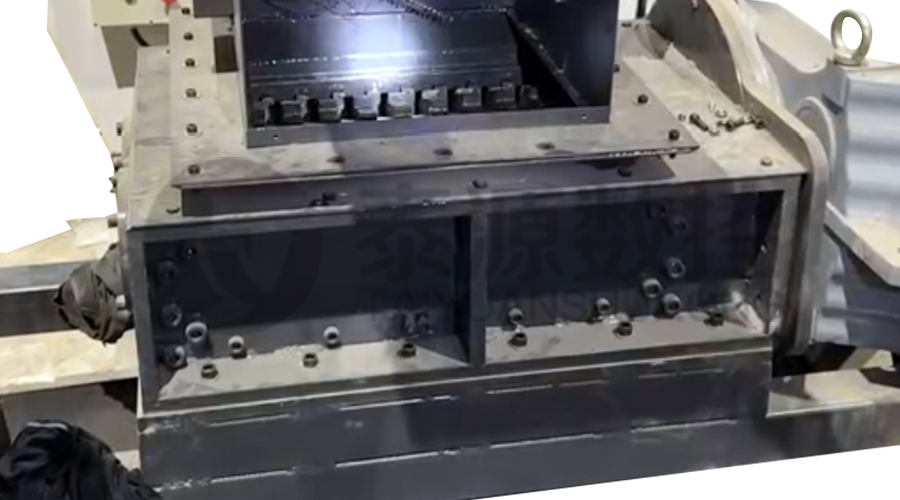 Modular Iron Chip Crusher High strength crusher for chip
The blades are made of high-strength materials and reasonably placed at the exit of the chip extractor to break the clump iron chips.Reduce the risk of rollback and improve waste frame utilization.
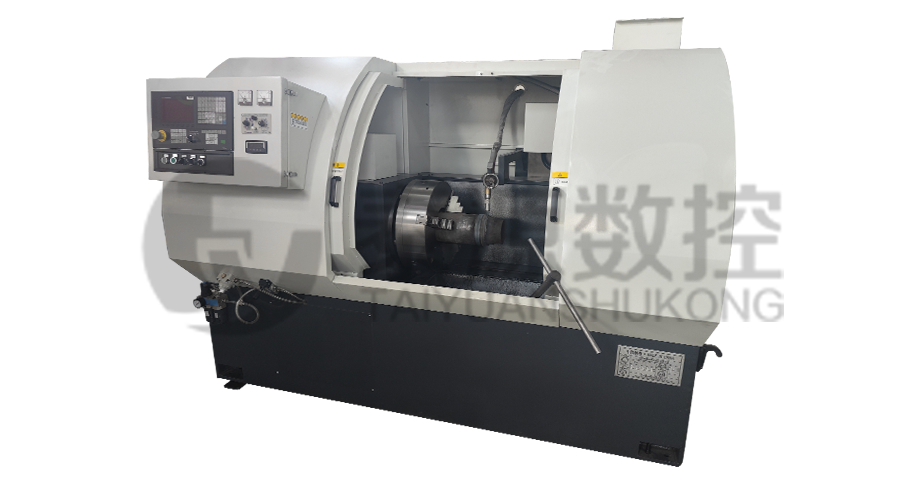 Series:TYSK-HB Semi-automatic wear-resistant band welder
Applicable to ARNCO 100XT, 200XT, 300XT. Support φ1.2-2.0 cored or solid wire surfacing welding.Can be equipped with single gun spray welding and double gun spray welding two ways. Support PLC or CNC system control.
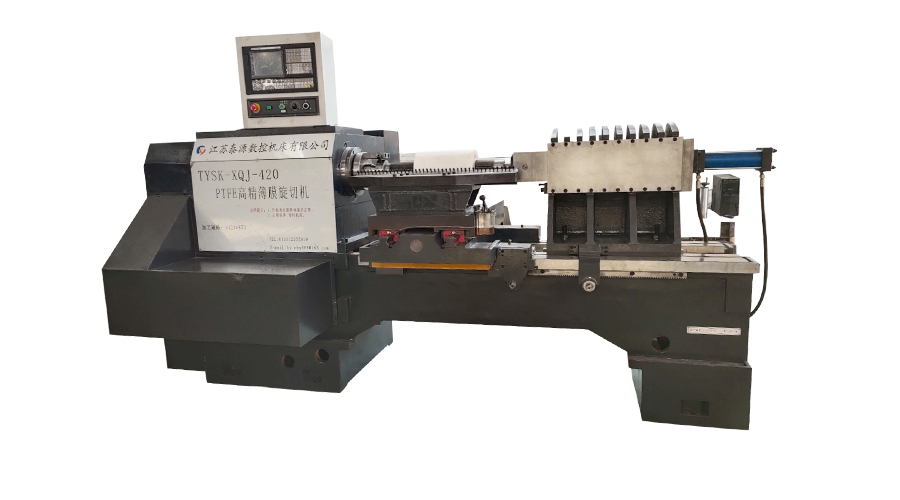 Model:TYSK-XQJ-550 Medium & Large PTFE Film Skiving Machine
Designed to process blanks with a maximum diameter of 550 mm and a maximum length of 1000 mm. We can also customize according to the needs of users. Friendly change speed and thickness with CNC.
