



 English
  عربى
عربى  中文简体
中文简体

Reminder information

Dec 25, 2025
Content
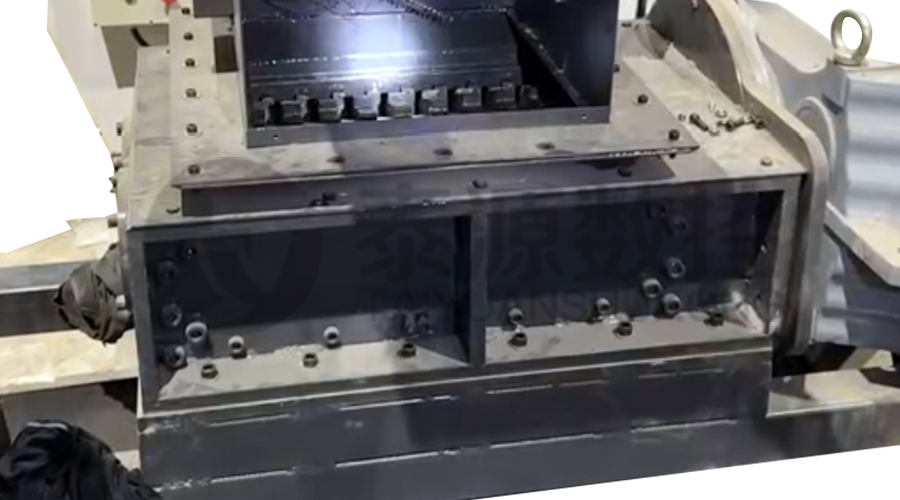
In modern manufacturing, especially in metallurgy, chemical, and industrial machining sectors, the selection of a high-intensity chip crusher is critical for processing metal and composite chips efficiently. The core factors include particle size uniformity, throughput, and energy consumption.
The most common types of high-intensity chip crusher include hammer type, roller type, and shear type. Each type has distinct operational principles and suitable applications.
| Type | Mechanism | Strength | Limitations |
| hammer type high-intensity chip crusher | High-speed rotating hammers impact material | High crushing efficiency | Higher wear on hammers, moderate particle uniformity |
| roller type high-intensity chip crusher | Compression between rollers | Good uniformity, lower noise | Lower throughput for very hard materials |
| shear type high-intensity chip crusher | Cutting via blades in shear action | Best particle size uniformity | Slower throughput, requires sharp blade maintenance |
In high-speed environments, particle size uniformity is essential for downstream processes. The shear type high-intensity chip crusher often achieves superior consistency due to its cutting action, whereas hammer type may produce a wider particle size distribution.
The high-efficiency chip crushing machine prioritizes throughput. Hammer type machines deliver the highest speed processing, roller type balances efficiency and uniformity, and shear type ensures precision but slightly slower.
| Type | Particle Size Uniformity | Throughput Efficiency | Energy Consumption |
| Hammer Type | Medium | High | High |
| Roller Type | Good | Medium | Medium |
| Shear Type | Excellent | Medium-Low | Medium |
High-speed crushing imposes mechanical stress. Components should use high-strength alloy steel, with hardened surfaces for uniform particle size chip crusher performance. Proper bearing selection, rotor balancing, and wear-resistant coatings ensure long-term reliability.
Optimizing operation includes scheduled inspections, rotor and blade maintenance, and proper lubrication. Using high-efficiency chip crushing machine designs minimizes downtime and lowers lifecycle costs.
The shear type high-intensity chip crusher provides the best uniformity due to its precise cutting mechanism, ideal for downstream metallurgical or chemical applications.
Hammer type offers the highest throughput but lower uniformity, while shear type ensures uniformity at a slightly lower processing speed. Roller type offers a balance.
High-strength alloy steels with surface hardening are recommended. Wear-resistant coatings on rotors and blades extend service life under continuous high-speed operation.
Scheduled maintenance, proper rotor balancing, optimized feed rate, and selecting the correct crusher type based on chip hardness and volume reduce downtime and energy consumption.
They can process hard metals, but wear and energy consumption increase significantly. Roller or shear types may be preferred for uniformity and lower operational stress in such cases.
Related Products
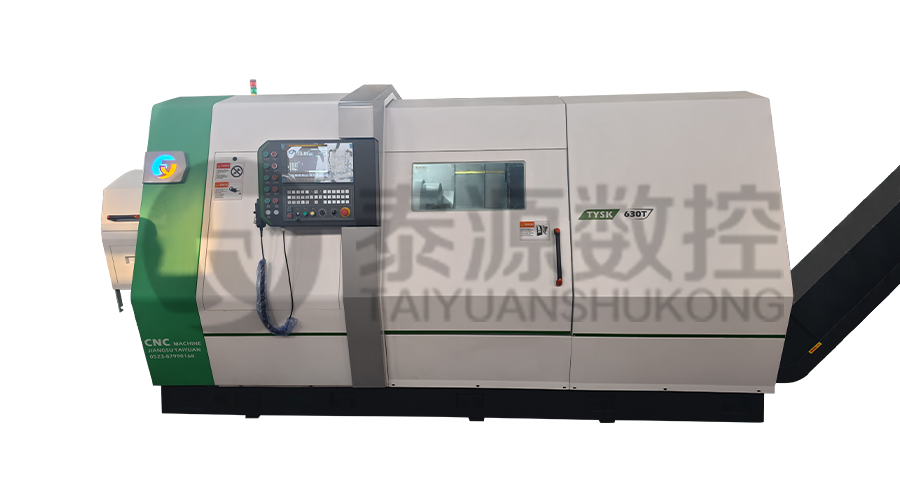 Model:TYSK-630T Drill Pipe, Joint & Coupling Lathe
The machine adopts a FANUC CNC system with stable processing accuracy and flexible programming functions to ensure that the processed parts meet strict industry standards. The high torque and heavy-load design can cope with long-term continuous work and has strong durability.
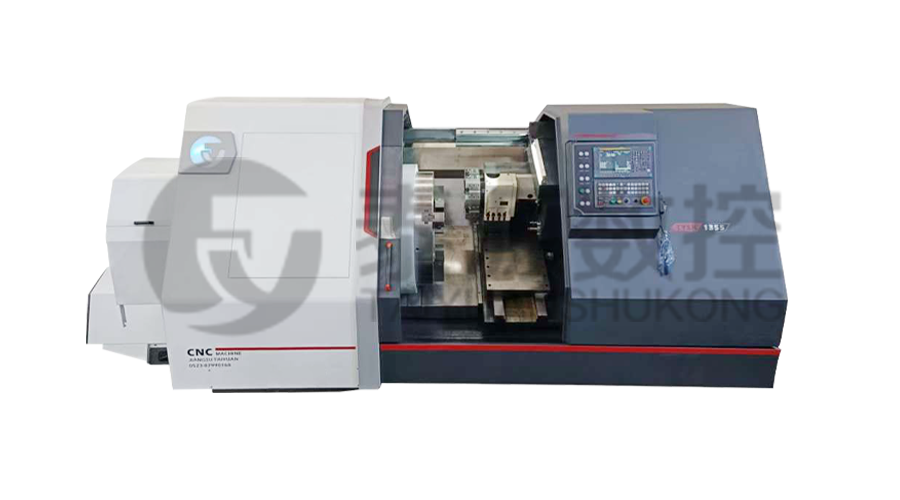 Model:TYSK-1355 Oil Pipe Processing Lathe
The machine adopts a FANUC CNC system with stable processing accuracy and flexible programming functions to ensure that the processed parts meet strict industry standards. The high torque and heavy-load design can cope with long-term continuous work and has strong durability.
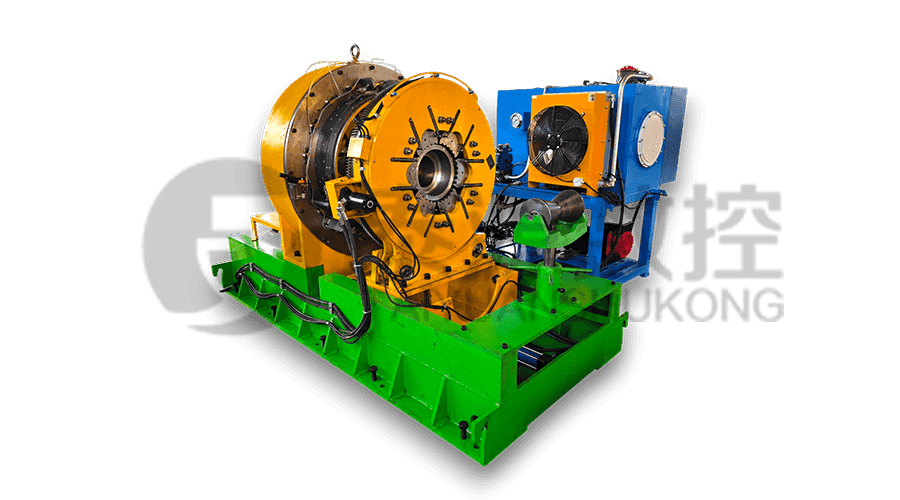 Series:TYSK-NKJ Screw-on machine/Casing and tubing coupling bucking unit
The machine uses a hydraulic motor, mechanical floating mechanism, and real-time torque detection, adapts to material bending, and prevents material deformation. Auxiliary machines are configured to help with semi-automation.
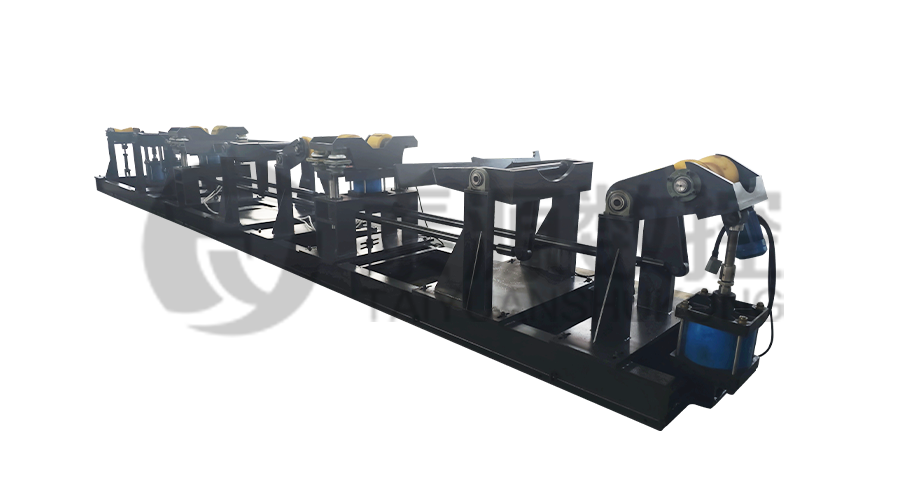 Long, heavy material solutions Automatic loading and unloading mechanism for pipe threading
The special flexible support mode can effectively reduce the influence of workpiece bending on processing and improve the yield. Strictly matching with our pipe threading lathe.
Modular Iron Chip Crusher High strength crusher for chip
The blades are made of high-strength materials and reasonably placed at the exit of the chip extractor to break the clump iron chips.Reduce the risk of rollback and improve waste frame utilization.
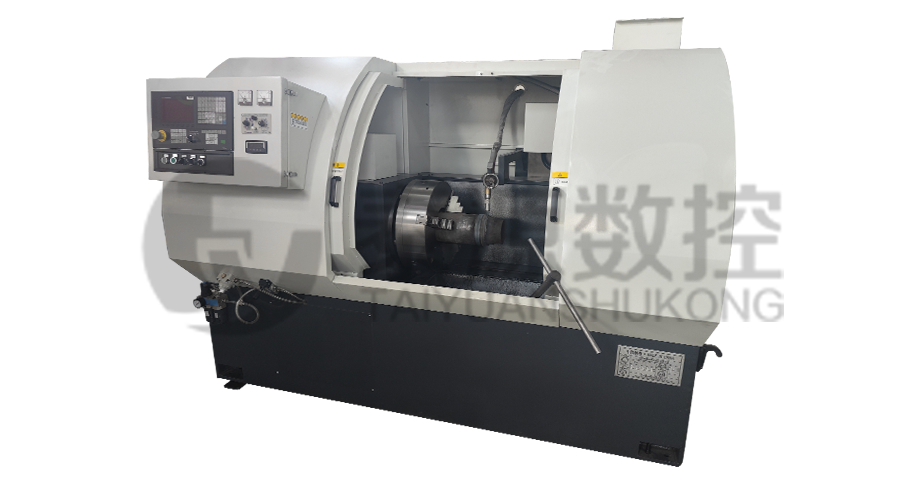 Series:TYSK-HB Semi-automatic wear-resistant band welder
Applicable to ARNCO 100XT, 200XT, 300XT. Support φ1.2-2.0 cored or solid wire surfacing welding.Can be equipped with single gun spray welding and double gun spray welding two ways. Support PLC or CNC system control.
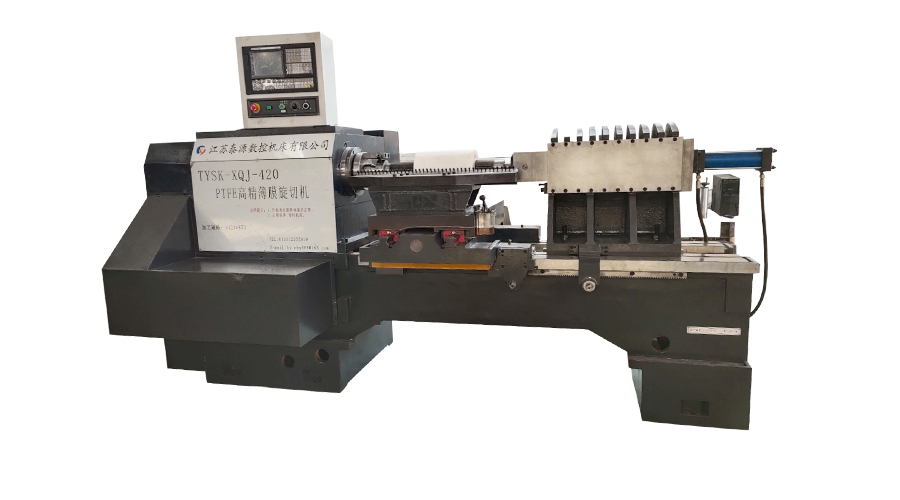 Model:TYSK-XQJ-550 Medium & Large PTFE Film Skiving Machine
Designed to process blanks with a maximum diameter of 550 mm and a maximum length of 1000 mm. We can also customize according to the needs of users. Friendly change speed and thickness with CNC.
