



 English
  عربى
عربى  中文简体
中文简体

Reminder information

Dec 19, 2025
Content
The performance of any high precision pipe threading machine heavily depends on its mechanical and sensor components. Core components include the screw chuck, spindle, and linear guide system. A well-designed spindle with minimal runout ensures that threads are consistent along the entire pipe length.
| Component | Manual System | Automated System |
| Spindle Runout | ±0.05 mm | ±0.01 mm |
| Linear Guide Accuracy | ±0.08 mm | ±0.02 mm |
| Feedback Sensor | None or limited | High-resolution optical/encoder sensors |
An automatic pipe loading and unloading system reduces human error and ensures each pipe is precisely positioned before threading. Automated systems can handle repetitive positioning with millimeter-level accuracy.
| Aspect | Manual Loading | Automatic Loading |
| Positioning Accuracy | ±0.1–0.2 mm | ±0.01–0.02 mm |
| Cycle Time | High variability | Consistent and shorter |
| Thread Quality | Occasional errors | High repeatability |
Optimization focuses on minimizing vibration and ensuring rigidity. Techniques include reinforcing the machine bed, using high-precision bearings, and implementing real-time calibration systems that adjust for thermal and mechanical variations.
| Optimization Method | Before Optimization | After Optimization |
| Vibration Level | 0.8 mm/s | 0.2 mm/s |
| Thread Accuracy | ±0.05 mm | ±0.01 mm |
| Operator Intervention | Frequent | Minimal |
High-speed threading introduces thermal expansion and wear issues. Proper spindle design, cooling, and lubrication are critical. High-speed machines with robust design maintain thread precision without sacrificing throughput.
| Parameter | Standard Speed | High Speed |
| Spindle Temp Rise | 5°C | 12°C |
| Thread Accuracy | ±0.02 mm | ±0.03 mm |
| Wear Rate | Moderate | Increased without proper lubrication |
Reliable repeatable positioning is achieved through regular maintenance, software-assisted error compensation, and integration with automation sensors. Scheduled inspections of the chuck, guides, and feedback system maintain the accuracy over time.
| Maintenance Aspect | Without Systematic Checks | With Systematic Checks |
| Positioning Repeatability | ±0.05 mm | ±0.01 mm |
| Downtime Frequency | High | Low |
| Thread Quality | Variable | Consistent |
Automation eliminates manual alignment errors. Coupled with precision sensors and software control, each pipe is consistently positioned to within ±0.01 mm, ensuring uniform threads and reducing rework.
Routine lubrication, spindle inspection, linear guide calibration, and periodic software recalibration are critical. High-speed operation without maintenance can reduce accuracy and shorten component life.
If thermal expansion, vibration, and spindle wear are not addressed, high-speed threading may slightly reduce precision. Using proper cooling, vibration damping, and lubrication maintains high-quality threads.
Optical or encoder sensors detect pipe position in real-time, allowing precise alignment before threading. They compensate for small deviations and ensure consistent quality in repeated cycles.
The company integrates robust mechanical design, high-quality materials, and advanced software calibration. Coupled with strict quality control, this guarantees long-term accuracy and efficiency even in high-speed production.
Related Products
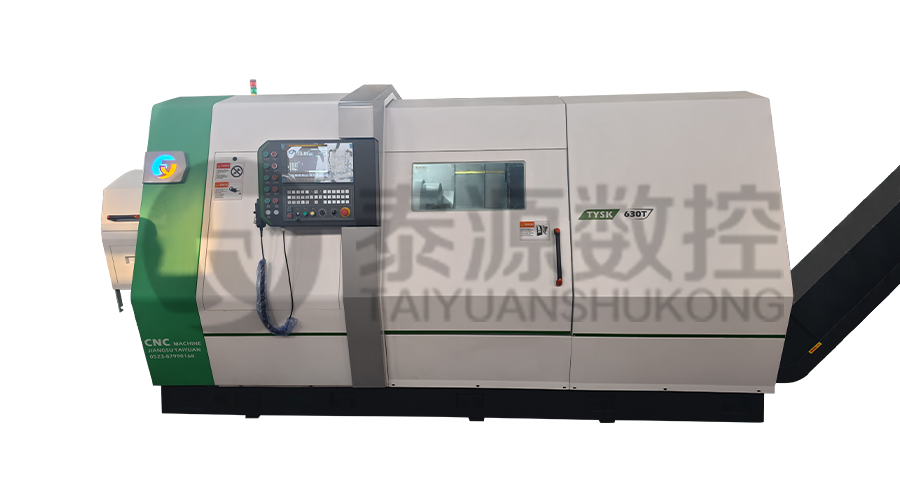 Model:TYSK-630T Drill Pipe, Joint & Coupling Lathe
The machine adopts a FANUC CNC system with stable processing accuracy and flexible programming functions to ensure that the processed parts meet strict industry standards. The high torque and heavy-load design can cope with long-term continuous work and has strong durability.
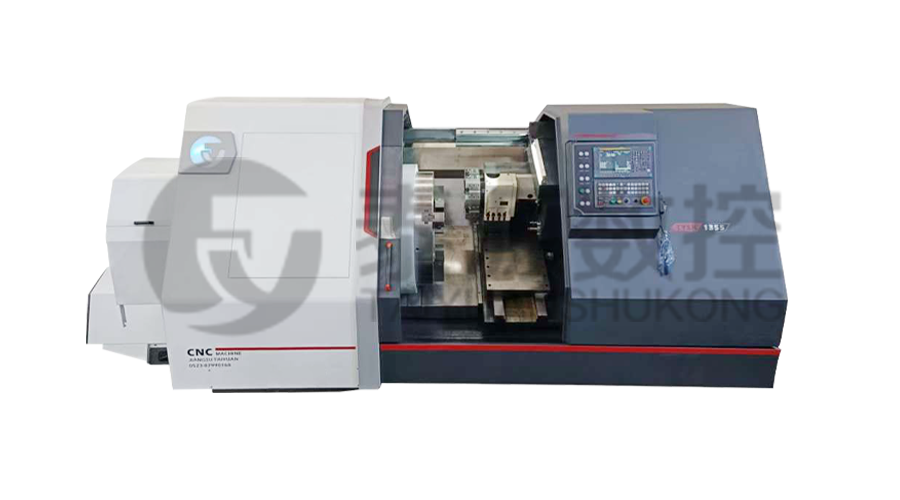 Model:TYSK-1355 Oil Pipe Processing Lathe
The machine adopts a FANUC CNC system with stable processing accuracy and flexible programming functions to ensure that the processed parts meet strict industry standards. The high torque and heavy-load design can cope with long-term continuous work and has strong durability.
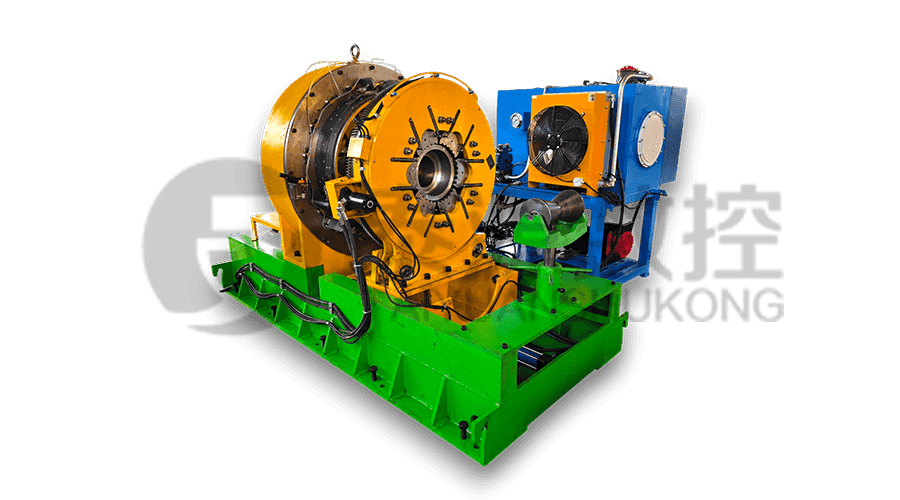 Series:TYSK-NKJ Screw-on machine/Casing and tubing coupling bucking unit
The machine uses a hydraulic motor, mechanical floating mechanism, and real-time torque detection, adapts to material bending, and prevents material deformation. Auxiliary machines are configured to help with semi-automation.
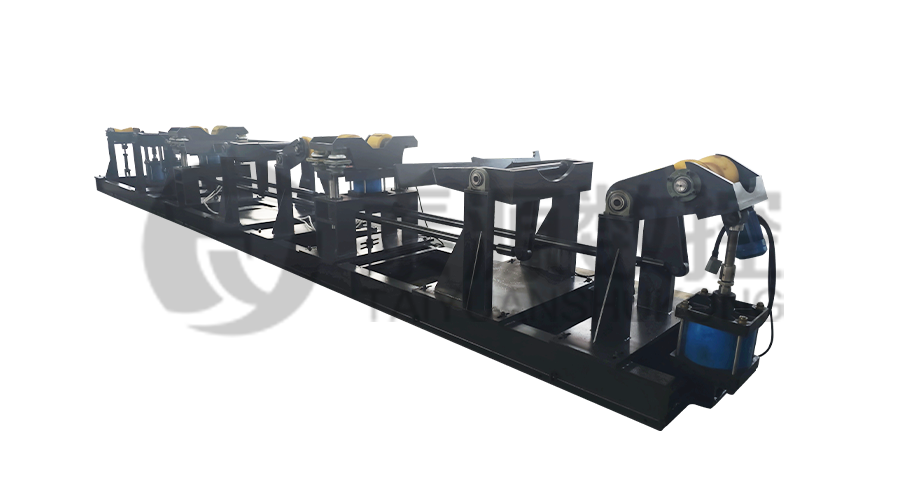 Long, heavy material solutions Automatic loading and unloading mechanism for pipe threading
The special flexible support mode can effectively reduce the influence of workpiece bending on processing and improve the yield. Strictly matching with our pipe threading lathe.
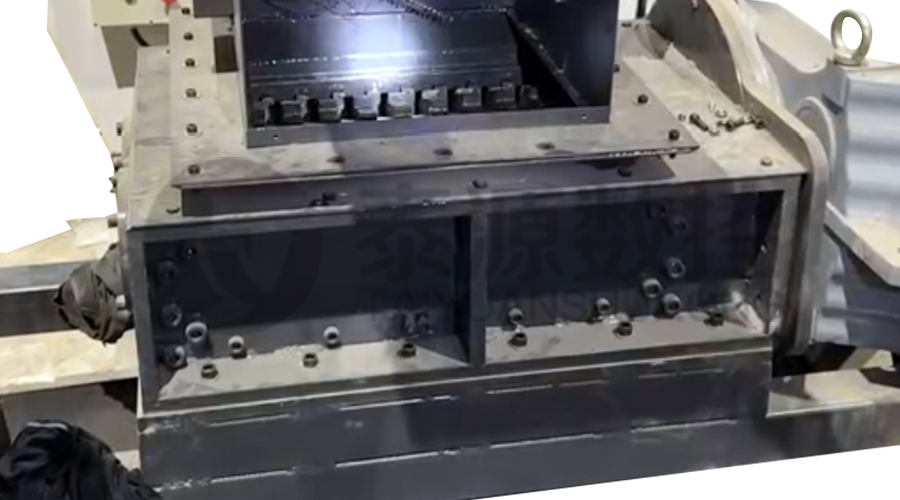 Modular Iron Chip Crusher High strength crusher for chip
The blades are made of high-strength materials and reasonably placed at the exit of the chip extractor to break the clump iron chips.Reduce the risk of rollback and improve waste frame utilization.
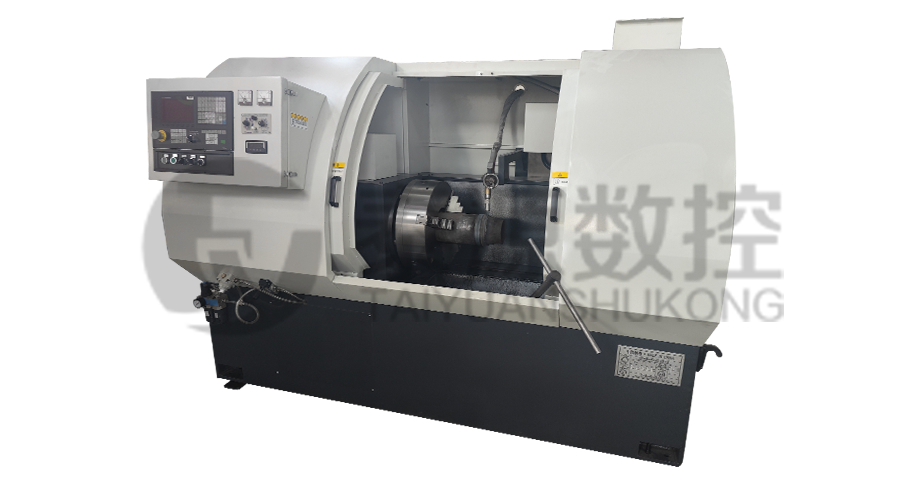 Series:TYSK-HB Semi-automatic wear-resistant band welder
Applicable to ARNCO 100XT, 200XT, 300XT. Support φ1.2-2.0 cored or solid wire surfacing welding.Can be equipped with single gun spray welding and double gun spray welding two ways. Support PLC or CNC system control.
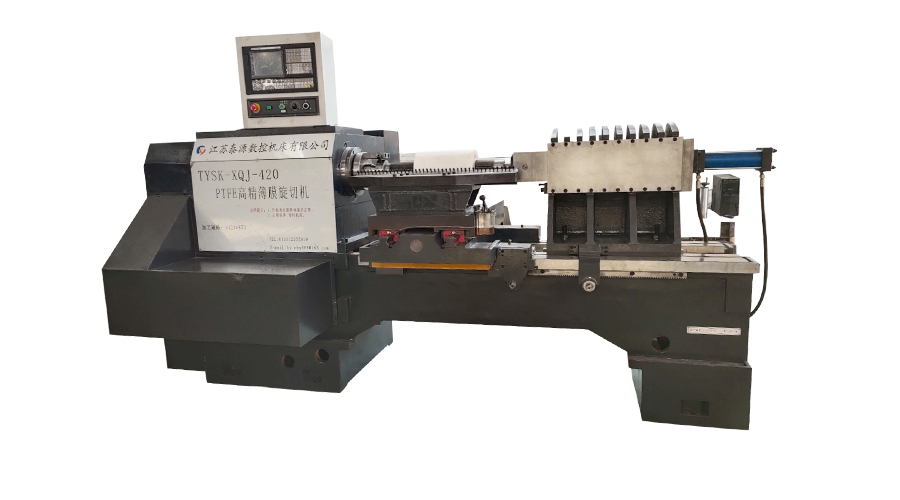 Model:TYSK-XQJ-550 Medium & Large PTFE Film Skiving Machine
Designed to process blanks with a maximum diameter of 550 mm and a maximum length of 1000 mm. We can also customize according to the needs of users. Friendly change speed and thickness with CNC.
