



 English
  عربى
عربى  中文简体
中文简体

Reminder information

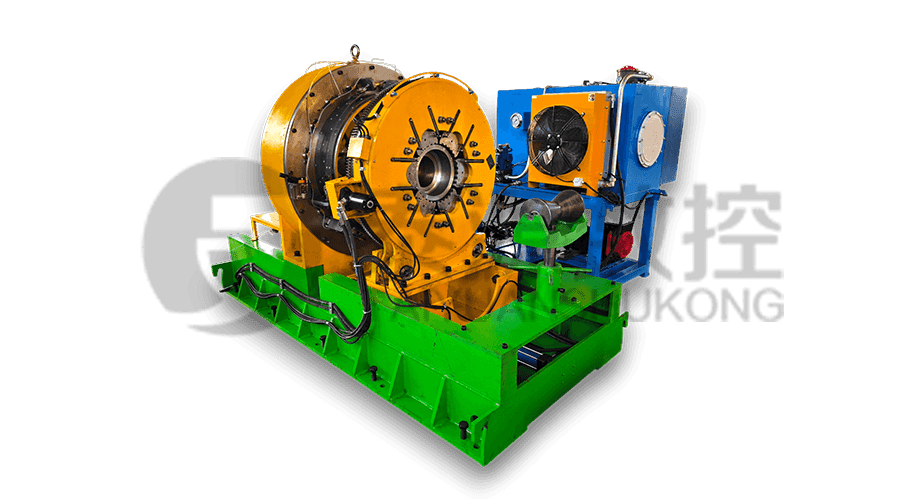
Sep 23, 2026
Content
When a workshop starts processing casing and tubing, one of the first equipment decisions is how to make up and break out threaded connections. A bucking unit and a pipe torque machine both apply torque to threaded pipe, but they are not interchangeable in an oil country tubular goods (OCTG) production line. Understanding the difference affects your connection quality, cycle time, and ability to meet API requirements.
The direct answer is this: choose a bucking unit when your work revolves around casing, tubing, and coupling connections that need precise, reproducible torque. Choose a pipe torque machine only when you need a more flexible tool for occasional thread makeup or when the connections are not governed by strict oilfield specifications.
A bucking unit is a machine designed to screw couplings onto oil country tubular goods, or to break them apart, using controlled rotation and torque. It grips the pipe body and the coupling independently, then applies a pre-set torque to produce a connection that meets the specified makeup standard. Typical applications include running couplings on casing and tubing, attaching drill pipe tool joints, and preparing connections before the pipe goes to the well site.
Because the bucking unit is built for a narrow set of tasks, it can be tuned to deliver high torque repeatability and consistent turn counts. This makes it easier to document quality for every joint. A well-designed bucking unit also handles large-diameter, heavy-wall pipe without sacrificing speed. For a deeper look at how torque control and changeover work in practice, see our article on bucking unit torque control and changeover.
A pipe torque machine is a broader term. It can refer to any powered device that grips pipe and applies torque to tighten or loosen threaded connections. Some units are portable, some are bench-mounted, and others are integrated into pipe handling systems. They are useful in maintenance shops, fabrication yards, and general pipe assembly where a variety of thread types and sizes need to be handled.
The limitation is that a general-purpose pipe torque machine may not offer the same level of rigidity, spindle support, or torque monitoring as a dedicated bucking unit. If you are working with API-grade casing or tubing, the difference in measurement accuracy can mean the difference between a connection that seals properly and one that leaks at the wellhead.
The table below summarizes the main points of comparison. Use it as a quick reference during vendor selection.
| Comparison Factor | Bucking Unit | Pipe Torque Machine |
|---|---|---|
| Primary Application | OCTG coupling makeup and breakout | General threaded pipe assembly and repair |
| Torque Control | High-resolution digital control with repeatable settings | Often manual or less precise control |
| Thread Monitoring | Built-in monitoring of turns, position, and torque curve | Usually limited to torque cutoff |
| Rigidity and Workpiece Support | Heavy-duty spindle and steady rests for large pipe | Variable depending on design |
| API Compliance | Can be configured to meet API 5CT and API 5B requirements | Not specifically designed for API OCTG |
| Production Throughput | High, with automated cycles for batch processing | Moderate, better suited to non-repetitive work |
| Investment and Floor Space | Higher initial cost, compact footprint for its capacity | Lower entry cost, but may need additional equipment |
The most significant difference is how the machine controls and records torque. A bucking unit continuously measures torque and rotation angle, allowing operators to set an optimum makeup window. A pipe torque machine may only indicate the target torque value, leaving more room for human error and making it harder to reproduce the same connection quality on every joint.
Bucking units are designed to fit into a continuous processing line. They can be paired with threading lathes, washing stations, and inspection benches to move pipe from raw material to finished product. A general-purpose pipe torque machine is more likely to be used as a standalone tool, which can create bottlenecks in a high-volume shop and require extra material handling between process steps.
When your process has to satisfy API specifications, the documentation trail becomes part of the output. A bucking unit with digital data logging can record torque values for each joint and export them for traceability. Pipe torque machines rarely offer this level of documentation. For operators supplying casing and tubing to drilling programs, this is a decisive advantage. Keep in mind the requirements for API 5CT bucking compliance considerations when you compare quotes.
Your decision should be driven by the work you do today and the work you plan to do over the next few years. A vendor may offer a low-cost torque machine, but you need to evaluate the total cost of ownership, including rework, rejected joints, and lost inspection time. Ask yourself the following questions:
If most answers are positive, a dedicated bucking unit is the right investment. It will give you tighter process control and higher throughput than a general-purpose pipe torque machine. And when the time comes to expand, the unit can be integrated into a coupling intelligent production line to automate loading, threading, bucking, and inspection together.
The gap between the two machine types becomes clear when you compare the actual cost per joint. A bucking unit shortens cycle time, reduces rework, and gives your quality team reliable data. It also protects the thread form from galling and damage because the machine controls the entire engagement path, not just the final torque peak.
At Jiangsu Taiyuan CNC Machine Tool, we design bucking units around the requirements of casing and tubing shops. One practical example is the TYSKNKJ-100 series casing and tubing coupling bucking unit, which combines a rigid spindle, programmable torque curve, and easy changeover for different pipe diameters. The machine is built to hold tight tolerances on connection makeup while remaining simple enough for operators to learn quickly.
A pipe torque machine has its place in maintenance and general fabrication, but it cannot replace the specialized function of a bucking unit in an OCTG workshop. The differences in torque precision, production integration, and compliance reporting are substantial. If your goal is consistent, documented, API-ready connections, invest in equipment that was designed for that task.
To see how a purpose-built bucking unit fits into your floor plan, start by reviewing a list of relevant oil country processing equipment. Compare the options on torque range, spindle bore, control system, and service support before making your decision.
Related Products
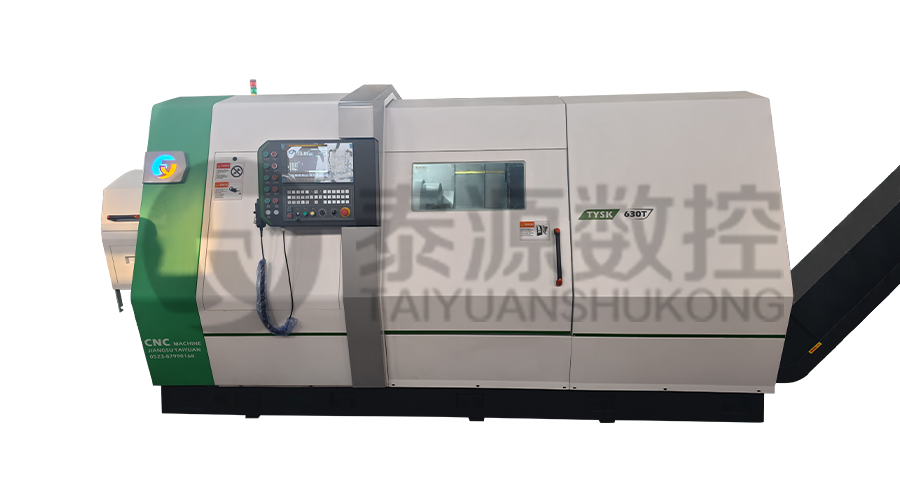 Model:TYSK-630T Drill Pipe, Joint & Coupling Lathe
The machine adopts a FANUC CNC system with stable processing accuracy and flexible programming functions to ensure that the processed parts meet strict industry standards. The high torque and heavy-load design can cope with long-term continuous work and has strong durability.
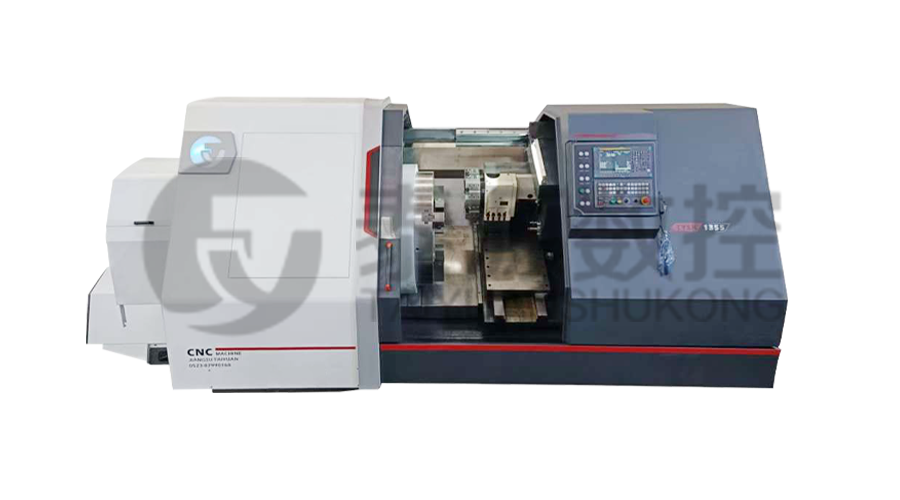 Model:TYSK-1355 Oil Pipe Processing Lathe
The machine adopts a FANUC CNC system with stable processing accuracy and flexible programming functions to ensure that the processed parts meet strict industry standards. The high torque and heavy-load design can cope with long-term continuous work and has strong durability.
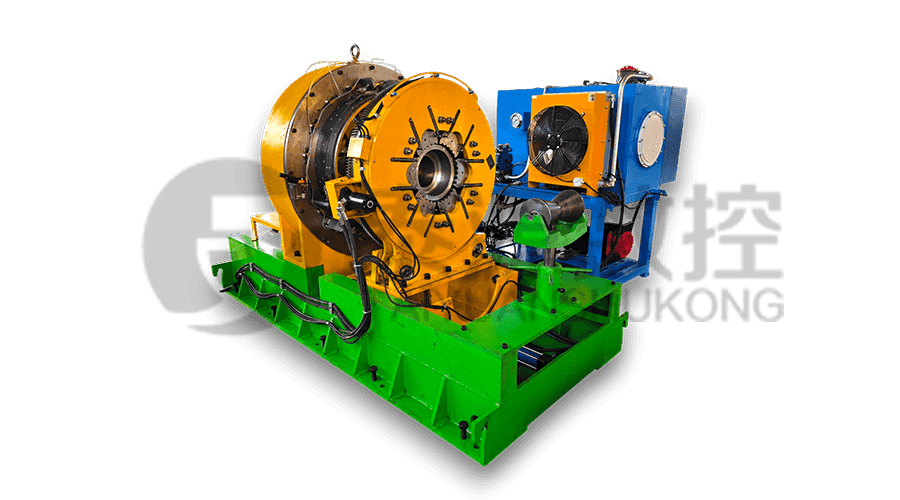 Series:TYSK-NKJ Screw-on machine/Casing and tubing coupling bucking unit
The machine uses a hydraulic motor, mechanical floating mechanism, and real-time torque detection, adapts to material bending, and prevents material deformation. Auxiliary machines are configured to help with semi-automation.
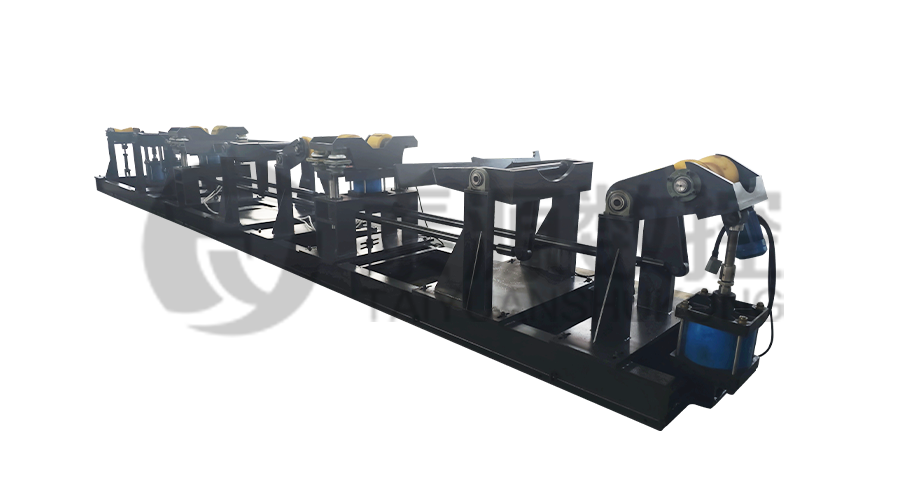 Long, heavy material solutions Automatic loading and unloading mechanism for pipe threading
The special flexible support mode can effectively reduce the influence of workpiece bending on processing and improve the yield. Strictly matching with our pipe threading lathe.
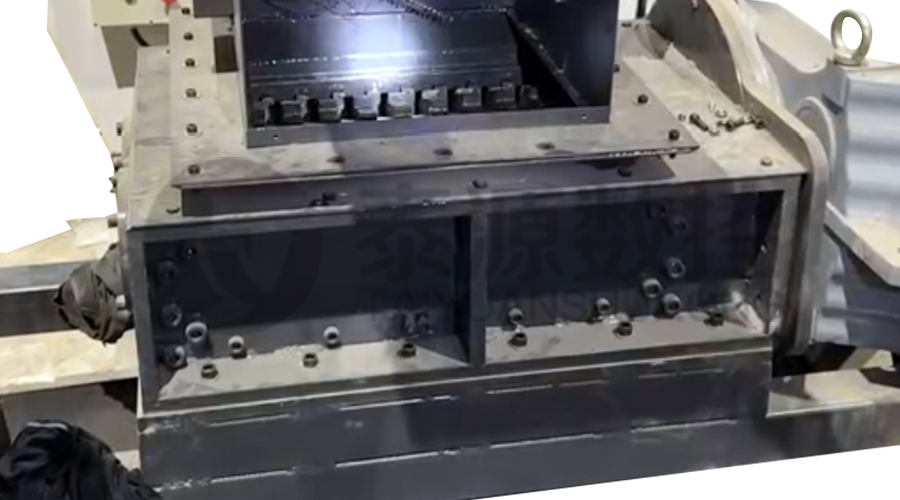 Modular Iron Chip Crusher High strength crusher for chip
The blades are made of high-strength materials and reasonably placed at the exit of the chip extractor to break the clump iron chips.Reduce the risk of rollback and improve waste frame utilization.
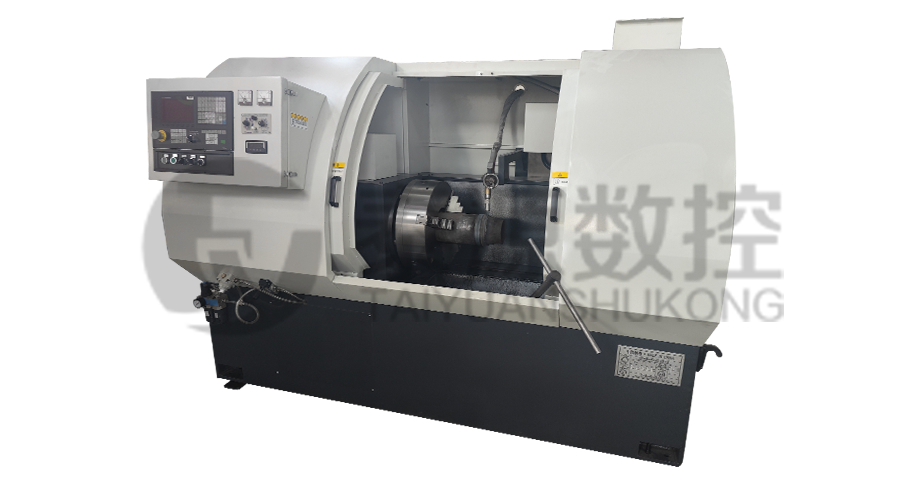 Series:TYSK-HB Semi-automatic wear-resistant band welder
Applicable to ARNCO 100XT, 200XT, 300XT. Support φ1.2-2.0 cored or solid wire surfacing welding.Can be equipped with single gun spray welding and double gun spray welding two ways. Support PLC or CNC system control.
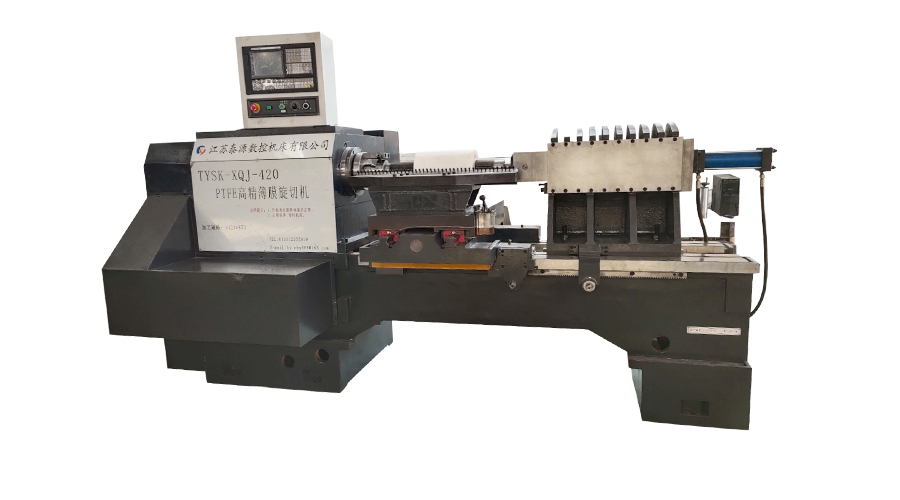 Model:TYSK-XQJ-550 Medium & Large PTFE Film Skiving Machine
Designed to process blanks with a maximum diameter of 550 mm and a maximum length of 1000 mm. We can also customize according to the needs of users. Friendly change speed and thickness with CNC.
