



 English
  عربى
عربى  中文简体
中文简体

Reminder information

Sep 30, 2026
Content
When you compare a hydraulic bucking unit vs mechanical bucking unit, the first difference is not price; it is how torque is controlled. Choose a hydraulic unit when you need repeatable make-up torque, data records, and less operator dependence. Choose a mechanical unit when your volume is low, your torque tolerance is wide, and you want a simpler machine that a local workshop can repair. Neither type is universally better. The realistic question is which failure mode your operation can afford.
A bucking unit is a torque-controlled wrench for threaded tubular connections. It makes up or breaks out tubing, casing, and drill pipe connections without cutting threads. The thread form is created by a lathe; the bucking unit controls how tightly the pin and box are assembled.
That distinction matters. A bucking unit cannot fix a poor thread. A thread that is already cut out of tolerance will be no safer after make-up. If you are selecting a complete shop, the lathe and the bucking unit should be chosen as a pair. For the machining side, an oil pipe processing lathe with sufficient spindle bore and torque determines thread geometry. The bucking unit then determines connection integrity.
Torque is rarely a single number. Most connection programs specify a recommended make-up torque range, for example 3,800 to 4,600 ft-lb. Under-torque can cause leaks or loosening downhole. Over-torque can gall threads, yield the shoulder, or distort the coupling. A device that holds torque inside that window reliably is worth more than a device that simply reaches a number occasionally.
A mechanical bucking unit typically uses an electric motor, a gearbox, and an adjustable torque-limiting clutch or brake. The operator sets the clutch manually, engages the drive, and watches a torque gauge. Some mechanical designs use a load cell on a torque arm. Others rely on clutch slip as the trigger.
Mechanical machines are understandable. There is no hydraulic oil to change, no servo valve to tune, and no controller software to update. Gears and bearings can be repaired by a local maintenance crew. First cost is lower. For a workshop that makes up a few joints per week and has a generous torque window, that simplicity may be the most valuable feature.
The risk is drift. Clutch torque changes as linings wear, as temperature rises, and as settings are bumped. An experienced operator can feel when a connection is about to reach the shoulder and ease off in time. That skill is real, but it is also hard to repeat across shifts and hard to prove later. The same machine that made up 100 good joints on Monday may run hundreds of foot-pounds high on a hot Friday afternoon. For high-volume work, premium connections, or client audits, that is a serious problem.
A hydraulic bucking unit replaces the manual clutch with a hydraulic motor and a closed-loop controller. The controller reads torque from a transducer or a pressure sensor, compares it with the programmed target, and adjusts the drive in real time. When the connection reaches the target, the controller holds the torque briefly and then stops.
Closed-loop control removes most of the operator's judgment. The unit applies the same ramp, the same peak torque, and the same dwell time cycle after cycle. If the torque window is tight, or if the connection must be made up exactly the same way on every joint, this repeatability is the strongest argument for hydraulic.
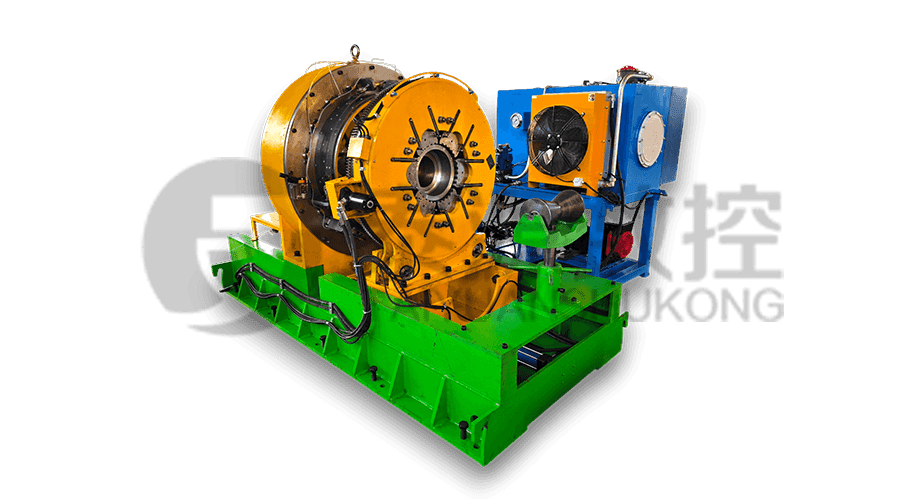
For a production shop, a hydraulic bucking unit such as the TYSKNKJ-100 series casing and tubing coupling bucking unit is built around this logic: program the target, let the controller stop the drive, and avoid relying on feel.
Many hydraulic controllers can record peak torque, connection number, date, and operator. That record is useful when a customer asks for evidence that a joint was assembled inside its recommended range. Mechanical units can be retrofitted with sensors, but the torque control remains manual. The technical principles behind powerful torque output are useful to understand before you specify a machine; you can read more about tubing coupling bucking unit technical principles separately.
No table can replace a trial with your own connections, but the table below summarizes the usual differences.
| Feature | Mechanical bucking unit | Hydraulic bucking unit |
|---|---|---|
| Torque setting | Manual clutch or brake adjustment | Programmed target through controller |
| Torque repeatability | Depends on operator and clutch condition | High under closed-loop control |
| Operator skill requirement | High | Moderate |
| Torque feedback | Mechanical gauge, sometimes load cell | Digital torque transducer |
| Data recording | Typically manual | Built-in or optional records |
| First cost | Lower | Higher |
| Maintenance | Simpler, often field repairable | Requires oil, filters, seals, and electronic diagnosis |
| Best fit | Low volume, wide torque tolerance | High volume, premium threads, traceability |
First cost is the most visible number, not the most important one.
Mechanical units are cheaper to buy. They can be a sensible choice when the cost of a rejected connection is low and the volume is small. But if a single over-torqued coupling is scrapped, or if a leak develops after installation, the savings disappear quickly. A hydraulic unit usually has a higher first cost but can pay for itself through fewer damaged connections, faster cycles, and less rework.
Mechanical machines fail in understandable ways: gear wear, bearing noise, and clutch lining wear. Most good maintenance crews can handle these. Hydraulic machines fail in different ways: seal leaks, dirty filters, faulty sensors, or a failed proportional valve. They are not necessarily harder to maintain, but they demand clean oil and scheduled checks. If your site has no one who understands hydraulics and controllers, the mechanically simpler unit may be the lower-risk choice.
Both types can injure people if they are used carelessly. A mechanical unit can store energy in a spinning flywheel or a slipping clutch. An operator who adjusts the clutch while the drive is engaged is taking a serious risk. A hydraulic unit stores energy in hoses and accumulators; maintenance requires lowering pressure and locking out the power supply.
Look for guards around the rotating tongs, a clear operator zone, and a procedure for handling skid-mounted equipment. Automation can reduce over-torque, but it does not replace machine guarding or lockout/tagout.
Write down every connection you plan to run: tubing OD, casing OD, thread type, recommended make-up torque, and tolerance. If the tolerance is tight, or if the connection is a premium product, hydraulic control is the safer answer. If the connections are forgiving and the volume is low, mechanical may be enough. A practical walkthrough of selection criteria is available in our comparison of how to choose screw-on machines for casing and tubing coupling bucking.
If your quality plan requires a record for every connection, choose a unit that can generate that record. The relationship between make-up torque and compliance is not optional for API products. Before you buy, review the points that matter in API 5CT bucking compliance considerations.
A bucking unit that is fast but surrounded by manual material handling may not reduce cycle time as much as you expect. If you are building a high-volume coupling shop, a coupling intelligent production line can combine bucking with cleaning, inspection, and handling in one flow. It is a larger investment, but it removes the operator from the repetitive part of the job.
Choose mechanical when simplicity and low first cost outrank precision and documentation. Choose hydraulic when repeatability, traceability, and production speed outrank the initial price. For API tubular work, premium connections, or multi-shift production, a hydraulic bucking unit is usually the better long-term decision. For a low-volume shop with an experienced operator and a maintenance crew that knows the machine, a mechanical unit can still be the right answer.
The best choice is the one matched to your torque range, your maintenance capability, and the quality records your customers expect.
Related Products
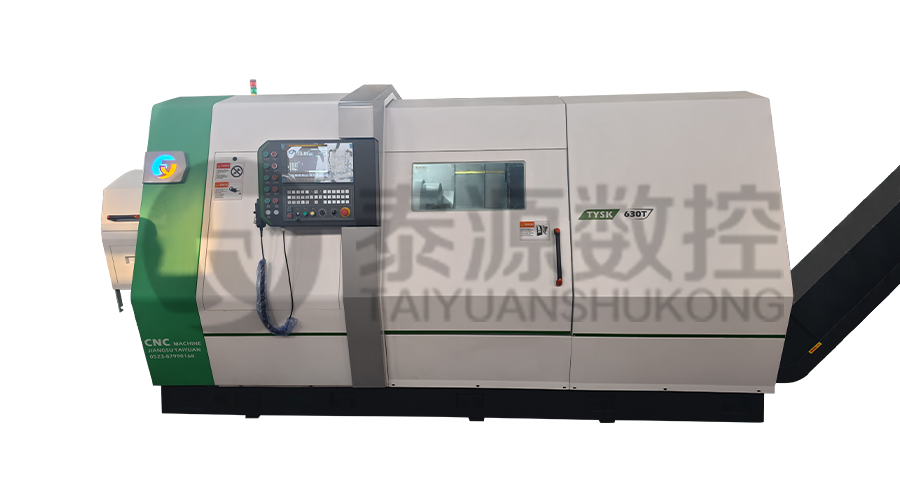 Model:TYSK-630T Drill Pipe, Joint & Coupling Lathe
The machine adopts a FANUC CNC system with stable processing accuracy and flexible programming functions to ensure that the processed parts meet strict industry standards. The high torque and heavy-load design can cope with long-term continuous work and has strong durability.
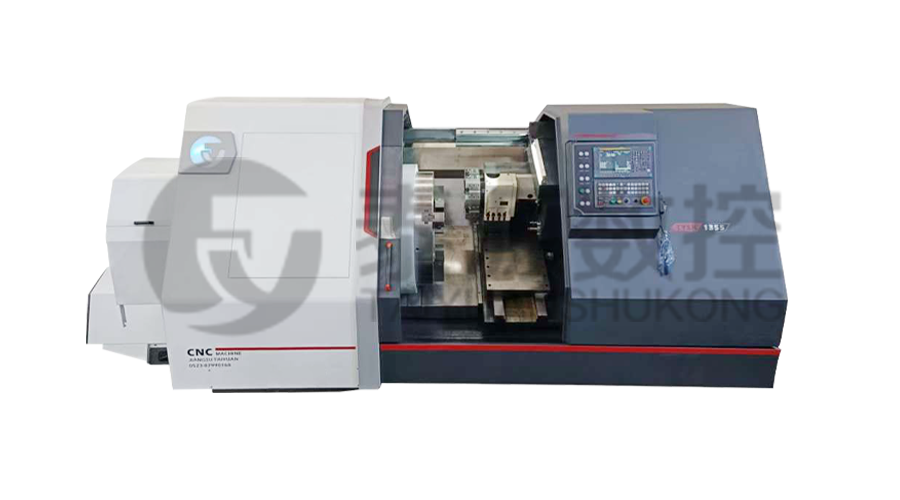 Model:TYSK-1355 Oil Pipe Processing Lathe
The machine adopts a FANUC CNC system with stable processing accuracy and flexible programming functions to ensure that the processed parts meet strict industry standards. The high torque and heavy-load design can cope with long-term continuous work and has strong durability.
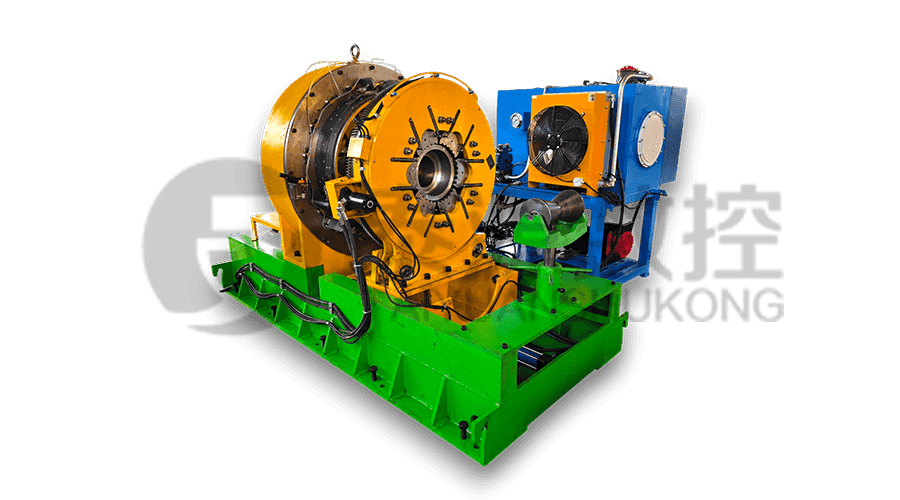 Series:TYSK-NKJ Screw-on machine/Casing and tubing coupling bucking unit
The machine uses a hydraulic motor, mechanical floating mechanism, and real-time torque detection, adapts to material bending, and prevents material deformation. Auxiliary machines are configured to help with semi-automation.
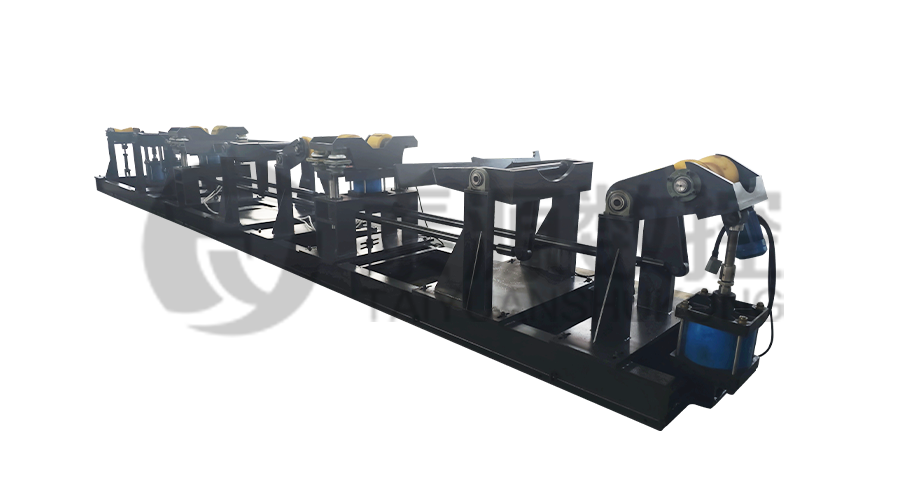 Long, heavy material solutions Automatic loading and unloading mechanism for pipe threading
The special flexible support mode can effectively reduce the influence of workpiece bending on processing and improve the yield. Strictly matching with our pipe threading lathe.
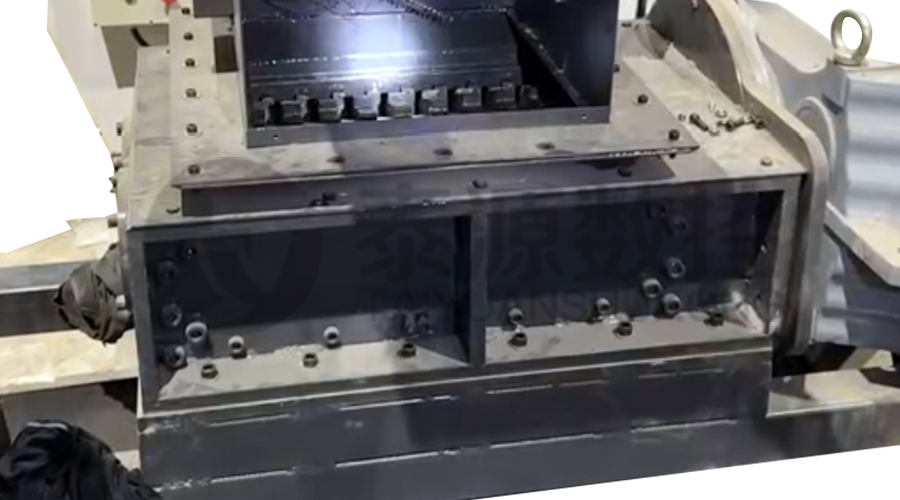 Modular Iron Chip Crusher High strength crusher for chip
The blades are made of high-strength materials and reasonably placed at the exit of the chip extractor to break the clump iron chips.Reduce the risk of rollback and improve waste frame utilization.
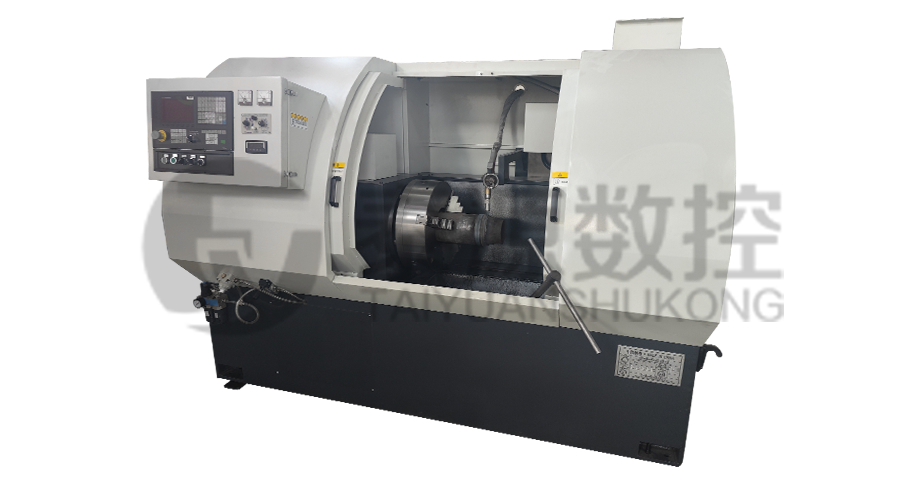 Series:TYSK-HB Semi-automatic wear-resistant band welder
Applicable to ARNCO 100XT, 200XT, 300XT. Support φ1.2-2.0 cored or solid wire surfacing welding.Can be equipped with single gun spray welding and double gun spray welding two ways. Support PLC or CNC system control.
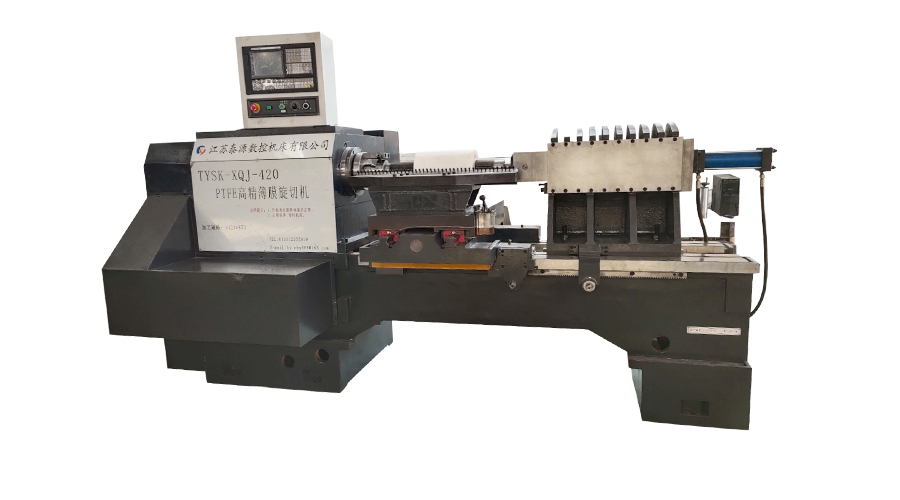 Model:TYSK-XQJ-550 Medium & Large PTFE Film Skiving Machine
Designed to process blanks with a maximum diameter of 550 mm and a maximum length of 1000 mm. We can also customize according to the needs of users. Friendly change speed and thickness with CNC.
