



 English
  عربى
عربى  中文简体
中文简体

Reminder information

Sep 09, 2026
Content
Advanced casing and tubing coupling bucking units are essential equipment in modern oil and gas manufacturing, delivering precise torque control and consistent coupling installation quality. These automated systems transform tubular connection operations by eliminating human error and ensuring reliable sealing performance in high-pressure oilfield environments.
The quality of threaded connections in casing and tubing directly determines well integrity, operational safety, and long-term production reliability. Manual or inconsistent coupling installation can lead to loose connections, premature failure, and costly downtime.
Casing and tubing coupling bucking units address these challenges by automating the make-up process with repeatable precision. Equipment manufacturers and OCTG suppliers rely on these systems to achieve consistent torque values, proper thread engagement, and superior connection reliability across high-volume production runs.
Modern casing and tubing coupling bucking units feature advanced load cells and real-time monitoring systems that deliver torque accuracy within 2-3% tolerance. This precision ensures consistent thread engagement and optimal connection strength in every coupling installation, whether processing standard API casing or premium tubing specifications.
Hydraulic or electric clamping mechanisms automatically align pipe ends and secure stable positioning during the make-up process. This eliminates operator dependency and reduces installation time from 60-90 seconds per connection down to 15-25 seconds, dramatically increasing production throughput.
Leading bucking unit designs support a wide range of casing diameters (4.5" to 13-3/8") and tubing sizes (2-3/8" to 5.5"), with adjustable parameters for different thread types and API standards. This flexibility allows manufacturers to run multiple product lines on a single processing system.
Comparative analysis of connection quality metrics with automated bucking units versus manual make-up operations
By automating the coupling installation process, manufacturers can process 40-60% more connections per shift. A facility with three coupling stations equipped with casing and tubing coupling bucking units can typically increase annual production capacity by 8,000-12,000 metric tons while maintaining consistent quality standards.
Automated torque control eliminates the variability inherent in manual threading operations. PLC-based control systems monitor and log every connection, ensuring repeatability and providing data for quality assurance programs. This capability is essential for meeting API 5CT and API 5L specifications in competitive OCTG markets.
Integration with production planning systems allows real-time scheduling adjustments based on equipment performance data. Manufacturers can optimize batch sizes, reduce inventory holding time, and lower per-unit processing costs while improving overall equipment utilization rates to 90%+ levels.
Large-scale casing and tubing producers deploy casing and tubing coupling bucking units in coupling installation lines to ensure every connection meets premium-connection specifications. Premium threads (PT, XT, VAM, Hydril) require tight torque tolerances that only automated systems can reliably achieve.
Drilling contractors and well completion service providers use portable or semi-automated bucking units on drilling sites and service rigs to ensure proper connection makeup during well construction and maintenance operations. This ensures field-made connections meet the same quality standards as factory-threaded joints.
Custom pipe processors and specialty tubular manufacturers integrate bucking units into their production lines to handle both standard and non-standard sizing requirements. These systems often feature quick-change adapter systems to accommodate multiple pipe geometries and thread configurations.
Six-month quality tracking showing defect reduction following deployment of automated coupling bucking systems across three production facilities
Start by documenting the full range of casing and tubing sizes you process, including diameter, wall thickness, grade, and thread type. Bucking unit selection must align with your product portfolio and production scheduling requirements.
Modern casing and tubing coupling bucking units offer varying levels of automation: basic manual control, semi-automatic with torque monitoring, or fully automatic PLC-integrated systems. Higher automation levels reduce operator training needs and improve consistency but require greater initial investment.
Request factory testing data confirming torque calibration accuracy, repeatability, and alignment precision. Qualified suppliers should provide documented proof of compliance with API specifications and customer-specific performance requirements.
Choose manufacturers with proven engineering expertise, responsive technical support, availability of spare parts, and willingness to customize designs for specialized applications. Long-term partnerships with reliable suppliers ensure continuous equipment performance and minimize unexpected downtime.
Investing in premium casing and tubing coupling bucking units from established manufacturers delivers measurable returns through improved connection quality, increased production capacity, and reduced operational risk. These systems represent a cornerstone technology for OCTG producers, pipe processors, and oilfield service companies seeking competitive advantage in quality-sensitive markets.
Whether you're upgrading existing coupling installation lines or building new production facilities, selecting equipment that matches your specifications and performance requirements is essential for long-term success in tubular manufacturing.
Leading systems deliver torque accuracy within 2-3% of target values, ensuring consistent thread engagement across all connections. This precision is critical for premium connections and high-pressure wellbore applications.
Automated systems typically reduce coupling installation time from 60-90 seconds to 15-25 seconds per connection, representing 60-75% time savings and proportional increases in production throughput.
Yes, modern designs support diameter ranges from 2-3/8" to 13-3/8" with adjustable parameters and quick-change fixtures accommodating different thread types and API standards across product lines.
Most facilities see payback within 12-18 months through production capacity increases (40-60%), defect reduction (70-80%), and labor cost optimization, with ongoing cost savings extending for the equipment's 10-15 year service life.
Yes, specialized portable and skid-mounted systems are available for drilling sites, service rigs, and mobile applications where permanent installation isn't feasible, offering similar accuracy benefits with deployment flexibility.
Related Products
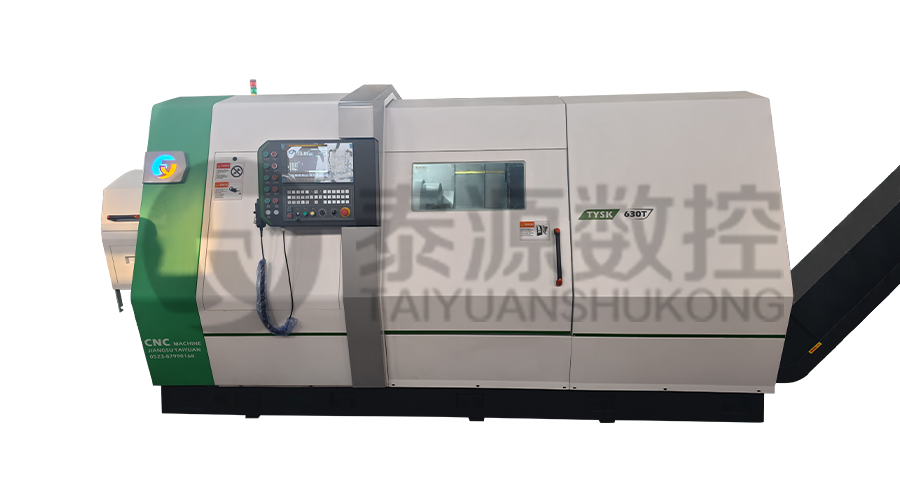 Model:TYSK-630T Drill Pipe, Joint & Coupling Lathe
The machine adopts a FANUC CNC system with stable processing accuracy and flexible programming functions to ensure that the processed parts meet strict industry standards. The high torque and heavy-load design can cope with long-term continuous work and has strong durability.
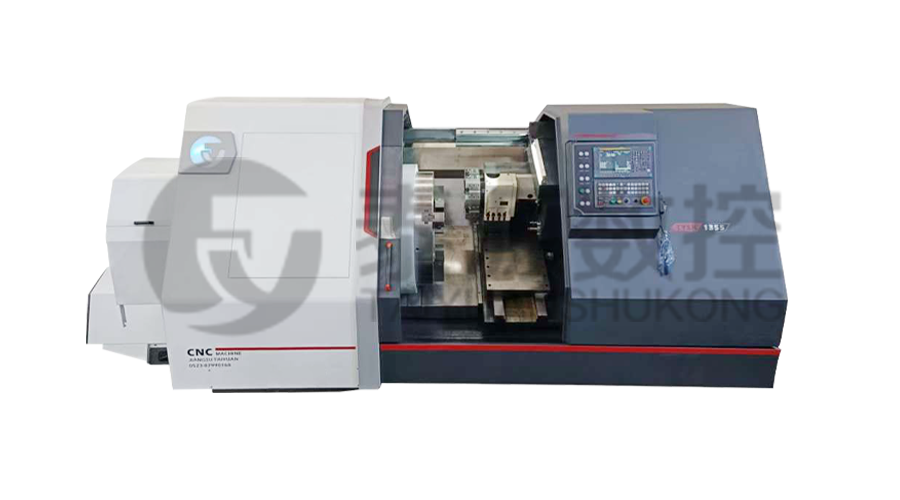 Model:TYSK-1355 Oil Pipe Processing Lathe
The machine adopts a FANUC CNC system with stable processing accuracy and flexible programming functions to ensure that the processed parts meet strict industry standards. The high torque and heavy-load design can cope with long-term continuous work and has strong durability.
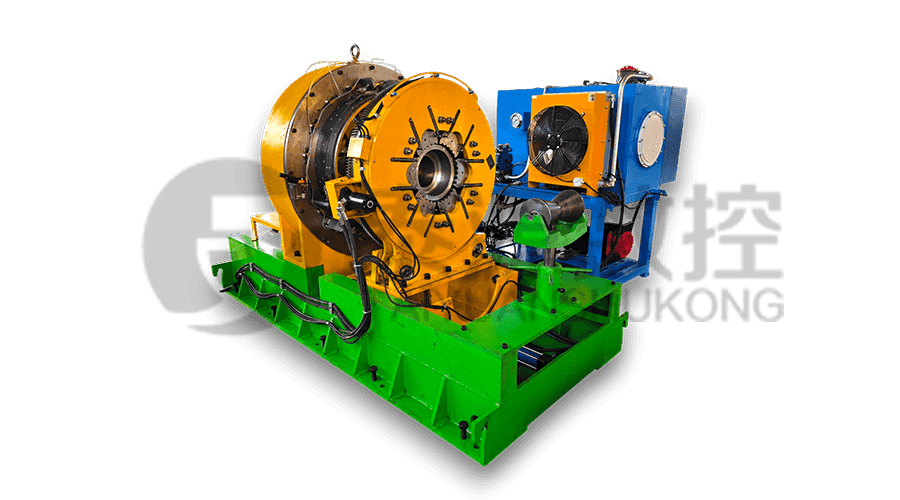 Series:TYSK-NKJ Screw-on machine/Casing and tubing coupling bucking unit
The machine uses a hydraulic motor, mechanical floating mechanism, and real-time torque detection, adapts to material bending, and prevents material deformation. Auxiliary machines are configured to help with semi-automation.
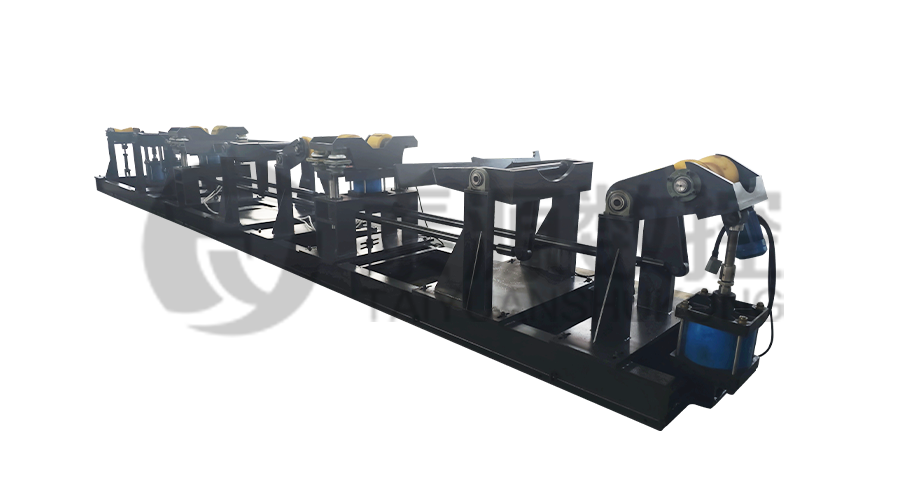 Long, heavy material solutions Automatic loading and unloading mechanism for pipe threading
The special flexible support mode can effectively reduce the influence of workpiece bending on processing and improve the yield. Strictly matching with our pipe threading lathe.
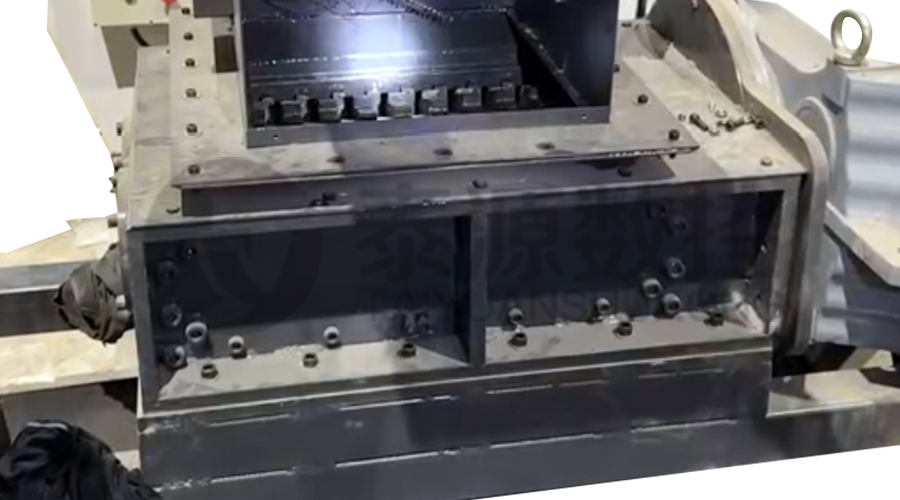 Modular Iron Chip Crusher High strength crusher for chip
The blades are made of high-strength materials and reasonably placed at the exit of the chip extractor to break the clump iron chips.Reduce the risk of rollback and improve waste frame utilization.
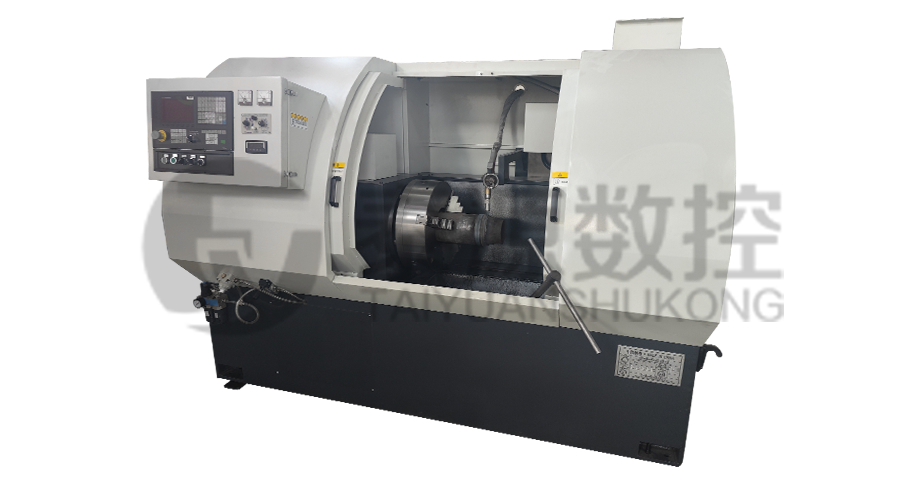 Series:TYSK-HB Semi-automatic wear-resistant band welder
Applicable to ARNCO 100XT, 200XT, 300XT. Support φ1.2-2.0 cored or solid wire surfacing welding.Can be equipped with single gun spray welding and double gun spray welding two ways. Support PLC or CNC system control.
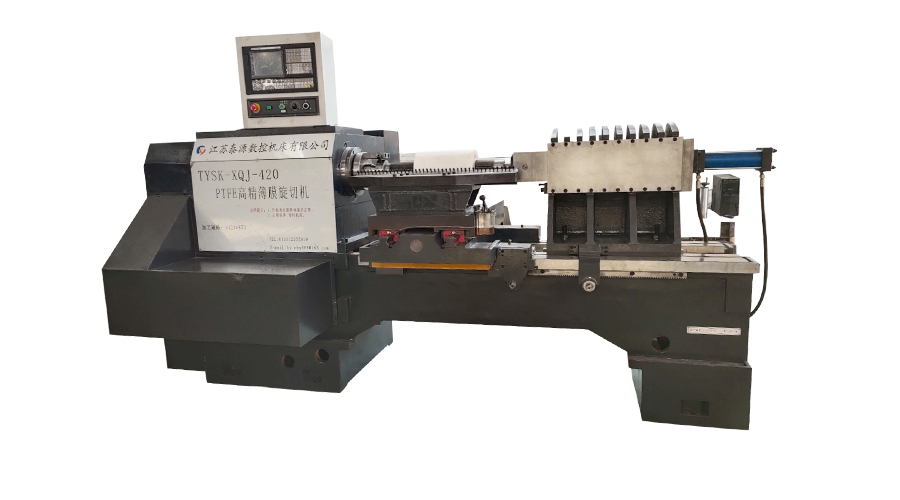 Model:TYSK-XQJ-550 Medium & Large PTFE Film Skiving Machine
Designed to process blanks with a maximum diameter of 550 mm and a maximum length of 1000 mm. We can also customize according to the needs of users. Friendly change speed and thickness with CNC.
