



 English
 عربى
 中文简体

Reminder information

Nov 13, 2026
Content
A casing and tubing shop orders a CNC lathe for 5-1/2 in. couplings, cuts a clean first article, then watches pitch diameter creep toward the top of the tolerance band by the 80th joint of every shift. Nothing on the machine has failed. The machine was specified from a catalog envelope instead of from the part.
Buy the machine that is proven against your heaviest, longest and most torque-demanding part, not against the average of your order book. In practice that means pinning down four things before the purchase order is signed: the working envelope (spindle bore, chucking, steady support), the threading accuracy the builder will guarantee in writing, the make-up torque the bucking station can hold, and the repeatability that survives a full production shift. Price, delivery and automation options are negotiated on top of those four, never instead of them.
Oilfield machining is narrow, heavy and standard driven. Casing and tubing couplings, drill pipe tool joints, pin and box threads on pipe bodies, and hard-banded tool joints all load a lathe differently. Before comparing manufacturers, write down the part family, the OD and wall range, the thread form, the required make-up torque, and the number of pieces per shift. That single list eliminates most of the wrong machines and most of the wrong quotations.
| Workpiece | What it tests on the machine | Question for the builder |
|---|---|---|
| Casing and tubing couplings | Chucking rigidity, pitch and taper control, make-up torque of the bucking unit | What torque can the bucking station hold without jaw slip or thread marking? |
| Drill pipe tool joints | Shoulder face flatness, taper, surface finish under interrupted cuts | What shoulder flatness and taper are guaranteed after a production run, not on a first article? |
| Pipe body pin and box threads | Spindle bore, steady rest capacity, thread length, chip evacuation | What is the maximum through-bore, and how is a long pipe supported at the thread end? |
| Hard-banded joints | Overlay welding quality plus the turning that follows it | Is banding done on the same machine or moved to a second station? |
| Thick-wall coupling stock | Rigidity at high depth of cut, thermal stability over a shift | How much material can be removed per pass before chatter appears? |
Once that table is filled in with your own parts, the comparison stops being about brand names and starts being about numbers you can hold a supplier to.
A large quoted bore means little if the chuck through-hole is smaller, or if the steady rests cannot carry the pipe weight at the thread end. Check the complete chain: spindle bore, chuck through-hole, front and rear steady rest diameter range, maximum workpiece weight between centers, and bed length for the longest joint you expect to run. On casing and tubing work, the difference between a purpose-built pipe lathe and a general-purpose turning machine shows up as pipe sag and vibration, not as a line on a data sheet.
Ask for the parameters that decide whether a joint gauges: cumulative pitch error over the thread length, taper, thread height and flank finish. A builder that guarantees only high precision is telling you the acceptance test has not been defined. The meaningful commitment is a documented test cut: thread a representative coupling, gauge it against the applicable standard, and record the results against the machine serial number. Threads made for casing and tubing are checked against API 5CT requirements, and the threading cycle, spindle encoder resolution and servo response all feed into whether those limits are met on the 200th joint as well as the first. API 5CT compliance belongs at the start of the conversation, not in the final inspection report.
Bucking is where a lathe earns its place in an oilfield shop, or fails to. Confirm the maximum make-up torque, whether torque is programmable and recorded per joint, and how the machine prevents thread marking and galling. Torque capacity is also a structural question: jaw design, spindle stiffness and the hydraulic or servo system behind it all matter. If your mix swings from small tubing to heavy casing, ask how changeover is handled and how long it takes in minutes, not in theory.
Thermal growth and tool wear are the normal enemies of a long shift. Ask what accuracy the builder will hold on the 200th piece, and how the machine compensates: spindle thermal compensation, coolant temperature control, in-process gauging, or offsets an operator can adjust quickly. A machine that needs manual correction every twenty parts quietly adds a full operator to your cost structure, and that cost never appears in the quotation.
Once a machine can hold tolerance, throughput decides payback. Automatic loading and unloading, thread gauging stations, chip handling sized for heavy swarf, and production lines that move a coupling from blank to bucked joint without manual handling all reduce labor per piece. Ask for cycle time broken down by operation and require the numbers to be demonstrated on a test cut rather than estimated in a proposal.
Two suppliers can quote an identical specification and carry very different risk. The deciding question is how much of the machine the builder actually makes and controls.
An assembler can be a good partner when the machine is standard and the spare parts chain is short. The same assembler becomes expensive when a spindle needs replacement, a completion program is waiting, and the lead time sits with a third party the seller does not control. Ask the question early and listen for specifics, because a builder that machines its own beds usually answers with process detail rather than with adjectives.
The purchase price is the smallest part of the ten-year cost of an oilfield lathe. Insist on these terms in the contract rather than in a verbal promise:
These five items are also the fastest way to separate a supplier who supports machines from one who only ships them.
The right manufacturer is the one that answers these questions with measurements and documentation instead of adjectives. When a builder can show a test cut, a gauged thread, a torque curve and a service commitment, the machine is a production asset from the day it lands. When the answers stay vague, the discount on the purchase order is the cheapest part of the deal and the most expensive part of the next five years.
Start from the parts you actually run, build the specification around them, and let the commercial discussion follow the technical one. If you want to see how a purpose-built oilfield configuration is laid out in practice, review the machine lineup before you issue the enquiry, and compare each option against the checklist above.
Related Products
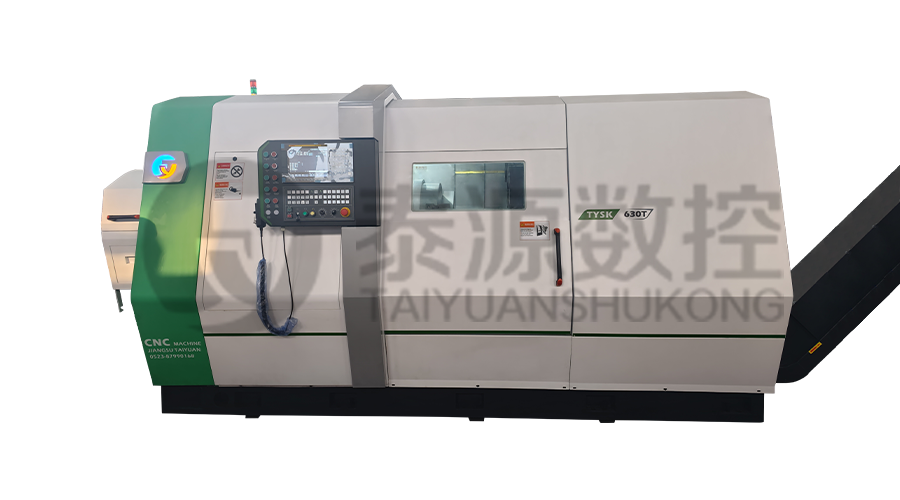 Model:TYSK-630T Drill Pipe, Joint & Coupling Lathe
The machine adopts a FANUC CNC system with stable processing accuracy and flexible programming functions to ensure that the processed parts meet strict industry standards. The high torque and heavy-load design can cope with long-term continuous work and has strong durability.
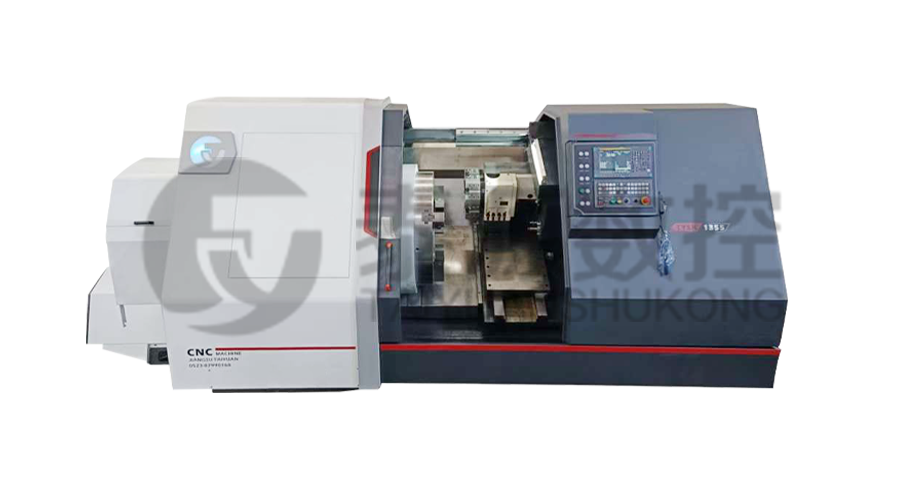 Model:TYSK-1355 Oil Pipe Processing Lathe
The machine adopts a FANUC CNC system with stable processing accuracy and flexible programming functions to ensure that the processed parts meet strict industry standards. The high torque and heavy-load design can cope with long-term continuous work and has strong durability.
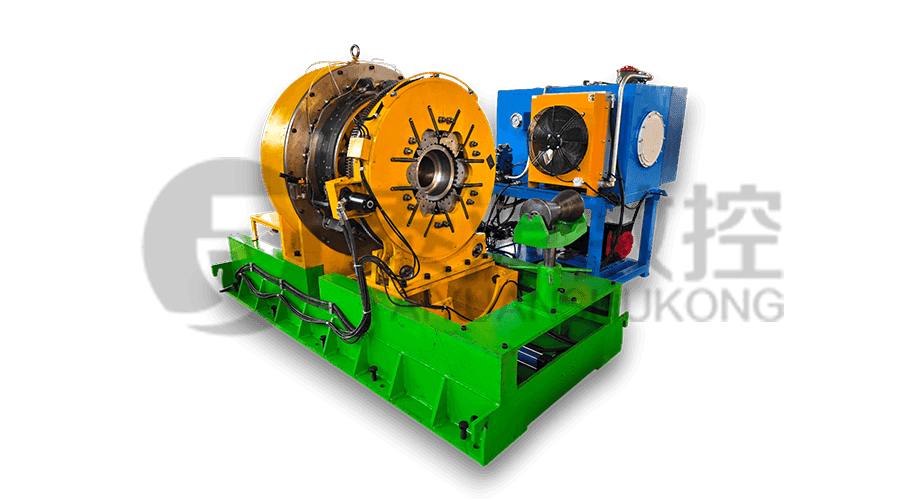 Series:TYSK-NKJ Screw-on machine/Casing and tubing coupling bucking unit
The machine uses a hydraulic motor, mechanical floating mechanism, and real-time torque detection, adapts to material bending, and prevents material deformation. Auxiliary machines are configured to help with semi-automation.
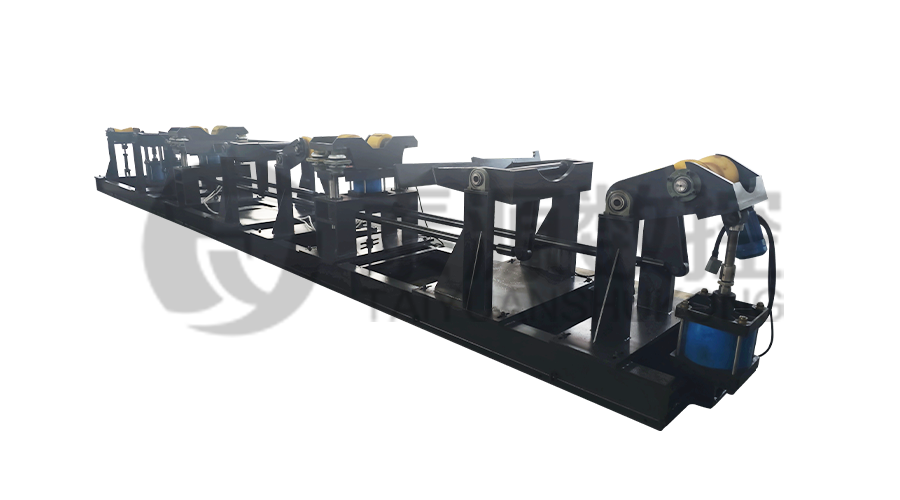 Long, heavy material solutions Automatic loading and unloading mechanism for pipe threading
The special flexible support mode can effectively reduce the influence of workpiece bending on processing and improve the yield. Strictly matching with our pipe threading lathe.
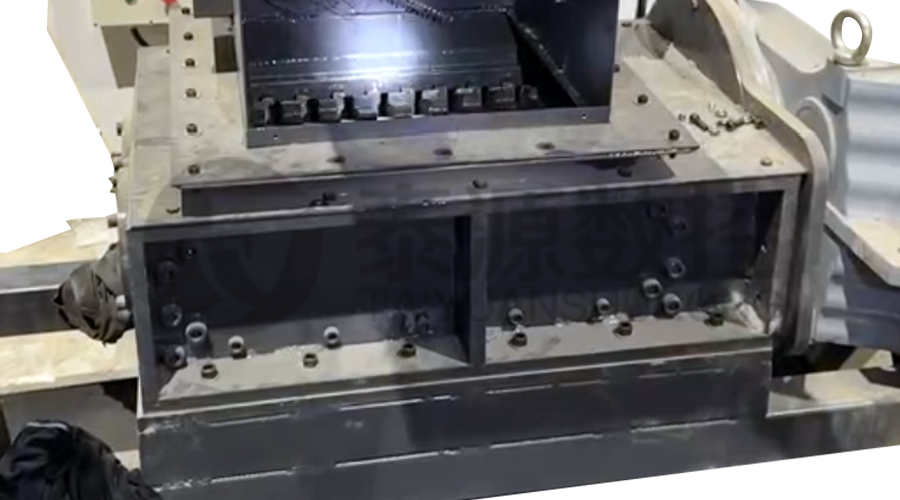 Modular Iron Chip Crusher High strength crusher for chip
The blades are made of high-strength materials and reasonably placed at the exit of the chip extractor to break the clump iron chips.Reduce the risk of rollback and improve waste frame utilization.
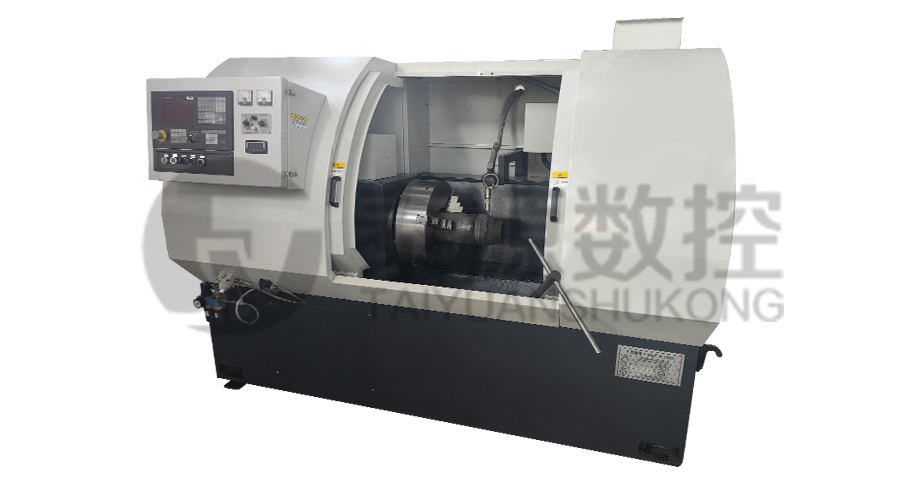 Series:TYSK-HB Semi-automatic wear-resistant band welder
Applicable to ARNCO 100XT, 200XT, 300XT. Support φ1.2-2.0 cored or solid wire surfacing welding.Can be equipped with single gun spray welding and double gun spray welding two ways. Support PLC or CNC system control.
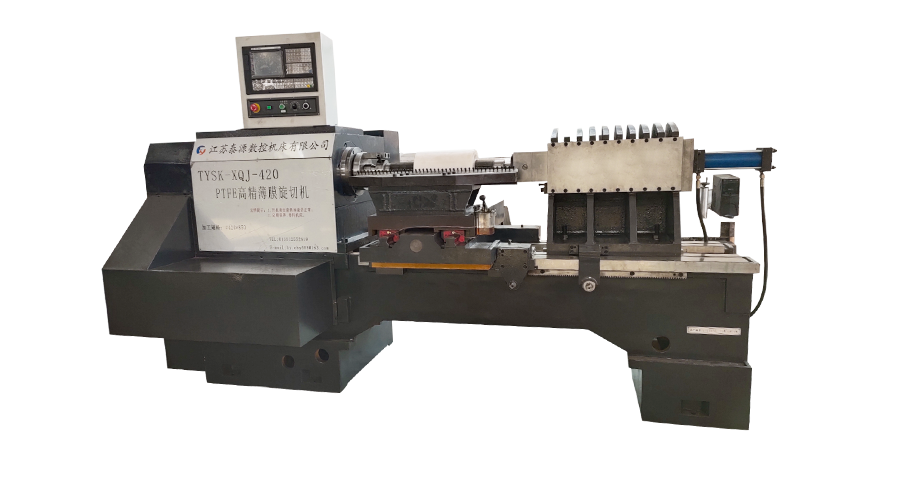 Model:TYSK-XQJ-550 Medium & Large PTFE Film Skiving Machine
Designed to process blanks with a maximum diameter of 550 mm and a maximum length of 1000 mm. We can also customize according to the needs of users. Friendly change speed and thickness with CNC.
