



 English
  عربى
عربى  中文简体
中文简体

Reminder information

Jul 16, 2026
Content
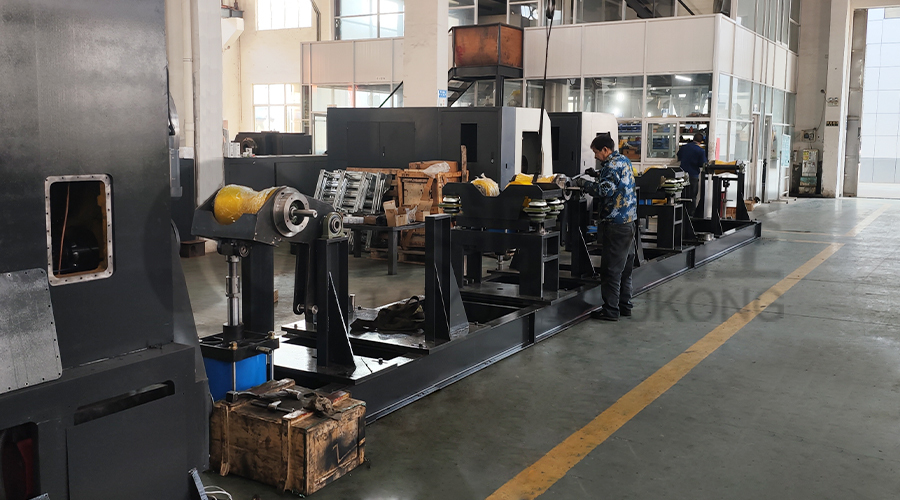
Pipe threading lines that still rely on manual feeding lose hours every shift to walking, lifting, and repositioning. An automatic loading and unloading mechanism for pipe threading closes that gap by keeping stock moving into and out of the machine without an operator touching a single pipe.
An automatic loading and unloading mechanism is a material handling system that feeds raw pipe into a threading machine, holds it in position for cutting, and clears the finished piece once the cycle ends. A complete build typically combines a feed magazine, an alignment stage, a clamp-and-transfer arm, an unload chute, and a controller that synchronizes all four with the machine's cycle time.
These mechanisms are built to plug into CNC pipe threading machines, cutting cells, and full production lines, so the pipe never sits idle waiting for a person to move it.
Threading machines are frequently rated far above what a shop actually produces, because the bottleneck sits between cycles, not inside them. Operators picking up long, heavy stock, squaring it against a stop, and clearing finished lengths add dead time that never shows up on the machine's spec sheet.
A threading machine only performs as well as the material feeding it. Automating the load and unload step is usually the single highest-return change a pipe shop can make to throughput.
The gains from automatic loading and unloading show up in five places that a plant manager can track directly on the production floor.
| Production speed | High, continuous feed | Limited by operator pace |
| Labor requirement | Lower, monitoring only | Higher, hands-on every cycle |
| Positioning accuracy | Consistent, repeatable | Varies by operator |
| Safety exposure | Reduced lifting and contact | Higher injury risk |
| Best fit | Medium to large-volume runs | Small batch or prototype work |
Selecting the right mechanism is a matter of matching hardware to the pipe you actually run, not buying the most automated option available.
Oil and gas pipe manufacturing, structural steel production, plumbing fitting shops, and hydraulic component makers all share the same pattern: high volume, heavy material, and tight tolerance requirements. In each of these settings, an automatic loading and unloading mechanism removes the manual step that otherwise limits output the most.
If your threading machine sits idle between parts more than it runs, the fix is rarely a faster machine. It is closing the gap between machine cycles with automated feeding and clearing. Reach out to review your current pipe range and shift volume so a system can be sized correctly for your line.
Related Products
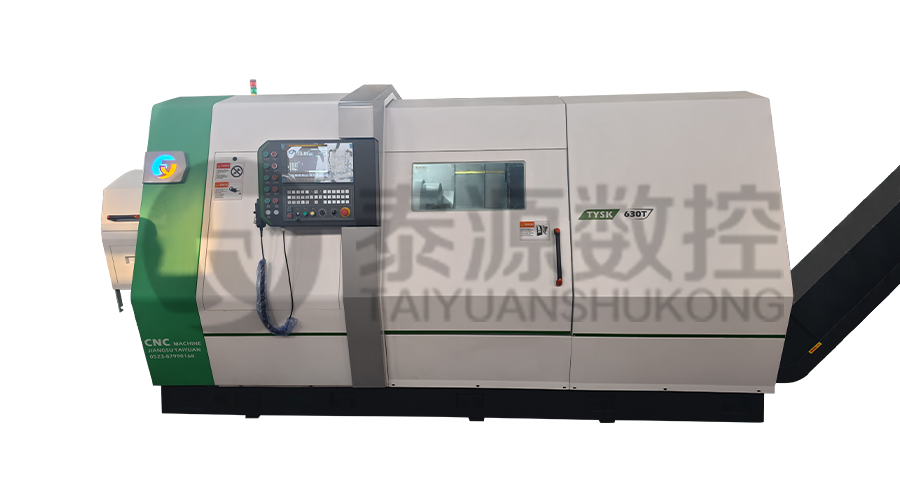 Model:TYSK-630T Drill Pipe, Joint & Coupling Lathe
The machine adopts a FANUC CNC system with stable processing accuracy and flexible programming functions to ensure that the processed parts meet strict industry standards. The high torque and heavy-load design can cope with long-term continuous work and has strong durability.
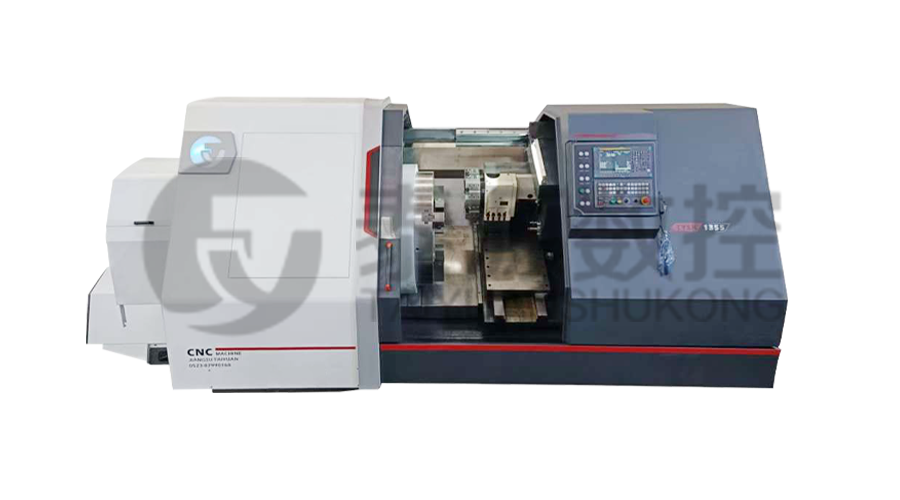 Model:TYSK-1355 Oil Pipe Processing Lathe
The machine adopts a FANUC CNC system with stable processing accuracy and flexible programming functions to ensure that the processed parts meet strict industry standards. The high torque and heavy-load design can cope with long-term continuous work and has strong durability.
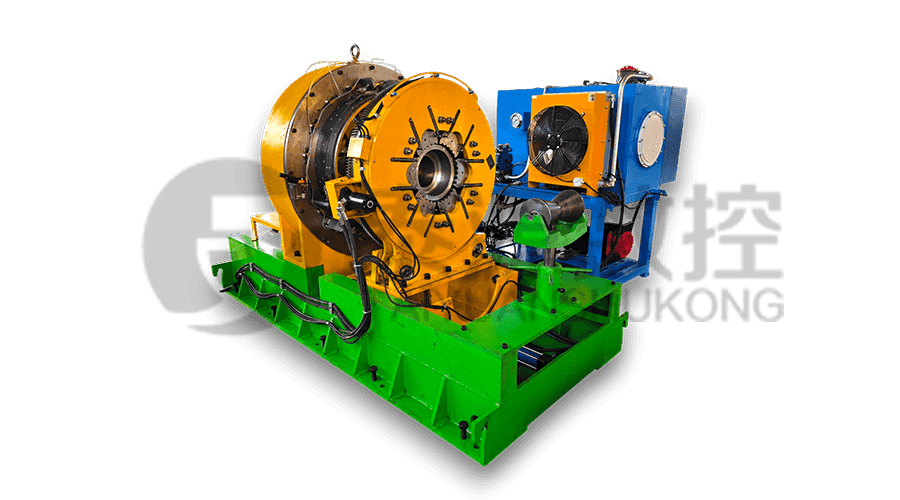 Series:TYSK-NKJ Screw-on machine/Casing and tubing coupling bucking unit
The machine uses a hydraulic motor, mechanical floating mechanism, and real-time torque detection, adapts to material bending, and prevents material deformation. Auxiliary machines are configured to help with semi-automation.
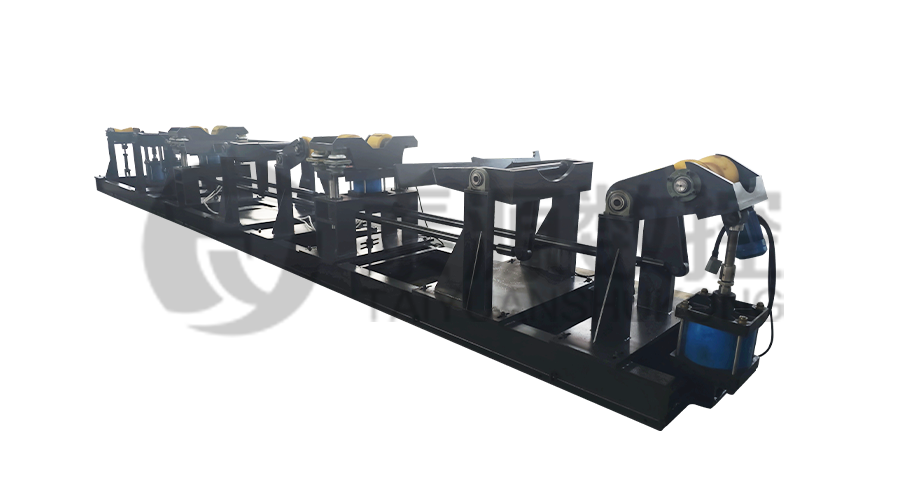 Long, heavy material solutions Automatic loading and unloading mechanism for pipe threading
The special flexible support mode can effectively reduce the influence of workpiece bending on processing and improve the yield. Strictly matching with our pipe threading lathe.
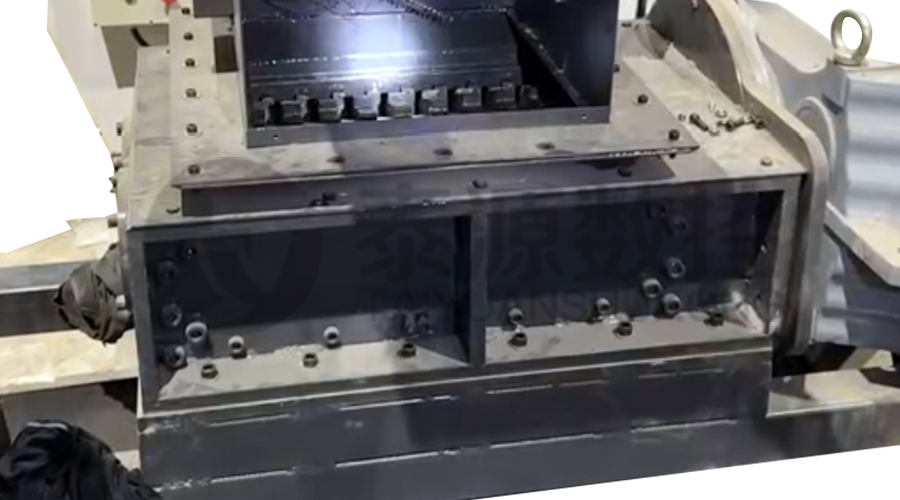 Modular Iron Chip Crusher High strength crusher for chip
The blades are made of high-strength materials and reasonably placed at the exit of the chip extractor to break the clump iron chips.Reduce the risk of rollback and improve waste frame utilization.
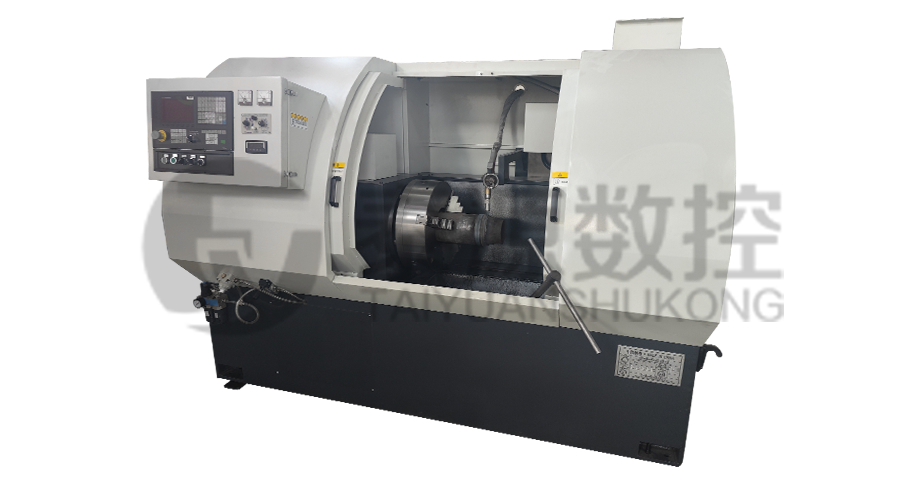 Series:TYSK-HB Semi-automatic wear-resistant band welder
Applicable to ARNCO 100XT, 200XT, 300XT. Support φ1.2-2.0 cored or solid wire surfacing welding.Can be equipped with single gun spray welding and double gun spray welding two ways. Support PLC or CNC system control.
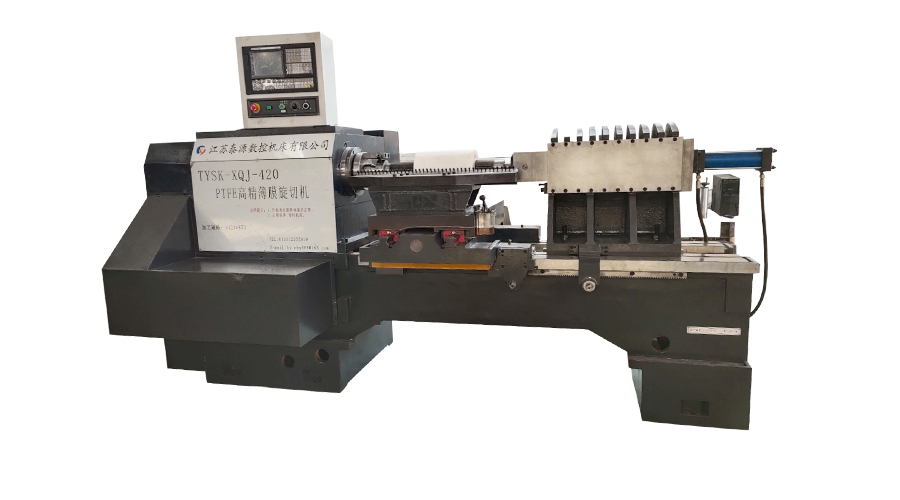 Model:TYSK-XQJ-550 Medium & Large PTFE Film Skiving Machine
Designed to process blanks with a maximum diameter of 550 mm and a maximum length of 1000 mm. We can also customize according to the needs of users. Friendly change speed and thickness with CNC.
