



 English
  عربى
عربى  中文简体
中文简体

Reminder information

Nov 24, 2025
Content
In the highly demanding oil and gas industry, the profitability of manufacturing drill pipe components is directly tied to the speed, precision, and reliability of the processing equipment. Maximizing **Specialized machine tool productivity** requires a systemic approach focused on reducing non-value-added time and embracing advanced automation. Engineers procuring an **Oil Drill Pipe Machine** must prioritize features that minimize the **Drill pipe manufacturing cycle time** and ensure high **Drill pipe production equipment** utilization across the entire facility. Jiangsu Taiyuan CNC Machine Tool Co., Ltd., a specialized machine tool production base established in 2003, offers high-technology equipment recognized for reliable quality, high driving power, and simple structure, all contributing to superior production efficiency across the **High efficiency drill pipe processing line**.
Efficiency in drill pipe manufacturing is measured by the rapid and continuous flow of product.
The total **Drill pipe manufacturing cycle time** is the sum of cutting time and non-cutting time (setup, handling, loading/unloading). Modern CNC pipe threading lathes, a core **Oil Drill Pipe Machine** component, drastically reduce this time through high-speed rapid traverse (>20 mmin) and optimized control algorithms that eliminate dwell time. Furthermore, simple structure and strong specificity of the machine tools mean minimal failure points, contributing to a longer precision retention time and maximized runtime, which is crucial for profitability.
**Drill pipe production equipment** utilization, often measured by OEE (Overall Equipment Effectiveness), is maximized by three factors: high uptime, high throughput, and high-quality output. To maintain a **High efficiency drill pipe processing line**, the machinery must feature fast tool changes, easy fixture setup, and, crucially, high reliability and few failure points, ensuring the machine is cutting product for the largest possible percentage of the operating shift. This dedicated approach to uptime is necessary to meet the demanding schedules of the global energy sector.
Comparison: Production Comparison: Automated vs. Manual Threading Lathe:
| System Type | Setup Time (Tool Change) | Cycle Time per Pipe End | Thread Geometry Consistency |
|---|---|---|---|
| Manual Lathe (Conventional) | High (Requires operator setting) | Longer (Multiple passes, manual gauging) | Highly dependent on operator skill |
| CNC Pipe Threading Lathe (Automated) | Low (Automatic compensation/ATC) | Shorter (Single-pass cutting often possible) | Excellent (Digital control, in-process gauging) |
Digital control and robotics eliminate human variability and accelerate processing speed.
**CNC pipe threading lathe automation** involves far more than just computer control; it integrates features essential for API compliance. Modern CNC systems offer automatic thread-start synchronization, dynamic P-T parameter compensation (for temperature variation), and advanced G-code programming that optimizes cutting path and speed. This level of automation guarantees that the critical connection threads—which must meet stringent geometry and surface finish requirements—are consistent from the first piece to the thousandth, bolstering **Specialized machine tool productivity**.
A true **High efficiency drill pipe processing line** relies on seamless material handling. Integrating robotics or specialized automatic conveying systems to move drill pipe sections between the hot upsetting unit, the heat treatment line, the CNC threading station, and the NDT station minimizes physical labor and—more importantly—eliminates the non-value-added time associated with manual loading and alignment. This continuous, error-free material flow is essential for maximizing **Drill pipe production equipment** utilization.
The underlying machine tool architecture must support both speed and heavy-duty operation.
For an **Oil Drill Pipe Machine**, high throughput cannot come at the expense of quality. Equipment like the CNC pipe threading lathe must possess high driving power and excellent rigidity to absorb the large cutting forces involved in machining high-strength steel grades (G105, S135) without inducing chatter or deflection. Our machines are engineered with strong specificity and long precision retention time, which ensures that the initial high throughput rate is sustained for years, providing a reliable foundation for **Specialized machine tool productivity**.
Modern **Oil Drill Pipe Machine** systems incorporate digital controls and sensing technology to facilitate predictive maintenance. By continuously monitoring vibration, spindle load, and temperature, the CNC system can alert maintenance staff to potential issues before a catastrophic failure occurs. This capability drastically reduces unexpected downtime, a key threat to the efficient **Drill pipe manufacturing cycle time**, and ensures that the **Drill pipe production equipment** remains operational.
The purchasing decision for an **Oil Drill Pipe Machine** must be driven by quantifiable metrics related to efficiency and quality assurance. Buyers must verify the system's ability to achieve a minimum **Drill pipe manufacturing cycle time** through robust **CNC pipe threading lathe automation**, ensuring high **Drill pipe production equipment** utilization across the entire **High efficiency drill pipe processing line**. This focus on efficiency and sustained **Specialized machine tool productivity** provides the competitive advantage required in the energy sector. Jiangsu Taiyuan CNC Machine Tool Co., Ltd. delivers reliable, specialized equipment, adhering to the concept of "specialization, refinement and strengthening" to partner with global energy manufacturers for mutual success.
Related Products
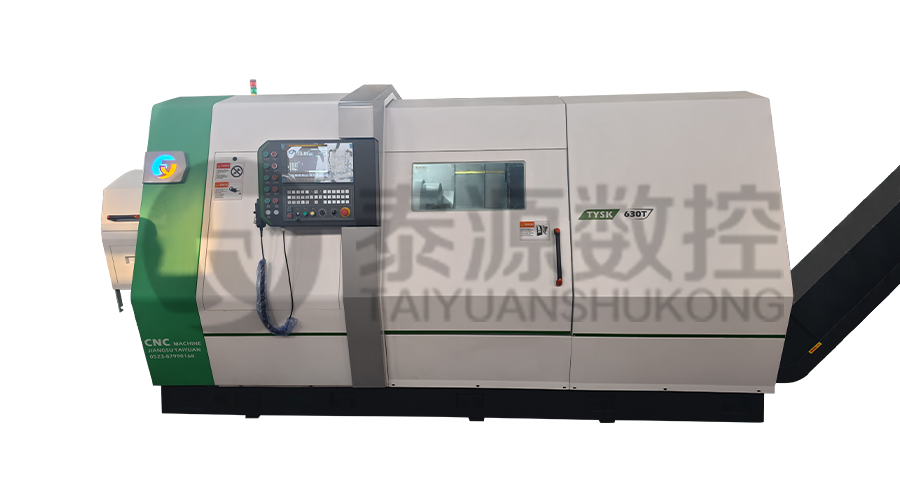 Model:TYSK-630T Drill Pipe, Joint & Coupling Lathe
The machine adopts a FANUC CNC system with stable processing accuracy and flexible programming functions to ensure that the processed parts meet strict industry standards. The high torque and heavy-load design can cope with long-term continuous work and has strong durability.
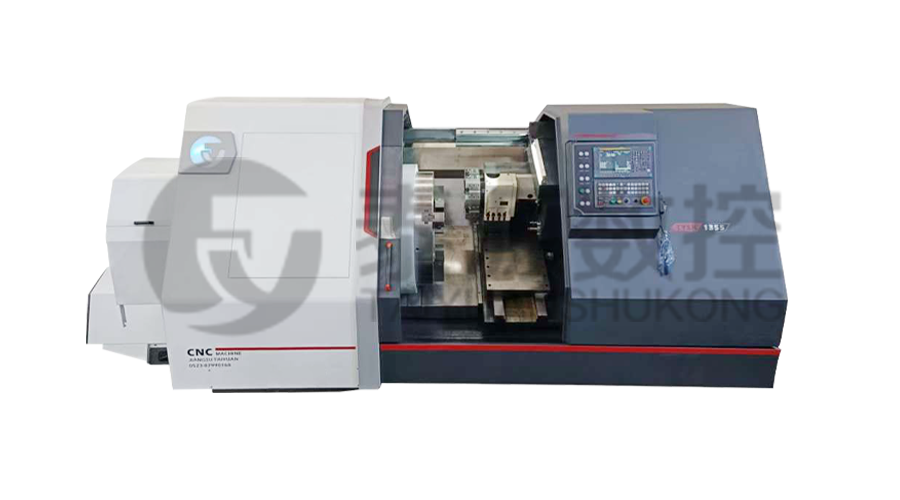 Model:TYSK-1355 Oil Pipe Processing Lathe
The machine adopts a FANUC CNC system with stable processing accuracy and flexible programming functions to ensure that the processed parts meet strict industry standards. The high torque and heavy-load design can cope with long-term continuous work and has strong durability.
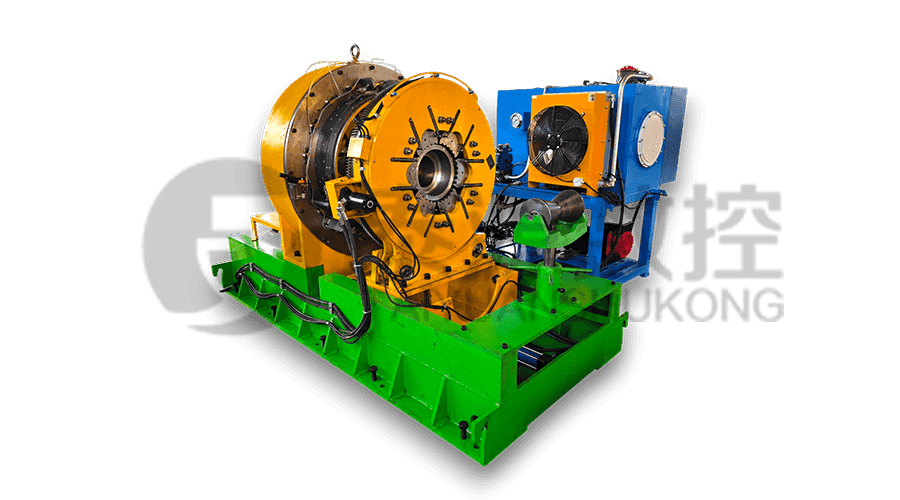 Series:TYSK-NKJ Screw-on machine/Casing and tubing coupling bucking unit
The machine uses a hydraulic motor, mechanical floating mechanism, and real-time torque detection, adapts to material bending, and prevents material deformation. Auxiliary machines are configured to help with semi-automation.
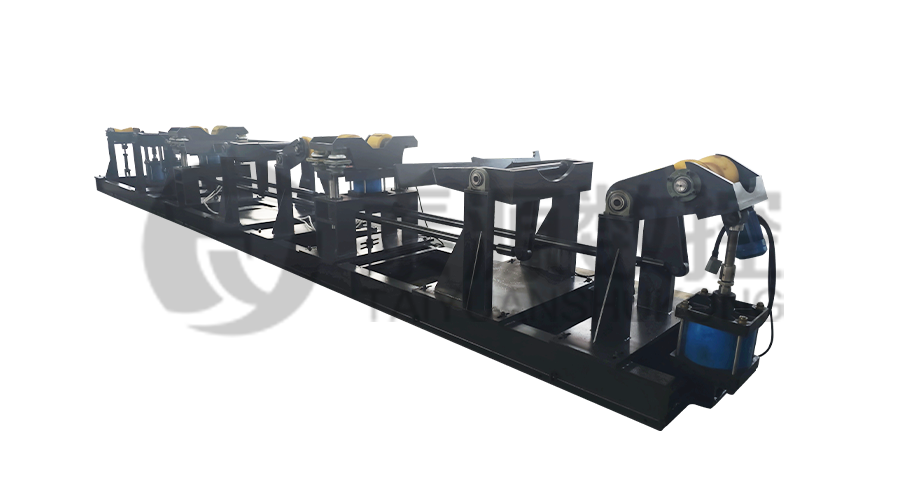 Long, heavy material solutions Automatic loading and unloading mechanism for pipe threading
The special flexible support mode can effectively reduce the influence of workpiece bending on processing and improve the yield. Strictly matching with our pipe threading lathe.
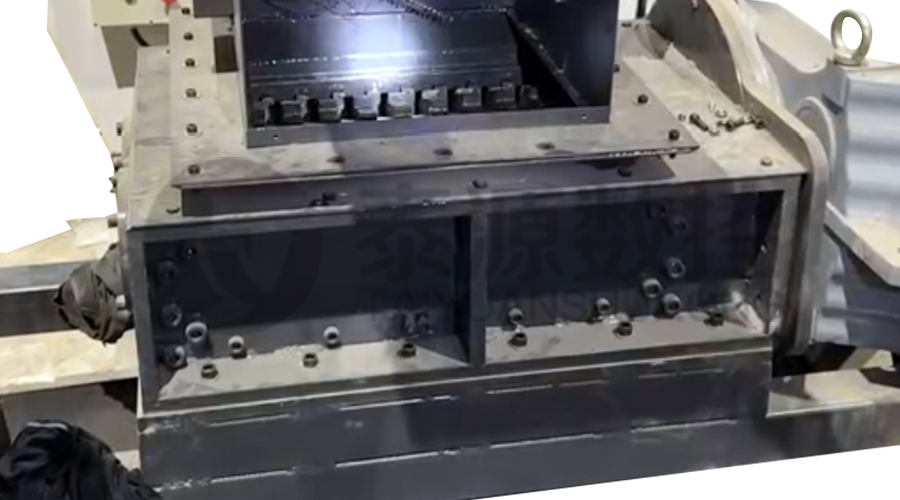 Modular Iron Chip Crusher High strength crusher for chip
The blades are made of high-strength materials and reasonably placed at the exit of the chip extractor to break the clump iron chips.Reduce the risk of rollback and improve waste frame utilization.
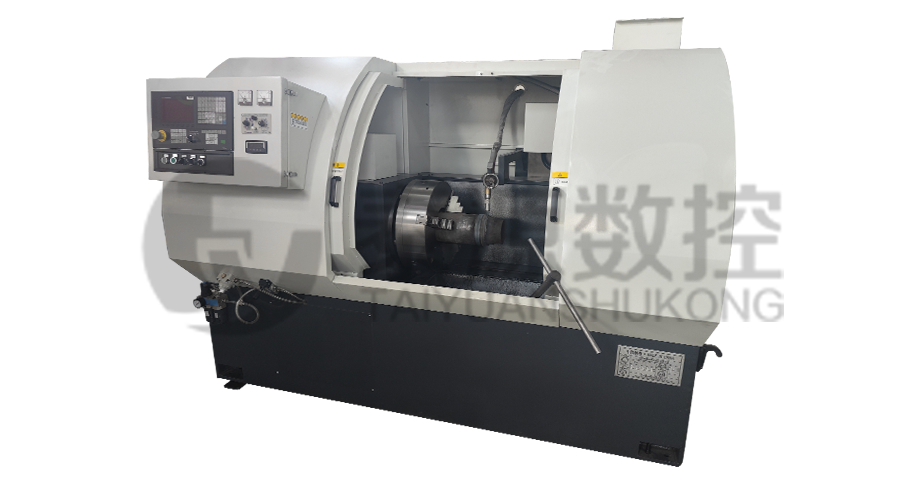 Series:TYSK-HB Semi-automatic wear-resistant band welder
Applicable to ARNCO 100XT, 200XT, 300XT. Support φ1.2-2.0 cored or solid wire surfacing welding.Can be equipped with single gun spray welding and double gun spray welding two ways. Support PLC or CNC system control.
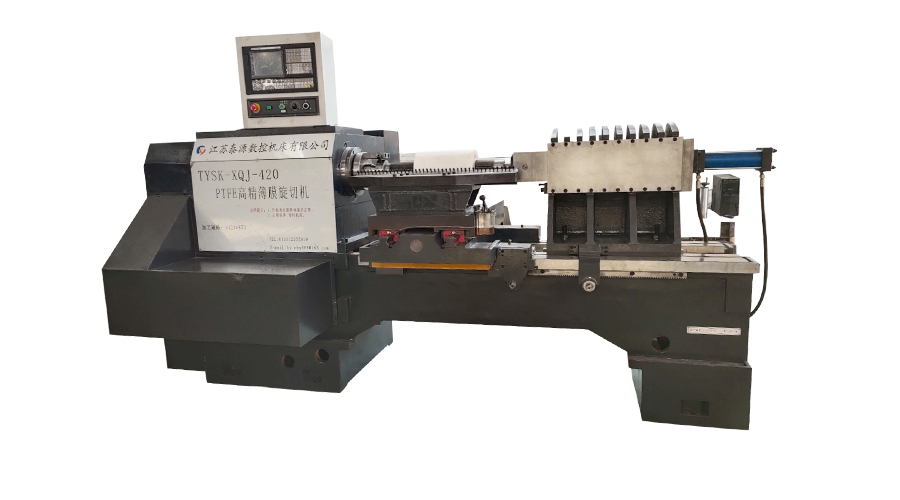 Model:TYSK-XQJ-550 Medium & Large PTFE Film Skiving Machine
Designed to process blanks with a maximum diameter of 550 mm and a maximum length of 1000 mm. We can also customize according to the needs of users. Friendly change speed and thickness with CNC.
