



 English
  عربى
عربى  中文简体
中文简体

Reminder information

Nov 20, 2025
Content
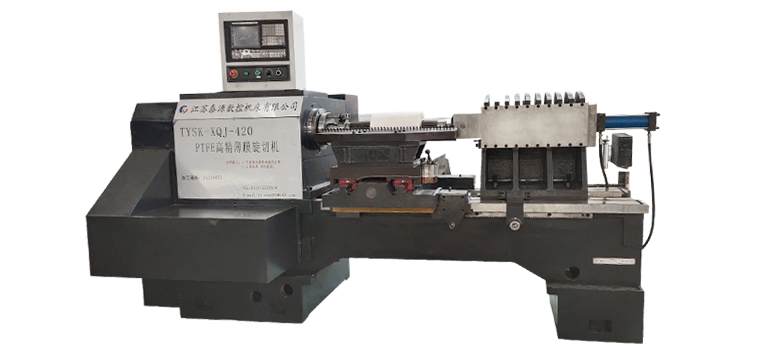
In the manufacture of high-performance PTFE (Polytetrafluoroethylene) products, film thickness uniformity is the ultimate indicator of machine quality. PTFE film, often used in mission-critical applications like electronic insulation and chemical sealing, demands precision typically measured in microns. For B2B buyers sourcing from **PTFE Film Skiving Machine Suppliers**, verifying the mechanical stability and automated controls of the equipment is essential. Jiangsu Taiyuan CNC Machine Tool Co., Ltd., a production base for special machine tools in the national petroleum equipment manufacturing industry, specializes in high-rigidity, high-precision machinery, ensuring that our products offer long precision retention time and high production efficiency.
Achieving sub-micron precision begins not with the controls, but with the foundational rigidity of the machine structure.
During the skiving process, the lateral force applied by the knife can cause microscopic deflection in the machine frame, which translates directly into thickness variation across the film width. Effective **PTFE skived film thickness tolerance** control requires a machine structure with exceptional rigidity, minimizing this deflection. Manufacturers of high-precision machines often use heavily ribbed cast iron or welded steel frames that possess excellent dampening characteristics. The quality of the film is inversely related to structural vibration; less vibration means tighter tolerance.
The continuous operation of drive motors and bearings generates heat, which can cause thermal expansion of the machine components, leading to drift in knife positioning over time. Advanced **PTFE Film Skiving Machine Suppliers** employ precise lubrication and localized cooling systems to maintain a stable operating temperature. Furthermore, using highly stable linear guides and anti-creep slide mechanisms ensures that mechanical wear and positional drift are minimized, preserving high precision throughout long production cycles.
Sub-micron uniformity requires a combination of high-resolution mechanics and closed-loop control.
Achieving **Micron level thickness uniformity** PTFE skiving necessitates a feed mechanism with extremely fine resolution. The positioning system responsible for advancing the cutting blade into the PTFE billet must typically resolve movements in $0.1$ to $0.5$ micron increments. This is achieved using high-precision linear scales, servo motors, and backlash-free ball screws. The slow, controlled advancement of the knife ensures that the soft PTFE material is precisely sheared, not torn or distorted, resulting in minimal thickness variation.
Even the most rigid machine requires active adjustment. This is where the **Automatic thickness control system** PTFE machine becomes indispensable. This system integrates a high-resolution sensor (e.g., laser or capacitive gauge) that measures the film thickness immediately after skiving. If the measured thickness deviates from the set point, the closed-loop feedback system sends a real-time signal to the knife positioning servo motor, correcting the feed rate and re-establishing the target thickness within seconds. This continuous adjustment capability is what distinguishes a high-end skiving machine.
The interface between the machine and the material—the blade—is a critical factor in performance and maintenance costs.
The choice of **PTFE skiving blade material** and longevity is paramount for minimizing downtime. Given the abrasive nature of some PTFE fillers and the need for a sustained razor-sharp edge, blades are typically manufactured from specialized high-speed steel (HSS), carbide, or ceramics. The blade geometry—specifically the rake angle and the edge radius—must be optimized for the specific PTFE density to ensure a clean cut and prevent material drag, which is a major cause of surface defects.
The specialized mechanical features of **High precision PTFE film skiving** equipment must ensure stability and precise control. For example, high-end machines feature rotating billet mandrels that minimize runout and ensure the billet surface presented to the knife is perfectly concentric. Our dedication to providing equipment with high technology and good rigidity aligns with the specialized demands of this niche market.
Comparison: Skiving Precision vs. Blade Adjustment Resolution:
| Blade Adjustment Resolution | Typical Thickness Tolerance Achieved | Target Application Focus |
|---|---|---|
| $1.0$ Micron | $\pm 5 to } 10$ Microns | General Industrial Sealing |
| $0.1$ to $0.5$ Micron | $\pm 1 to } 3$ Microns | High-End Electronic/Aerospace Film |
Successful procurement from **PTFE Film Skiving Machine Suppliers** demands a focus on quantifiable precision metrics. B2B engineers must verify the machine's capability for **Micron level thickness uniformity** PTFE skiving and its utilization of an integrated **Automatic thickness control system** PTFE machine. Our commitment to reliable quality, high technology, and specialized production positions us to partner with you, sharing development to create a better future in demanding industries worldwide.
Related Products
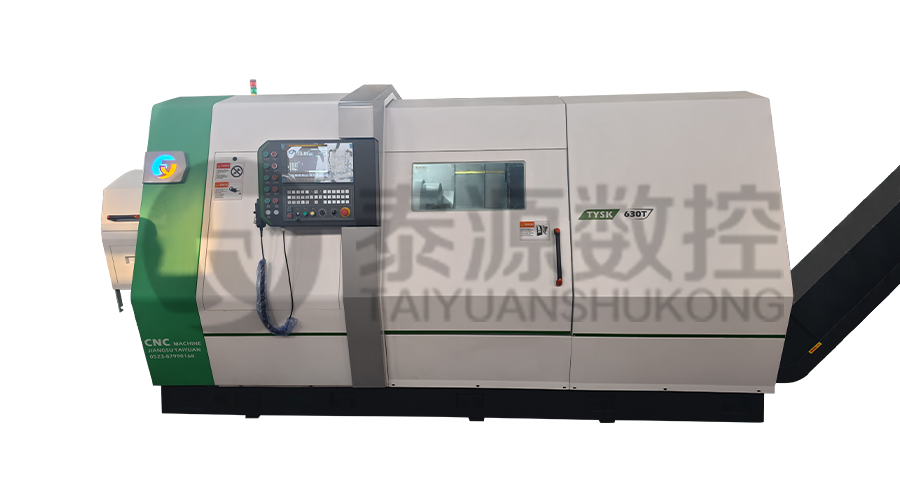 Model:TYSK-630T Drill Pipe, Joint & Coupling Lathe
The machine adopts a FANUC CNC system with stable processing accuracy and flexible programming functions to ensure that the processed parts meet strict industry standards. The high torque and heavy-load design can cope with long-term continuous work and has strong durability.
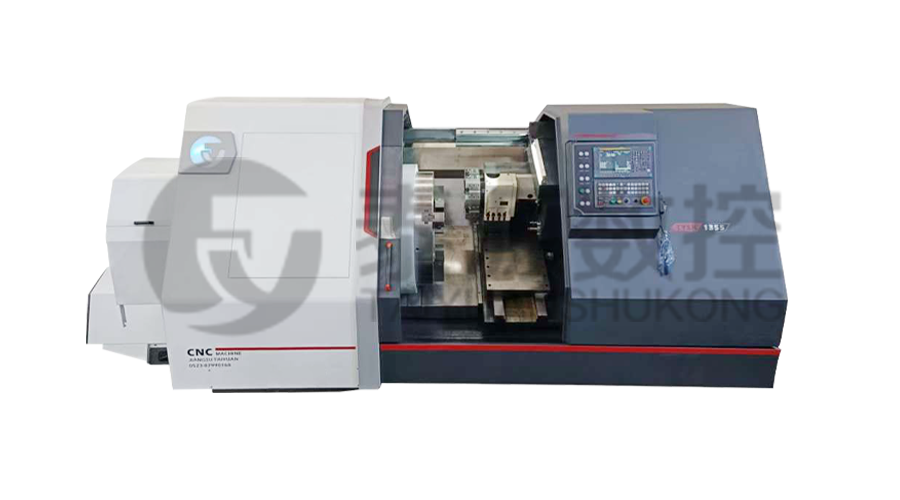 Model:TYSK-1355 Oil Pipe Processing Lathe
The machine adopts a FANUC CNC system with stable processing accuracy and flexible programming functions to ensure that the processed parts meet strict industry standards. The high torque and heavy-load design can cope with long-term continuous work and has strong durability.
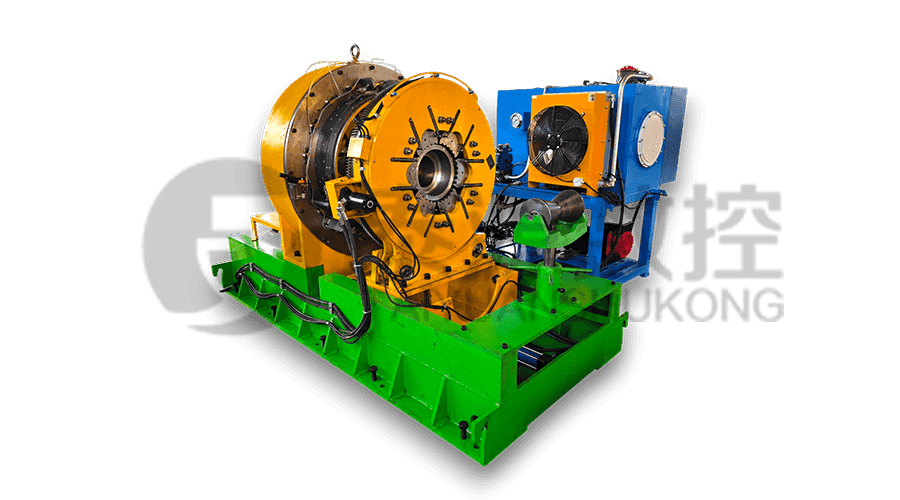 Series:TYSK-NKJ Screw-on machine/Casing and tubing coupling bucking unit
The machine uses a hydraulic motor, mechanical floating mechanism, and real-time torque detection, adapts to material bending, and prevents material deformation. Auxiliary machines are configured to help with semi-automation.
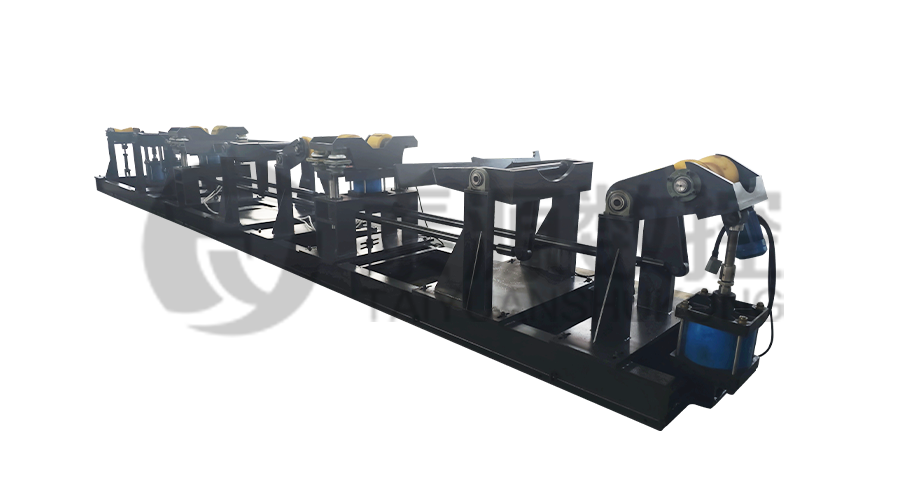 Long, heavy material solutions Automatic loading and unloading mechanism for pipe threading
The special flexible support mode can effectively reduce the influence of workpiece bending on processing and improve the yield. Strictly matching with our pipe threading lathe.
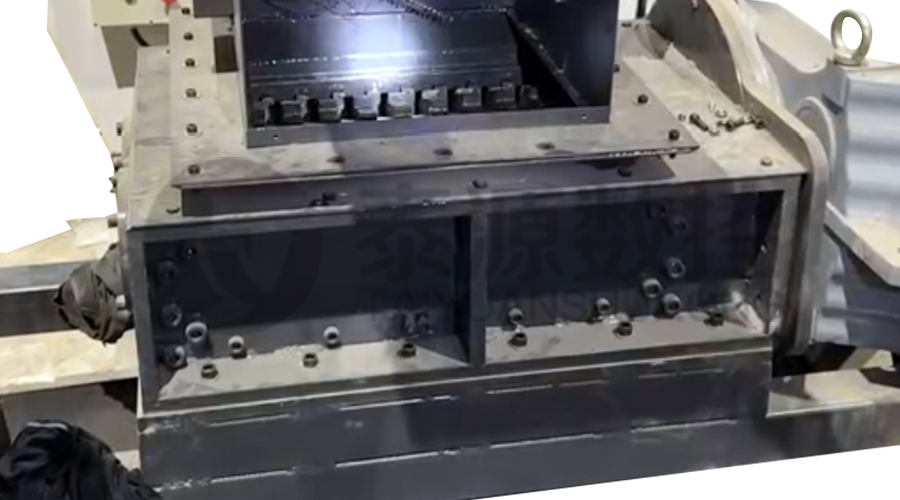 Modular Iron Chip Crusher High strength crusher for chip
The blades are made of high-strength materials and reasonably placed at the exit of the chip extractor to break the clump iron chips.Reduce the risk of rollback and improve waste frame utilization.
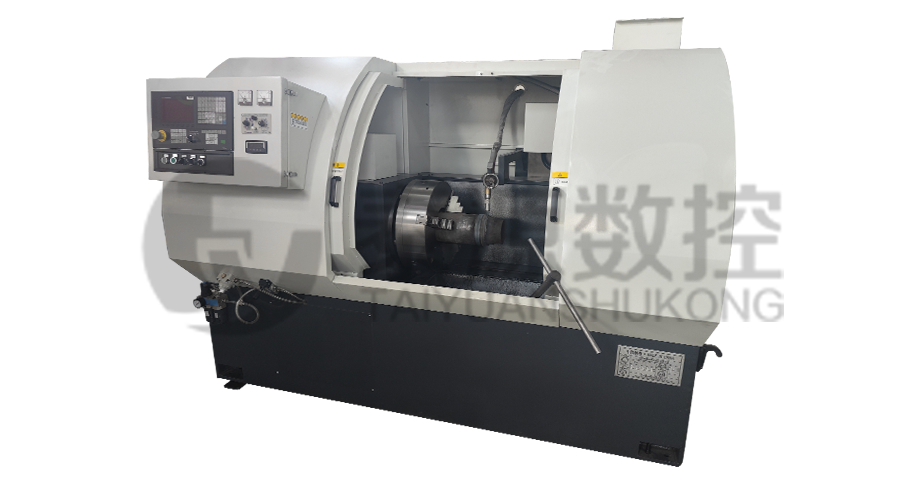 Series:TYSK-HB Semi-automatic wear-resistant band welder
Applicable to ARNCO 100XT, 200XT, 300XT. Support φ1.2-2.0 cored or solid wire surfacing welding.Can be equipped with single gun spray welding and double gun spray welding two ways. Support PLC or CNC system control.
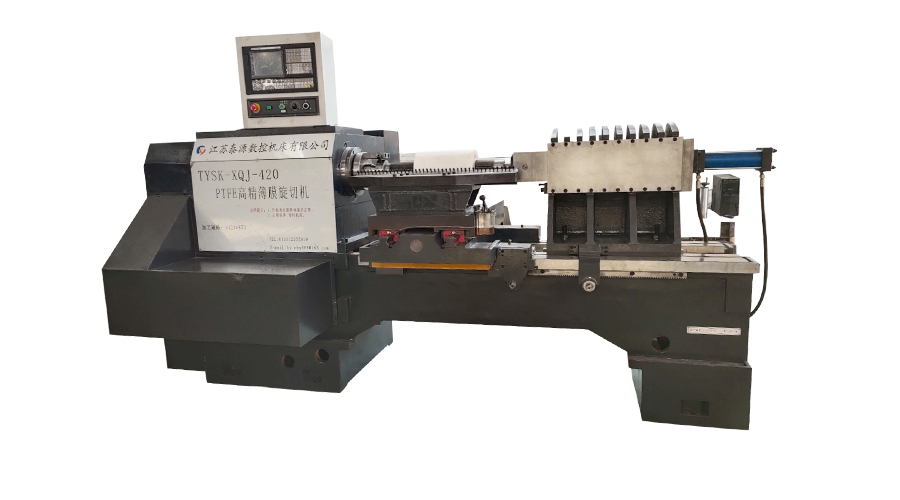 Model:TYSK-XQJ-550 Medium & Large PTFE Film Skiving Machine
Designed to process blanks with a maximum diameter of 550 mm and a maximum length of 1000 mm. We can also customize according to the needs of users. Friendly change speed and thickness with CNC.
