



 English
  عربى
عربى  中文简体
中文简体

Reminder information

Dec 04, 2025
Content
The **Oil Pipe Processing Lathe** is a highly specialized machine tool designed for the demanding requirements of Oil Country Tubular Goods (OCTG). The success of oil and gas exploration hinges on the integrity of the pipe threads—whether standardized API 5B connections or proprietary Premium Connections. Achieving micron-level precision in pitch, profile, and taper requires not only robust machine tool construction but also sophisticated Numerical Control (CNC) technology. Manufacturers must ensure their lathes can meet and maintain the stringent API 5B threading precision on CNC lathes standards required by the energy sector.
Φ1000mm Oil Pipe Processing Lathe Machine
API (American Petroleum Institute) standards, particularly API 5B and API Spec 7, define the tight tolerances essential for coupling and pipe connections. The primary technical challenges lie in controlling pitch and profile dimensions.
The V-form profile accuracy (including flank angles and crest/root radii) must be rigorously controlled. The profile tolerance for high-grade connections is often tighter than the standard API allowance, necessitating the use of high-resolution linear scales and dynamic tool wear monitoring.
| Thread Parameter | API Standard Tolerance (General) | Premium Connection Requirement (Typical) |
|---|---|---|
| Thread Taper | Typically ± 0.003-0.006 in/in | Reduced tolerance (often by 30-50%) for sealing integrity. |
| Pitch Diameter Repeatability | Standardized gauge limits | Sub-micron level consistency (Essential for CNC lathe repeatability for premium connections). |
The ability of the **Oil Pipe Processing Lathe** to maintain pitch accuracy at varying speeds is defined by the capabilities of its CNC and servo-drive system.
Thermal expansion of the lead screw and machine structure due to operational heat is a major source of pitch error. High-end **Oil Pipe Processing Lathe** systems integrate thermal sensors and use automatic CNC compensation algorithms to adjust the axis position dynamically, ensuring dimensional stability throughout long machining cycles.
Premium connections feature complex, non-API geometries that require exceptional **CNC lathe repeatability for premium connections**.
Complex threads often require multi-pass, specialized tool paths (e.g., jump threading, constant load machining). Advanced CNC simulation software is necessary to verify the cutting process and optimize the path before execution, guaranteeing the CNC lathe repeatability for premium connections necessary for high-volume production.
Precision threading of long, heavy oil pipes demands exceptional static and dynamic rigidity.
The Synchronous dual-chuck system for pipe threading utilizes two chucks (one on the spindle, one on the sub-spindle or tailstock) that clamp and drive the pipe simultaneously. This design not only provides superior pipe rigidity during cutting but also allows for full-length threading and ensures precise concentricity, which is challenging with single-chuck setups.
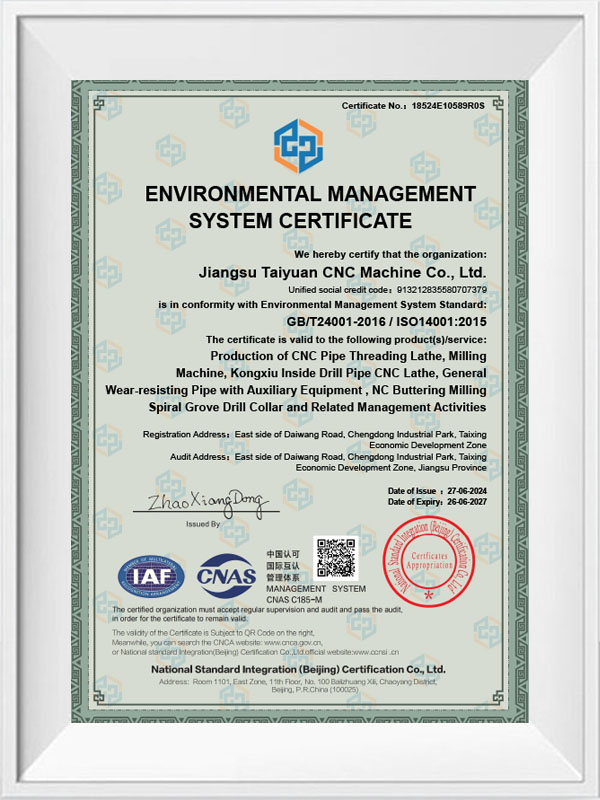
Jiangsu Taiyuan CNC Machine Tool Co., Ltd., established in 2003, is a recognized production base for special machine tools in the national petroleum equipment manufacturing industry, located in the central Jiangsu region. We specialize in special machine tools for OCTG, including Coupling CNC pipe threading lathes, drill pipe processing equipment, and drill collar thread lathes. Our products are engineered for reliable quality, high technology, and strong rigidity, ensuring extended precision retention time. We focus on delivering machines capable of maintaining the required High-precision pitch control in oil country lathe applications. Our adherence to ISO quality system certification and continuous technological development allows us to guarantee the exceptional Thread taper accuracy oil pipe processing and CNC lathe repeatability for premium connections demanded by global clients. We are committed to the concept of "specialization, refinement and strengthening," aiming to share development and create a better future.
The biggest challenge is controlling the cumulative pitch error over the threading length, which is addressed through high-resolution spindle encoders and advanced CNC pitch compensation mapping of the lead screw.
The dual-chuck system clamps and drives the pipe from both ends, significantly enhancing rigidity and concentricity during cutting, which is vital for achieving the high Thread taper accuracy oil pipe processing required for sealing integrity.
Premium connections have complex, non-standard thread forms and often utilize metal-to-metal seals, requiring tighter tolerances on thread profile, flank angles, and taper than API standards, demanding superior CNC lathe repeatability for premium connections.
Thermal expansion is a major factor. Heat generated during continuous operation can cause structural growth in the machine and lead screw, which must be counteracted by dynamic thermal compensation routines built into the CNC system.
Achieving this precision relies on the synchronization capability of the CNC, utilizing high-resolution encoders (e.g., >1 million P/R) on the spindle and high-response digital servo drives on the Z-axis to maintain perfect real-time coordination.
Related Products
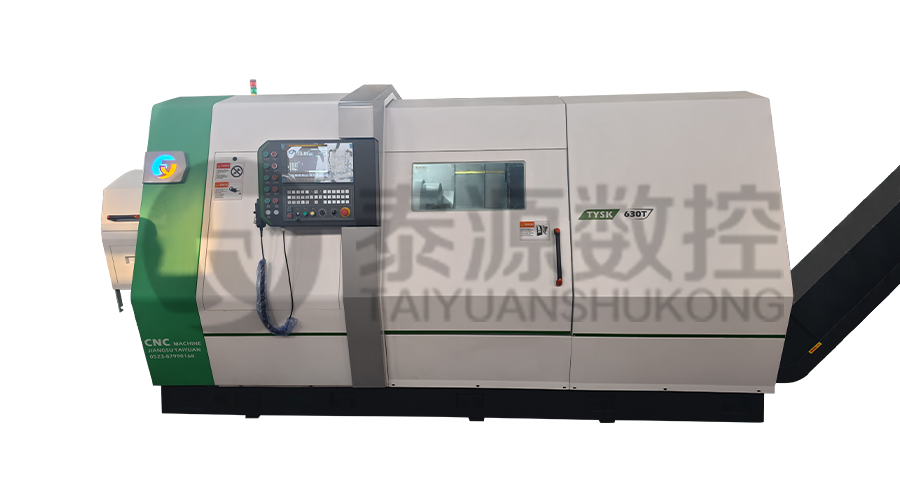 Model:TYSK-630T Drill Pipe, Joint & Coupling Lathe
The machine adopts a FANUC CNC system with stable processing accuracy and flexible programming functions to ensure that the processed parts meet strict industry standards. The high torque and heavy-load design can cope with long-term continuous work and has strong durability.
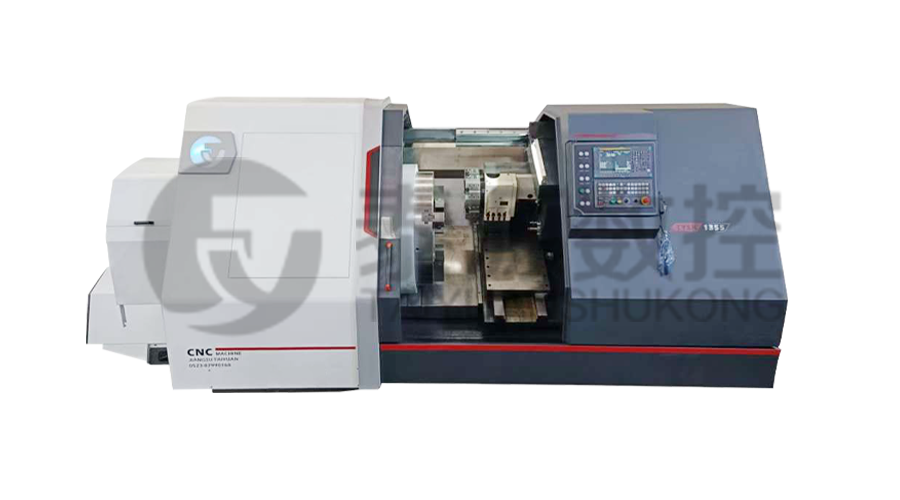 Model:TYSK-1355 Oil Pipe Processing Lathe
The machine adopts a FANUC CNC system with stable processing accuracy and flexible programming functions to ensure that the processed parts meet strict industry standards. The high torque and heavy-load design can cope with long-term continuous work and has strong durability.
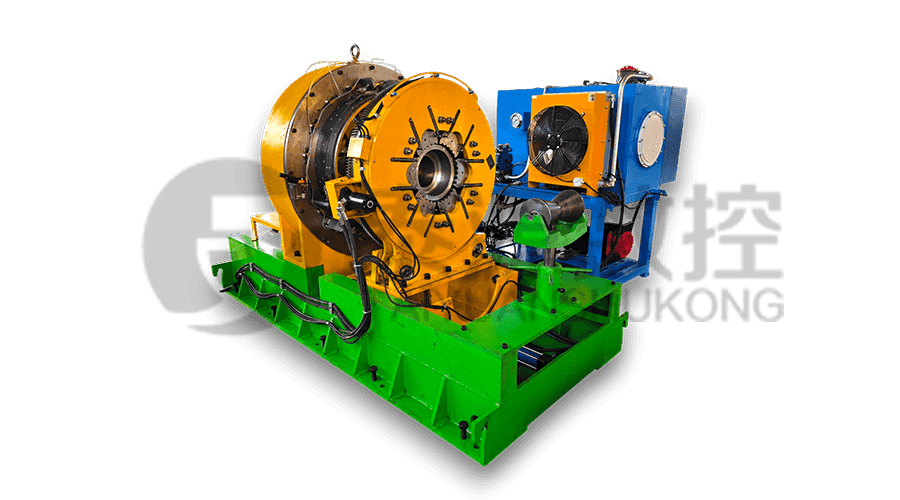 Series:TYSK-NKJ Screw-on machine/Casing and tubing coupling bucking unit
The machine uses a hydraulic motor, mechanical floating mechanism, and real-time torque detection, adapts to material bending, and prevents material deformation. Auxiliary machines are configured to help with semi-automation.
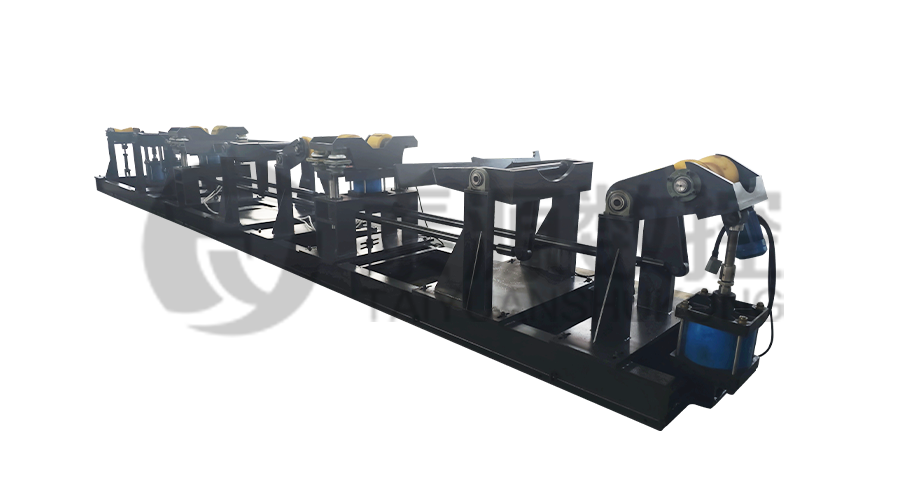 Long, heavy material solutions Automatic loading and unloading mechanism for pipe threading
The special flexible support mode can effectively reduce the influence of workpiece bending on processing and improve the yield. Strictly matching with our pipe threading lathe.
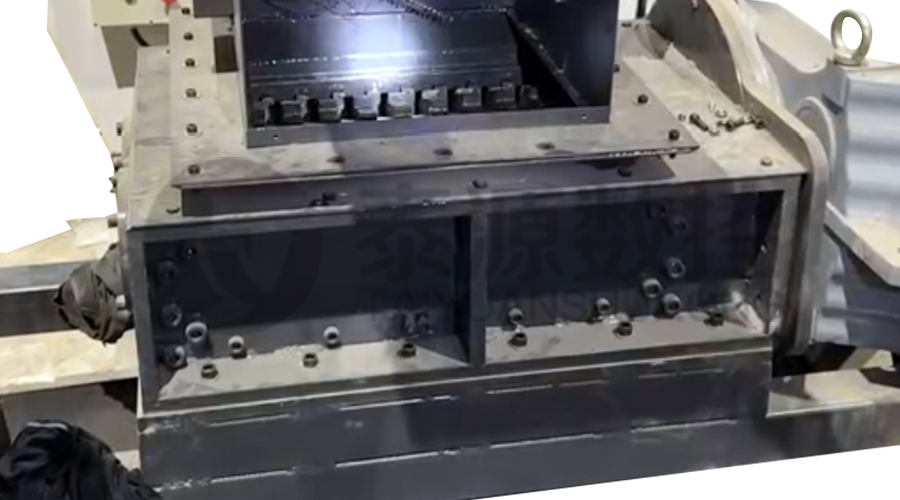 Modular Iron Chip Crusher High strength crusher for chip
The blades are made of high-strength materials and reasonably placed at the exit of the chip extractor to break the clump iron chips.Reduce the risk of rollback and improve waste frame utilization.
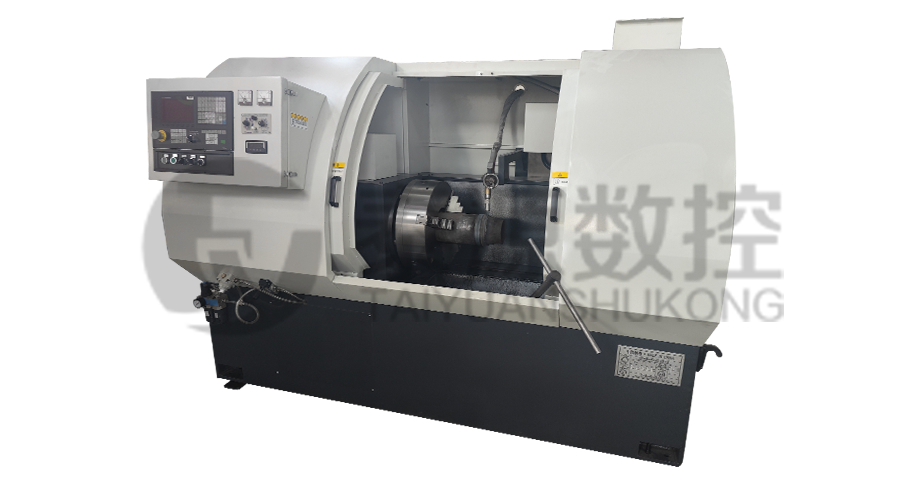 Series:TYSK-HB Semi-automatic wear-resistant band welder
Applicable to ARNCO 100XT, 200XT, 300XT. Support φ1.2-2.0 cored or solid wire surfacing welding.Can be equipped with single gun spray welding and double gun spray welding two ways. Support PLC or CNC system control.
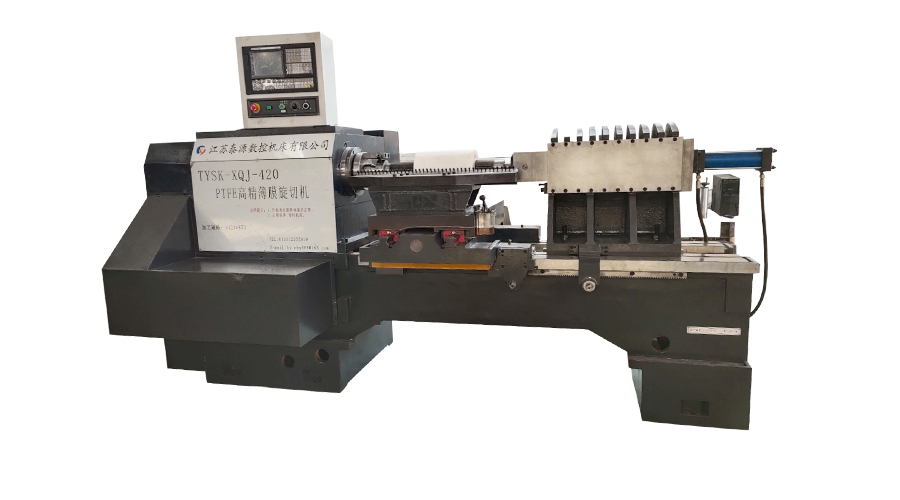 Model:TYSK-XQJ-550 Medium & Large PTFE Film Skiving Machine
Designed to process blanks with a maximum diameter of 550 mm and a maximum length of 1000 mm. We can also customize according to the needs of users. Friendly change speed and thickness with CNC.
