



 English
  عربى
عربى  中文简体
中文简体

Reminder information

Aug 26, 2026
Content
Every time a casing string goes into a deep well, the connection between two pipe joints becomes a pressure boundary. A small variation in thread pitch, a dull insert, or an incorrect make-up torque can turn a routine operation into a leak, a stuck string, or a costly downhole failure. That is why automated pipe connection equipment has become one of the most important assets in oil country tubular goods (OCTG) manufacturing. The trend is not simply toward faster machines; it is toward fully integrated, data-driven connection cells that combine threading, handling, bucking, inspection, and traceability in one controlled workflow.
Automated pipe connection equipment covers the machines and peripheral systems that produce and assemble threaded connections on casing, tubing, drill pipe, and line pipe. The main categories include:
CNC oil pipe processing lathes form the backbone of most threading workshops, and their role is expanding beyond cutting threads into complete machining cells. In practical terms, the thread itself is only part of the connection. The shoulder contact, seal surface, surface finish, and final torque all determine whether the connection will perform reliably under downhole loads. Future-ready equipment must therefore control the whole connection process, not just one turning operation.
In many conventional pipe threading shops, a joint is lifted by an overhead crane, loaded manually, threaded, moved to a bucking station, and only then inspected. That workflow contains too many opportunities for damaged threads, misaligned starts, and operator-dependent results. The future belongs to integrated cells where the pipe enters the process and moves through each operation with minimal human interference.
One of the most visible changes is the wider adoption of automatic loading and unloading mechanisms for pipe threading. These systems align the pipe, feed it into the spindle, remove it after machining, and transport it to the next station. Cycle times drop because loading no longer has to wait for a crane operator. Machined surfaces are protected, and the safety exposure for workers is reduced.
An automatic loader can present a new joint while the previous joint is still being machined. The result is a continuous flow rather than a stop-and-start operation. This is why high-precision, repeatable pipe threading automation is becoming a baseline requirement instead of an optional upgrade.
Manual transport of threaded pipe can damage the very surfaces the machining process tries to protect. Automated transfer systems eliminate most of that risk and make the production line easier to plan, staff, and control.
Thread quality is measured in tenths of a millimeter. Pitch errors, depth inconsistencies, and tool wear can degrade the connection before any final inspection catches the problem. Future automated pipe connection equipment will rely on real-time sensors to monitor cutting forces, spindle load, thread pitch, and surface condition during machining. When a parameter begins to drift, the control system can adjust feed rate, spindle speed, or tool offset before the part falls outside tolerance.
This is especially important for high-grade materials such as corrosion-resistant alloy tubing, where cutting conditions change quickly and post-process measurement is expensive. A machine that can detect and correct an anomaly in-process is far more reliable than one that only reports after the connection has been cut. For operations struggling with consistency, controlling pitch error and thread depth inconsistency remains one of the fastest ways to reduce scrap and rework.
| Process Area | Conventional Approach | Future Automated Approach |
|---|---|---|
| Threading setup | Manual tooling adjustment and trial cuts | CNC programs with automatic tool compensation |
| Quality checking | Post-process sampling with gauges | In-process sensors and per-joint records |
| Pipe handling | Overhead crane and manual positioning | Automatic loaders, conveyors, and grippers |
| Changeover | Long downtime for tool and fixture changes | Short changeovers with stored recipes |
| Maintenance | Reactive maintenance after failure | Predictive maintenance based on spindle and tool data |
Operators and pipe manufacturers are increasingly required to document every connection that goes into a well. That means recording not just the pipe grade and heat number, but also the thread program, tooling used, make-up torque, torque-turn curve, thread dope, and the operator who ran the process. Manual paper logs cannot keep up with that level of accountability.
The future of pipe connection equipment is therefore built around data capture. Bucking units with programmable torque and angle control can produce a complete make-up record for each connection. Coupling machining lines are moving in the same direction. Coupling intelligent production lines already demonstrate how machining, gauging, and reporting can be combined into a single automated flow, giving plant managers a clear audit trail from raw material to finished product.
No two pipe programs are exactly the same. One order may require 177.8 mm casing, while the next requires 244.5 mm surface casing or tubing with a different thread form. Future-proof equipment needs to handle this variety without requiring a complete line rebuild.
Modular automation is becoming the answer. Quick-change grippers, adjustable supports, programmable torque profiles, and stored threading recipes allow a single cell to switch between sizes and connection types in a matter of minutes. This is where the full value of intelligent coupling production line integration becomes visible: shorter changeovers, fewer setups, and less idle time between production runs.
Automated equipment cannot deliver value if it is down for unscheduled repairs. The next frontier is not just automation but self-aware equipment. Sensors embedded in spindles, drives, loaders, and hydraulic systems can detect abnormal vibration, temperature, or current draw long before a visible failure occurs.
Predictive maintenance turns that data into action. The machine can alert the maintenance team that a spindle bearing is degrading or that tool wear has reached a threshold, allowing the part to be changed during planned downtime. Remote diagnostics then let the equipment builder review the machine status, adjust parameters, and provide support without dispatching a technician to the site. For pipe connection equipment operating in remote or high-throughput facilities, this capability directly affects uptime and cost per connection.
When evaluating automated pipe connection equipment, the most important question is not how fast a single axis moves. It is how well the equipment will fit into a future workflow that includes data collection, quality documentation, flexible changeover, and remote maintenance.
Look for machines with open interfaces, clear data outputs, API-relevant thread inspection capability, and repeatable torque control. Consider how the threading lathe will connect to handling equipment, bucking units, and production reporting. The right investment is not just a machine; it is a modular, connected cell that can grow with your pipe program.
Future-ready automated pipe connection equipment is defined less by any single machine and more by how that machine shares data, responds to variation, and integrates with the rest of the production line. That is the direction the industry is moving, and it is the standard against which any new purchase should be measured.
Related Products
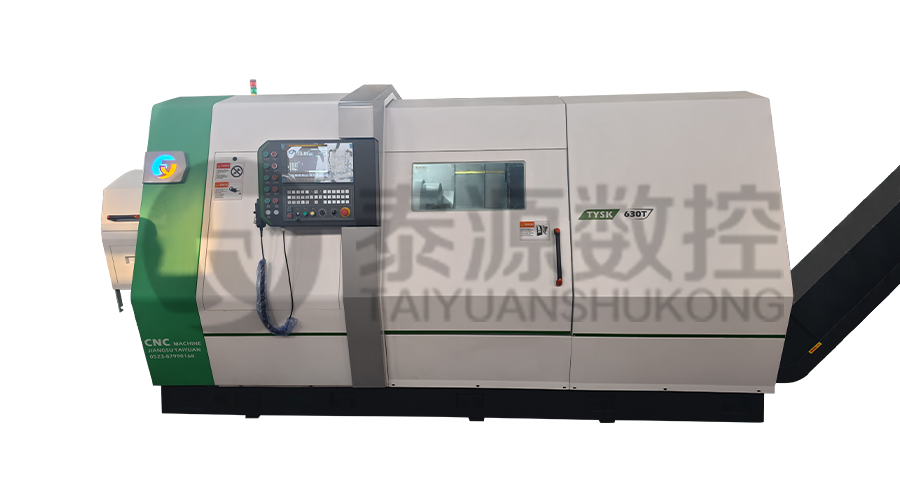 Model:TYSK-630T Drill Pipe, Joint & Coupling Lathe
The machine adopts a FANUC CNC system with stable processing accuracy and flexible programming functions to ensure that the processed parts meet strict industry standards. The high torque and heavy-load design can cope with long-term continuous work and has strong durability.
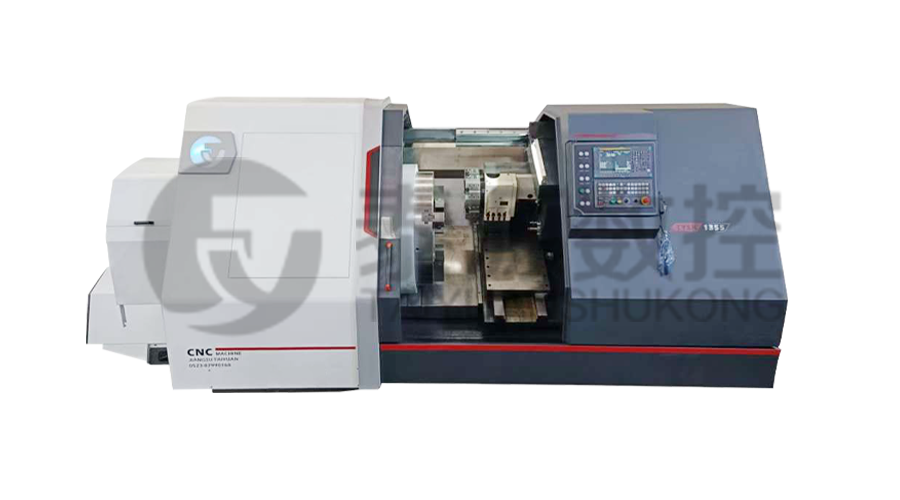 Model:TYSK-1355 Oil Pipe Processing Lathe
The machine adopts a FANUC CNC system with stable processing accuracy and flexible programming functions to ensure that the processed parts meet strict industry standards. The high torque and heavy-load design can cope with long-term continuous work and has strong durability.
Series:TYSK-NKJ Screw-on machine/Casing and tubing coupling bucking unit
The machine uses a hydraulic motor, mechanical floating mechanism, and real-time torque detection, adapts to material bending, and prevents material deformation. Auxiliary machines are configured to help with semi-automation.
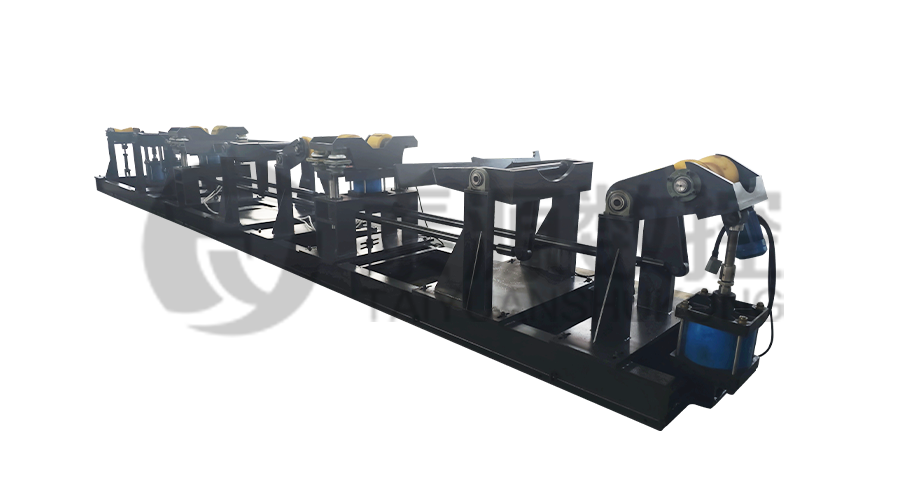 Long, heavy material solutions Automatic loading and unloading mechanism for pipe threading
The special flexible support mode can effectively reduce the influence of workpiece bending on processing and improve the yield. Strictly matching with our pipe threading lathe.
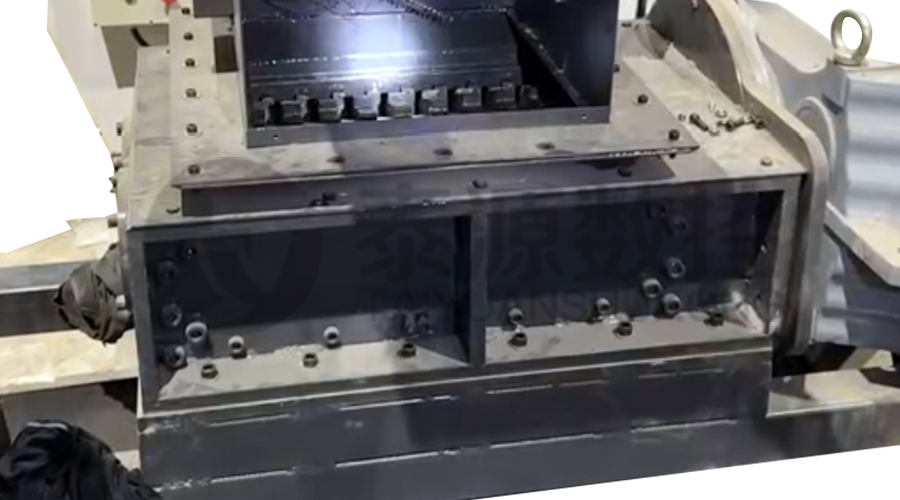 Modular Iron Chip Crusher High strength crusher for chip
The blades are made of high-strength materials and reasonably placed at the exit of the chip extractor to break the clump iron chips.Reduce the risk of rollback and improve waste frame utilization.
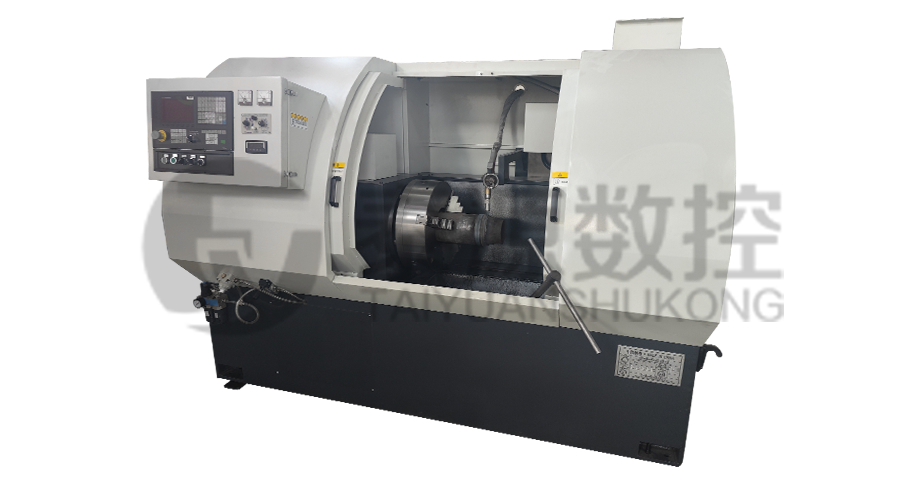 Series:TYSK-HB Semi-automatic wear-resistant band welder
Applicable to ARNCO 100XT, 200XT, 300XT. Support φ1.2-2.0 cored or solid wire surfacing welding.Can be equipped with single gun spray welding and double gun spray welding two ways. Support PLC or CNC system control.
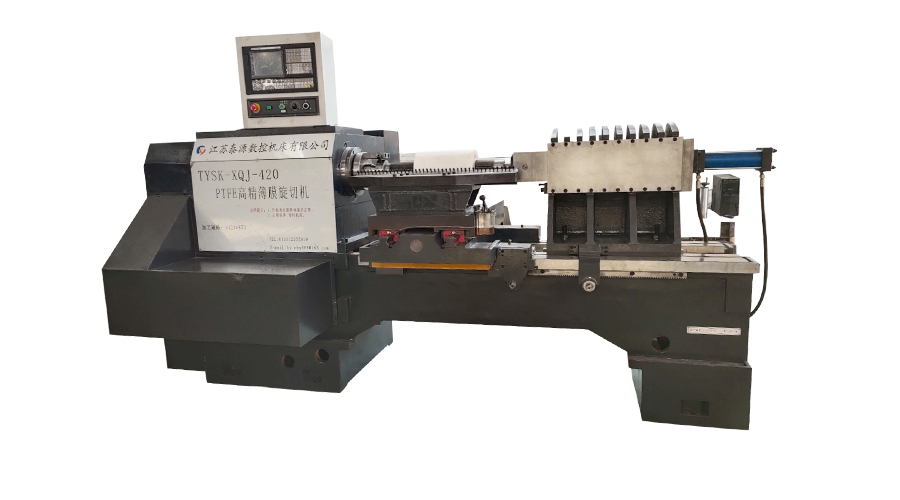 Model:TYSK-XQJ-550 Medium & Large PTFE Film Skiving Machine
Designed to process blanks with a maximum diameter of 550 mm and a maximum length of 1000 mm. We can also customize according to the needs of users. Friendly change speed and thickness with CNC.
